Does Blue Light Cause Digital Eye Strain? The Truth About Screen Exposure
Introduction
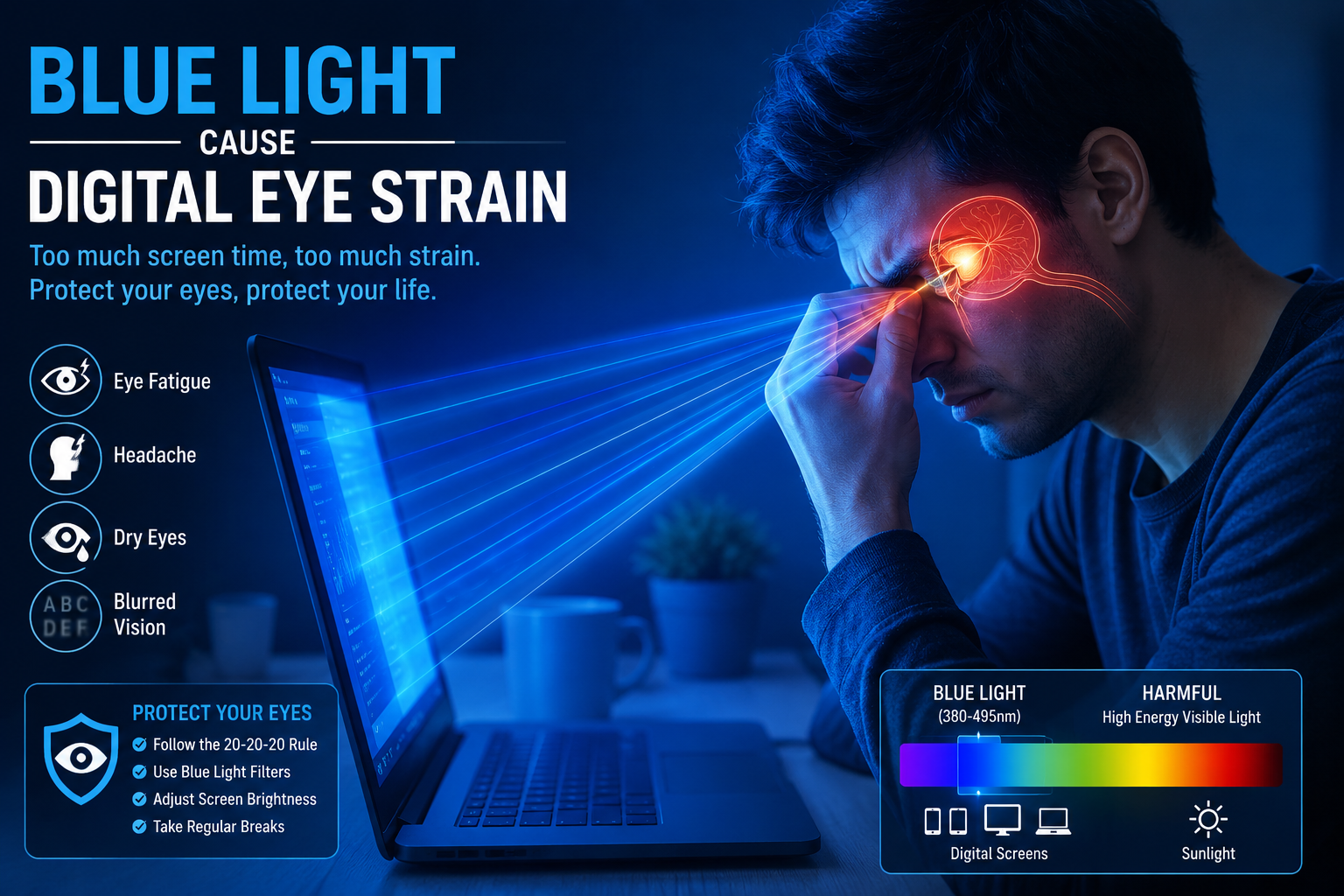
With the increasing use of smartphones, computers, tablets, and other digital devices, concerns about digital eye strain have become more common. Many people spend several hours each day looking at screens and experience symptoms such as tired eyes, dryness, blurred vision, headaches, and difficulty focusing.
One of the most discussed causes of screen-related discomfort is blue light exposure. While blue light from digital screens has received significant attention, the relationship between blue light and digital eye strain is more complex than many people believe. Understanding how screens affect eye comfort can help users develop healthier technology habits.
What Is Digital Eye Strain?
Digital eye strain, also known as computer vision syndrome, refers to eye discomfort and vision-related problems caused by prolonged use of digital devices.
Common symptoms include:
- Eye fatigue
- Dry or irritated eyes
- Blurred vision
- Headaches
- Neck and shoulder discomfort
- Difficulty focusing after long screen use
- Increased sensitivity to light
Digital eye strain is not caused by one single factor. It usually results from a combination of screen habits, viewing conditions, and reduced blinking during device use.

What Is Blue Light?
Blue light is a type of visible light with a relatively short wavelength and higher energy compared with other visible light colors. It exists naturally in sunlight and is also produced by artificial sources such as:
- Smartphones
- Computer monitors
- Tablets
- LED lighting
- Television screens
Because people spend more time indoors and use digital devices frequently, blue light exposure has become a major topic in discussions about eye health.
Does Blue Light Cause Digital Eye Strain?
Current research suggests that blue light alone is not considered the primary cause of digital eye strain. Most screen-related discomfort is linked to factors such as:
- Long periods of focusing on close objects
- Reduced blinking while using screens
- Poor screen positioning
- Incorrect lighting conditions
- Extended uninterrupted screen time
However, blue light may contribute indirectly by affecting visual comfort and sleep patterns, especially when screens are used late at night.
How Blue Light May Affect Screen Users
1. Increased Visual Discomfort
Some people may experience discomfort when exposed to bright screens for long periods. Blue light can contribute to glare and visual fatigue, especially in environments with poor lighting.
2. Sleep Disruption
Blue light exposure in the evening may affect the body’s natural sleep cycle by influencing melatonin production. Poor sleep quality can lead to tired eyes and reduced productivity the following day.
3. Screen Brightness and Contrast Issues
High brightness settings, strong contrast, and glare often create more eye discomfort than blue light itself.
Major Causes of Digital Eye Strain
1. Prolonged Screen Time
Spending several continuous hours on digital devices forces the eyes to maintain focus for extended periods, increasing fatigue.
2. Reduced Blinking
People tend to blink less while concentrating on screens. This can cause dryness, irritation, and discomfort.
3. Poor Viewing Distance
Holding screens too close or sitting too close to monitors can increase eye stress.
4. Incorrect Workspace Setup
Poor posture, bad lighting, and incorrect monitor height can contribute to overall discomfort.
5. Lack of Breaks
Continuous screen use without rest prevents the eyes from recovering.
How to Reduce Digital Eye Strain
Follow the 20-20-20 Rule
A simple way to reduce eye fatigue is:
- Every 20 minutes
- Look at something 20 feet away
- For at least 20 seconds
This helps relax focusing muscles.
Adjust Screen Settings
Helpful adjustments include:
- Reducing excessive brightness
- Increasing text size
- Improving screen contrast
- Using comfortable display settings
Maintain Proper Distance
Keep screens at a comfortable viewing distance and position them slightly below eye level when possible.
Blink More Often
Making a conscious effort to blink can help prevent dryness during long screen sessions.
Use Blue Light Filters at Night
Blue light from digital screens can contribute to digital eye strain. Prolonged screen use may cause eye fatigue, headaches, and blurred vision. Taking regular breaks and adjusting screen brightness can help reduce discomfort.
Blue Light Glasses: Do They Help?
Blue light filtering glasses are marketed as a solution for screen-related eye problems. Some users report improved comfort, but scientific evidence does not strongly confirm that blue light glasses prevent digital eye strain for everyone.
Eye comfort usually improves more through better screen habits, regular breaks, and proper workspace adjustments.
The Impact of Digital Eye Strain on Productivity
Digital eye strain can affect productivity by causing:
- Reduced concentration
- Slower work performance
- Increased fatigue
- Difficulty maintaining focus
- More frequent breaks
For professionals who spend many hours using technology, managing screen habits is important for maintaining comfort and efficiency.
The Future of Digital Eye Health
As technology use continues to grow, digital wellness will become increasingly important. Future solutions may include:
- Smarter display technologies
- AI-powered eye health monitoring
- Adaptive screen brightness
- Improved workplace ergonomics
- More advanced eye-care tools
Conclusion
Blue light is often blamed as the main cause of digital eye strain, but the reality is more complicated. While blue light may influence comfort and sleep patterns, factors such as prolonged screen use, reduced blinking, and poor viewing habits play a larger role in causing eye fatigue.
By practicing healthier screen habits, taking regular breaks, and creating a better digital workspace, users can reduce eye strain and improve productivity in an increasingly technology-driven world.


Post Comment