AI Small Factory: Smarter Manufacturing and Automation in 2026
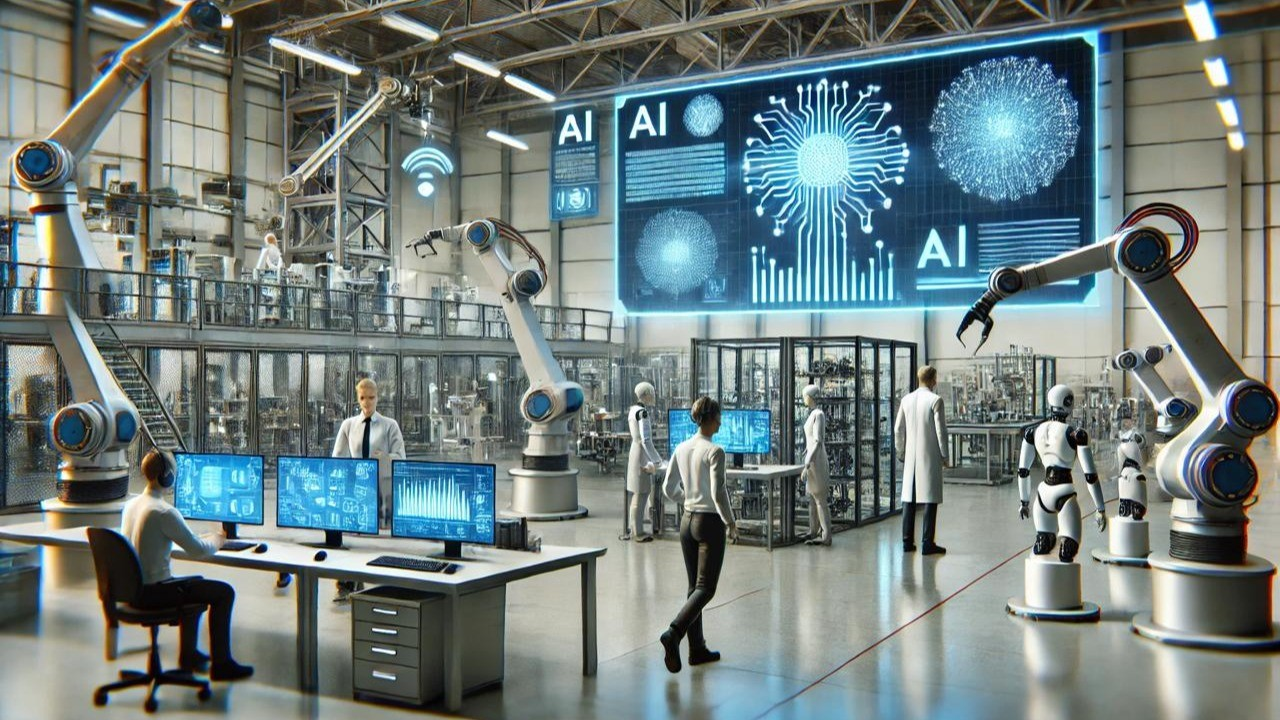
Artificial intelligence is changing the way factories operate, and the transformation is no longer limited to large industrial companies. In 2026, AI Small Factory manufacturers and SMEs are increasingly using AI, automation, connected sensors, robotics, and data analytics to improve production and compete in changing markets.
An AI small factory combines artificial intelligence with manufacturing equipment, software, sensors, and human expertise. Instead of relying entirely on manual monitoring and traditional processes, these factories can use real-time data to identify problems, predict maintenance requirements, improve quality, optimize production, and support faster decision-making.
Recent manufacturing research highlights AI, digital twins, robotics, industrial analytics, autonomous systems, and sustainable manufacturing as major areas of development for smart manufacturing.
What Is an AI Small Factory?
An AI small factory is a manufacturing facility that uses artificial intelligence and connected technologies to make production processes more intelligent and automated.
A traditional small factory may depend heavily on operators to monitor machines, inspect products, schedule maintenance, and respond to production problems. An AI-enabled factory can collect information continuously and use software to identify patterns and recommend or perform appropriate actions.
Typical technologies include:
- Artificial intelligence and machine learning
- Industrial IoT sensors
- Computer vision
- Predictive maintenance
- Robotic automation
- Digital twins
- Cloud and edge computing
- Production analytics
- Automated quality inspection
- AI-powered planning and scheduling
The goal is not necessarily to replace employees. Instead, AI can help workers make faster, more informed decisions while automating repetitive or data-intensive tasks.
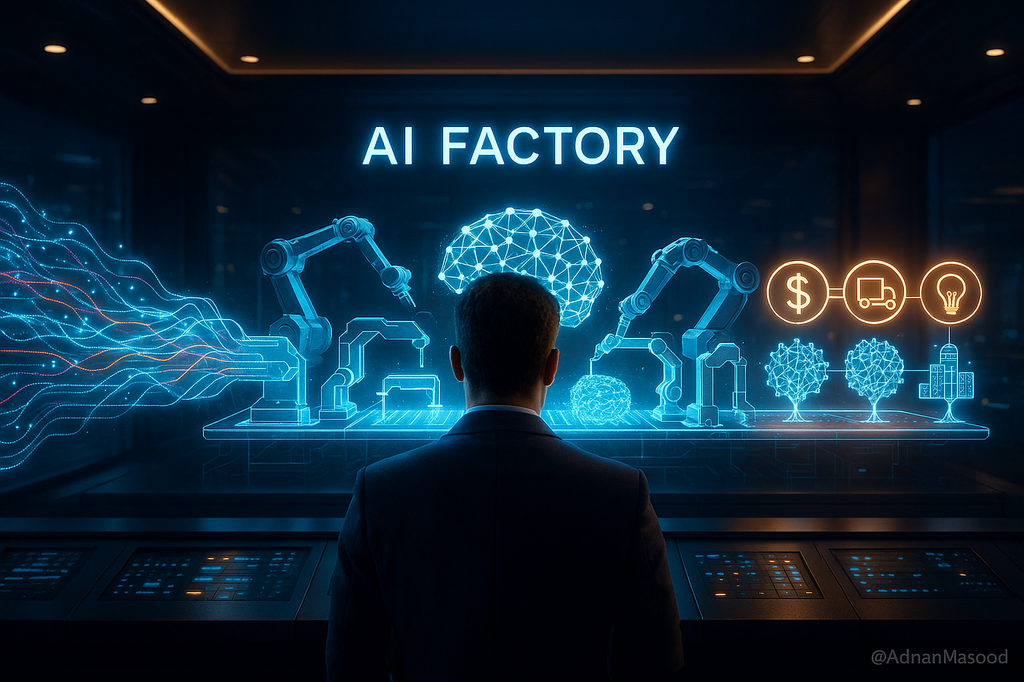
Why AI Matters for Small Manufacturing Businesses in 2026
For many small manufacturers, competing with larger companies requires better productivity without simply increasing labor and equipment costs.
Smart factory technologies are becoming more accessible because of cloud platforms, modular automation, connected sensors, and increasingly flexible AI tools. This is making digital manufacturing more practical for smaller businesses than it was in the past.
AI can help small factories address several common challenges:
1. Rising Production Costs
AI can analyze production data to identify inefficient processes, excessive machine usage, energy waste, and recurring production problems.
This information can help managers determine where improvements can have the greatest impact.
2. Machine Downtime
Unexpected equipment failures can be particularly expensive for small factories because they may have fewer backup machines and limited production capacity.
Predictive maintenance systems analyze machine data to identify unusual patterns before a major failure occurs.
3. Quality Control
Computer vision can inspect products using cameras and AI models. These systems can identify defects, inconsistencies, or quality issues during production.
AI-based inspection is already being applied in manufacturing environments, including cases where AI-supported inspection has helped reduce inspection time and improve throughput.
4. Labor Constraints
Automation can take over repetitive tasks while allowing employees to focus on supervision, maintenance, problem-solving, and higher-value activities.
This creates an environment where humans and machines work together rather than treating automation as a completely human-free production model.
Key Technologies Behind an AI Small Factory
AI-Powered Production Analytics
Manufacturing generates large amounts of data from machines, sensors, production systems, and quality-control processes.
AI can analyze this information to identify patterns and provide insights about:
- Production efficiency
- Machine performance
- Product quality
- Energy consumption
- Material usage
- Production bottlenecks
- Maintenance requirements
Instead of simply collecting data, an AI system can turn that data into operational information.
Predictive Maintenance
Predictive maintenance is one of the most practical AI applications for manufacturing.
Sensors can monitor factors such as:
- Temperature
- Vibration
- Pressure
- Machine speed
- Electrical consumption
- Operating cycles
AI models can analyze these signals and identify unusual behavior.
For example, if a motor begins producing vibration patterns associated with previous failures, the system can alert maintenance personnel before the equipment experiences a serious breakdown.
This approach can help reduce unplanned downtime and make maintenance scheduling more efficient.
AI Computer Vision for Quality Control
Computer vision allows cameras and AI software to inspect products automatically.
A small factory could use AI vision systems to detect:
- Surface defects
- Incorrect assembly
- Missing components
- Scratches
- Packaging problems
- Incorrect dimensions
- Product inconsistencies
The technology can be especially useful for repetitive inspections where human workers may experience fatigue.
AI-supported inspection is also becoming more capable of working with limited manufacturing data through techniques such as synthetic data generation.
Robotics and Automation
Robots have traditionally been associated with large factories, but smaller manufacturers can increasingly use collaborative robots and modular automation systems.
AI can improve robotic systems by helping them understand visual information, adapt to changing conditions, and perform more flexible tasks.
Potential applications include:
- Material handling
- Packaging
- Assembly
- Sorting
- Palletizing
- Machine tending
- Product inspection
The combination of AI and robotics is also expanding beyond traditional automotive manufacturing into other industrial sectors.
Digital Twins for Small Factories
A digital twin is a virtual representation of a physical machine, production process, or manufacturing environment.
Small manufacturers can use digital twins to simulate production changes before applying them to real equipment.
For example, a factory could test:
- A new production schedule
- Machine configuration
- Maintenance strategy
- Process changes
- Production capacity
- Energy optimization
Research published in 2026 shows growing interest in combining AI and digital twins for small-batch manufacturing, including real-time monitoring, process control, fault management, and automated machine calibration.
AI and Small-Batch Manufacturing
Small-batch production often requires flexibility because manufacturers may produce different products or customized orders in relatively small quantities.
Traditional automation can struggle when production changes frequently.
AI can help by supporting dynamic scheduling, process monitoring, quality control, and production adjustments.
This is particularly important for SMEs that need to balance customization with efficient production.
Research on AI and digital twins for small-batch manufacturing identifies fragmented systems, limited data, and skills constraints as important challenges, while proposing more integrated approaches to real-time manufacturing intelligence.
AI-Powered Inventory and Supply Chain Management
An AI small factory can also use intelligent systems beyond the production floor.
AI can analyze:
- Historical demand
- Customer orders
- Inventory levels
- Supplier performance
- Delivery schedules
- Material consumption
This can help manufacturers make more informed purchasing and inventory decisions.
For example, if an AI system identifies that a particular component is regularly consumed faster than expected, management can receive an early warning before inventory becomes critically low.
Smart Energy Management
Energy can represent a significant operating cost for manufacturing businesses.
AI can monitor energy consumption across machines and production processes to identify unusual usage and opportunities for optimization.
A smart factory may analyze:
- Machine electricity consumption
- Production schedules
- Peak demand
- Equipment efficiency
- Heating and cooling requirements
AI can then support decisions about when machines should operate and where energy consumption can potentially be reduced.
Energy efficiency is becoming increasingly important as industrial production becomes more digitally connected and electricity demand grows.
AI Agents in Manufacturing
One emerging development in 2026 is the use of AI agents in industrial environments.
Instead of simply displaying information, an AI agent can potentially coordinate multiple steps in a workflow.
For example, an industrial AI system could:
- Detect an abnormal machine condition.
- Analyze historical machine data.
- Identify a possible cause.
- Check maintenance records.
- Recommend an action.
- Create a maintenance task.
- Notify the responsible employee.
Human oversight remains important, especially when decisions affect safety, equipment, or product quality.
Research on large language models in smart manufacturing emphasizes human-in-the-loop systems and identifies validation, uncertainty, trust, and real-time integration as continuing challenges.
Benefits of an AI Small Factory
Implementing AI can provide several potential benefits.
Higher Productivity
Automation and intelligent scheduling can help factories use machines and workers more efficiently.
Better Product Quality
AI-powered inspection can identify defects more consistently and support faster quality-control processes.
Reduced Downtime
Predictive maintenance can help identify potential equipment problems before they cause major interruptions.
Faster Decision-Making
Real-time production data gives managers greater visibility into factory operations.
Greater Flexibility
AI can help manufacturers adjust production schedules and processes when customer requirements change.
Improved Resource Management
AI analytics can help monitor materials, energy, machine capacity, and inventory.
Challenges of Building an AI Small Factory
Despite the benefits, AI adoption is not automatic or risk-free.
Data Quality
AI systems depend heavily on reliable data. Poor-quality or incomplete data can reduce the usefulness of AI predictions.
Integration With Older Machines
Many small factories still operate equipment that was not designed to connect to modern digital systems.
Connecting legacy machinery with sensors, software, and AI platforms can require additional hardware and integration work.
Cost
Although AI technology is becoming more accessible, businesses still need to consider spending on sensors, software, networking, automation equipment, training, and maintenance.
Cybersecurity
Connected factories create additional digital entry points. Manufacturing companies therefore need appropriate cybersecurity controls to protect machines, production data, and business systems.
Employee Training
Workers need the skills to operate, monitor, and troubleshoot increasingly digital production environments.
Human Oversight
AI should not automatically control every manufacturing decision. High-risk operations require appropriate validation, safety systems, and human accountability.
NIST’s 2026 smart-manufacturing roadmap specifically highlights data management, integration with different sensing and control systems, and trustworthy and reliable AI as major challenges.
How Small Businesses Can Start With AI
Small manufacturers do not necessarily need to transform their entire factory at once.
A practical approach is to start with one measurable problem.
Step 1: Identify a Production Problem
Look for an area where the business experiences measurable losses, such as downtime, defects, excessive energy use, or manual data entry.
Step 2: Check Available Data
Determine whether the factory already collects useful machine, production, quality, or inventory data.
Step 3: Choose One AI Use Case
Possible starting points include:
- Predictive maintenance
- AI quality inspection
- Production forecasting
- Inventory optimization
- Energy monitoring
Step 4: Run a Small Pilot
Test the technology on one machine, production line, or process.
A focused pilot makes it easier to measure results and identify integration problems.
Step 5: Measure the Results
Track practical metrics such as:
- Downtime
- Production output
- Defect rates
- Maintenance costs
- Energy consumption
- Labor hours
- Production cycle time
Step 6: Scale Gradually
If the initial system produces reliable results, the factory can expand the technology to additional machines or processes.
Manufacturing Leadership Council recommends prioritizing use cases based on business impact, data availability, and time-to-value rather than attempting to digitize everything simultaneously.
The Future of AI Small Factories
The small factory of the future is likely to become increasingly connected, automated, and data-driven.
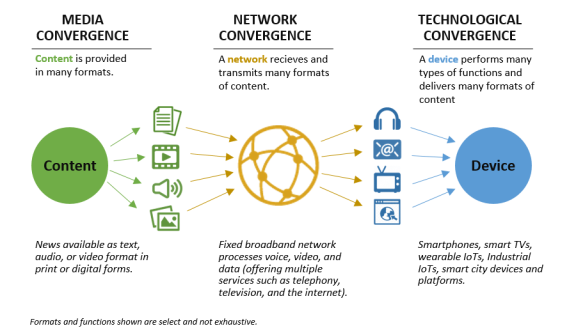
AI, robotics, digital twins, edge computing, computer vision, and industrial IoT are converging into integrated manufacturing systems.
The World Economic Forum’s 2026 Global Lighthouse Network highlighted trends including end-to-end intelligence, human-machine collaboration, and sustainability across advanced industrial sites.
At the same time, AI is moving beyond simple analytics toward systems that can assist with operational decisions. This could make smaller factories more adaptable without requiring the massive infrastructure traditionally associated with advanced manufacturing.
The key will be balancing automation with human expertise. The most useful AI small factory is not necessarily the one with the most robots or AI models. It is the one that applies technology to real operational problems while maintaining reliability, safety, and human oversight.
Conclusion
AI Small Factory: Smarter Manufacturing and Automation in 2026 represents a shift toward more intelligent, flexible, and connected production.
AI can help small manufacturers improve quality control, predict equipment failures, optimize production, manage inventory, monitor energy consumption, and support employees with real-time insights.
The technology is becoming more accessible, but successful adoption requires more than installing AI software. Businesses need reliable data, suitable infrastructure, trained employees, cybersecurity, clear goals, and measurable outcomes.
For small manufacturers, the practical path forward is to start with a specific business problem, test AI on a manageable scale, measure the results, and expand successful solutions gradually. In 2026, this approach can help smaller factories participate in the broader transition toward smart manufacturing and Industry 4.0.


Post Comment