Uber AI Technology: The Complete Guide to AI-Powered Transportation
Introduction
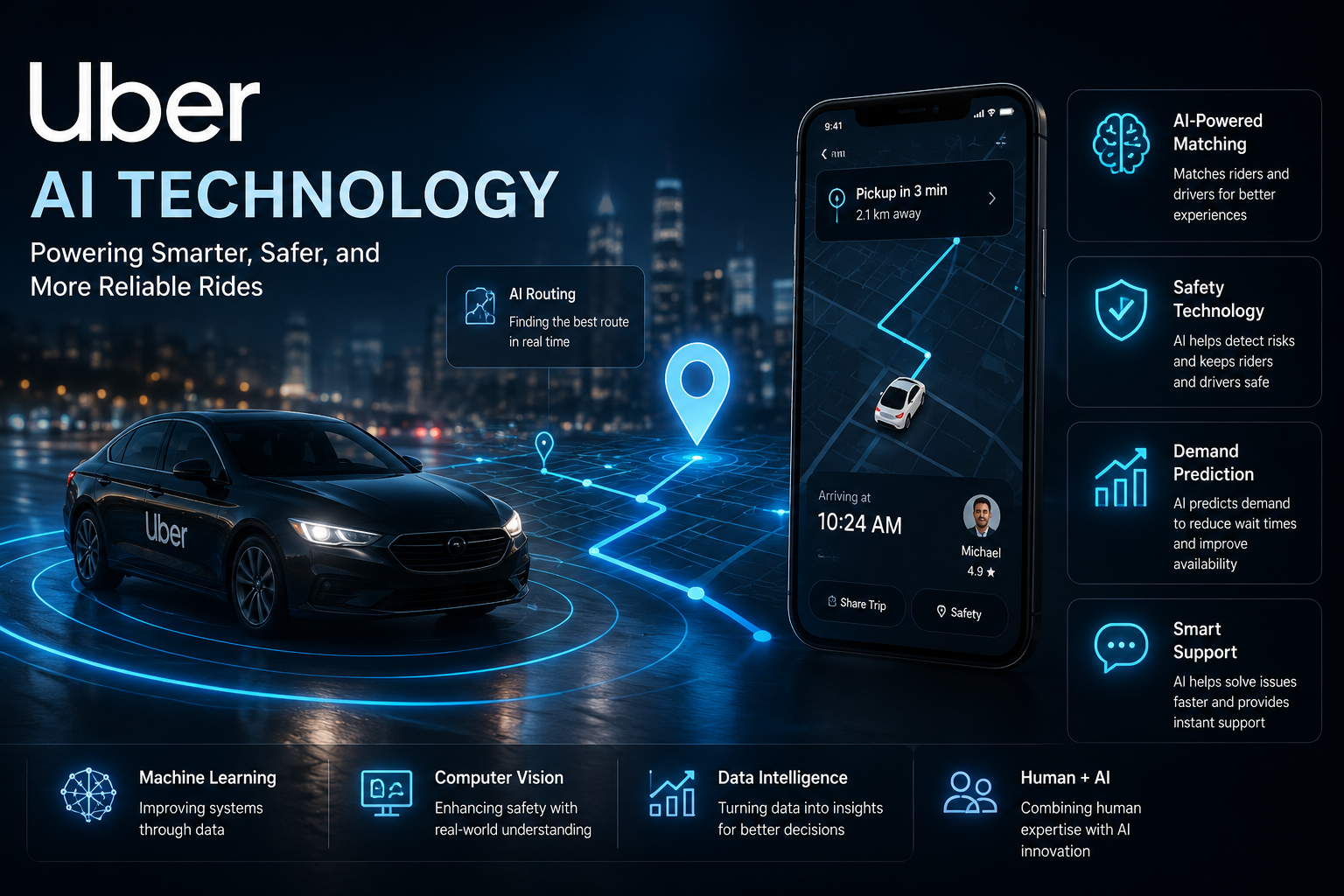
Uber has become one of the most recognized examples of how artificial intelligence can transform the transportation industry. By combining AI, machine learning, data analytics, and automation, Uber AI Technology improves ride matching, pricing, safety, navigation, and customer experiences.
Uber AI technology helps the platform process millions of real-time data points, predict demand, optimize routes, and connect drivers with riders more efficiently. AI-powered mobility solutions are becoming crucial for developing quicker, safer, and more intelligent travel experiences as transportation continues to change.
What Is Uber AI Technology?
Uber AI technology refers to the collection of artificial intelligence systems, machine learning models, and data-driven tools used to improve the company’s ride-sharing ecosystem.
These AI solutions analyze information such as:
- Rider requests
- Driver availability
- Traffic conditions
- Weather patterns
- Location data
- Historical travel trends
- User behavior
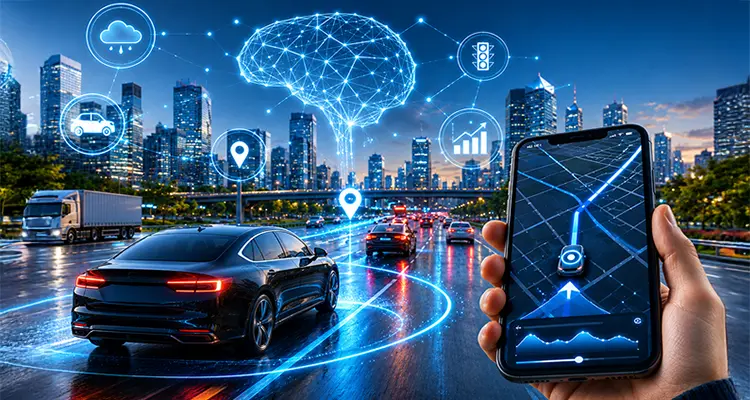
Uber’s AI systems use this data to make judgements in real time that increase dependability and efficiency.
How Uber Uses Artificial Intelligence
1. AI-Powered Ride Matching
One of Uber’s most important AI applications is intelligent ride matching. To discover the greatest fit, machine learning algorithms examine rider requests and available drivers.
AI considers factors such as:
- Driver location
- Estimated arrival time
- Traffic conditions
- Driver availability
- Rider preferences
This helps reduce waiting times and improves the overall ride experience.
2. Dynamic Pricing and Demand Prediction
Uber uses AI models to predict demand and adjust pricing based on real-time conditions.
AI analyzes:
- Number of available drivers
- Rider demand levels
- Events and holidays
- Weather changes
- Traffic patterns
This demand forecasting helps maintain balance between riders and drivers while improving marketplace efficiency.
3. AI Route Optimization
Uber uses artificial intelligence to provide smarter navigation and route recommendations.
AI-powered systems evaluate:
- Traffic congestion
- Road conditions
- Travel time predictions
- Accidents and delays
- Alternative routes
This allows drivers to reach destinations faster and helps riders receive more accurate arrival estimates.
4. AI for Safety and Security
Safety is a major area where Uber applies AI technology. Machine learning models help detect unusual activity and identify potential risks.
AI-based safety features can support:
- Fraud detection
- Identity verification
- Suspicious account activity monitoring
- Trip anomaly detection
- Driver and rider protection systems
These technologies help create a safer transportation environment.
5. AI Chatbots and Customer Support
Uber employs AI-powered customer support systems to promptly address frequent consumer enquiries.
AI assistants can help with:
- Ride issues
- Payment questions
- Account problems
- Refund requests
- Driver support
Automation allows Uber to provide faster responses while reducing support workload.
Uber AI and Autonomous Driving Technology
Uber has explored autonomous vehicle technology as part of its long-term transportation vision. AI is essential to self-driving systems since it allows cars to:
- Understand surroundings
- Detect objects
- Predict movement
- Make driving decisions
- Improve navigation
Autonomous mobility relies on advanced AI models, computer vision, sensors, and real-time data processing.
Benefits of Uber AI Technology
Improved Efficiency
AI helps Uber optimize operations by reducing delays, improving driver utilization, and managing large-scale transportation networks.
Better User Experience
AI personalization improves recommendations, pricing transparency, and ride reliability.
Enhanced Safety
Monitoring systems with AI capabilities assist in identifying hazards and promote safer transportation services.
Cost Optimization
Through improved resource allocation and predictive analysis, AI lowers operating expenses.
Smarter Decision-Making
Data-driven insights allow Uber to improve services and adapt quickly to changing market conditions.
Challenges of Using AI in Transportation
Despite its advantages, Uber AI technology faces several challenges:
Data Privacy Concerns
AI systems require large amounts of user and location data, creating the need for strong privacy protections.
Algorithmic Bias
AI models must be carefully designed to avoid unfair outcomes in pricing, availability, or decision-making.
Technical Complexity
Building and maintaining large-scale AI systems requires advanced infrastructure and continuous improvements.
Regulatory Challenges
Transportation solutions driven by AI must adhere to evolving safety, data usage, and autonomous car rules.
The Future of Uber AI Technology
The future of Uber AI will likely focus on more advanced automation, smarter mobility solutions, and deeper personalization.
Emerging AI developments may improve:
- Autonomous transportation
- Predictive maintenance
- Smart city integration
- AI-powered logistics
- Personalized travel experiences
- Sustainable transportation planning
As AI continues to evolve, Uber’s technology approach demonstrates how artificial intelligence can reshape the future of mobility.
Conclusion
Uber AI technology is a potent fusion of machine learning, real-time data analytics, and artificial intelligence. AI has become an essential component of contemporary transport, from matching drivers and passengers to streamlining routes and enhancing safety.
As the industry moves toward smarter and more automated mobility solutions, AI-powered platforms like Uber will continue influencing how people travel, connect, and experience transportation in the future.


Post Comment