The GenAI Divide: Opportunities, Challenges, and the Future of Business AI

Introduction
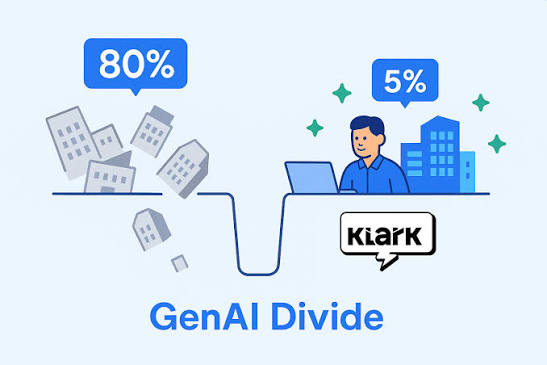
The way organizations function, create, and compete is being revolutionized by Generative Artificial Intelligence (GenAI). From automating repetitive tasks to generating content, analyzing data, and improving customer experiences, GenAI is becoming a key driver of digital transformation. However, not every organization is adopting AI at the same pace. This growing gap—often referred to as the GenAI Divide—separates businesses that effectively integrate AI into their operations from those that struggle with adoption due to technical, financial, or organizational challenges.
Understanding this divide is essential for companies seeking to remain competitive in an increasingly AI-driven economy.
What Is the GenAI Divide?
The GenAI Divide refers to the gap between organizations that successfully adopt and benefit from generative AI technologies and those that face barriers to implementation. Businesses on the leading edge leverage AI to improve efficiency, innovation, and decision-making, while others may lack the resources, expertise, infrastructure, or governance needed to realize similar benefits.
Why the GenAI Divide Exists
Several factors contribute to differences in AI adoption across organizations:
Limited Technical Expertise
Many companies lack workers with expertise in machine learning, data science, or artificial intelligence.
High Implementation Costs
Deploying AI solutions often requires investments in software, infrastructure, integration, and employee training.
Data Challenges
AI systems depend on high-quality, well-managed data. Organizations with incomplete or poorly organized data may struggle to achieve reliable results.
Legacy Systems
Older IT infrastructure can make it difficult to integrate modern AI technologies.
Regulatory and Ethical Concerns
Organizations must address issues such as privacy, security, transparency, intellectual property, and responsible AI use.
Opportunities Created by Generative AI
1. Increased Productivity
GenAI automates repetitive tasks such as drafting documents, summarizing information, creating reports, and responding to routine customer inquiries, allowing employees to focus on higher-value work.
2. Smarter Decision-Making
AI can analyze large volumes of structured and unstructured data, helping leaders identify trends, evaluate risks, and support strategic decisions.
3. Enhanced Customer Experience
Businesses can use AI-powered virtual assistants and personalized recommendations to provide faster, more relevant customer support and improve engagement.
4. Faster Innovation
GenAI accelerates idea generation, software development, product design, and content creation, reducing time to market for new products and services.
5. Cost Optimization
Automation can improve operational efficiency by reducing manual effort, streamlining workflows, and minimizing repetitive administrative tasks.
6. Competitive Advantage
Businesses that strategically use AI can create new business models, increase customer happiness, and react to market developments faster.
Challenges of Business AI Adoption
Data Privacy and Security
When utilizing AI technologies, businesses must safeguard sensitive data and adhere to any data protection regulations.
AI Bias and Fairness
AI models may reflect biases present in training data, making testing, monitoring, and governance essential for fair outcomes.
Workforce Transformation
Organizations must invest in employee training, reskilling, and change management as AI alters job responsibilities.
Integration Complexity
Connecting AI with existing enterprise systems, workflows, and databases can require significant planning and technical expertise.
Accuracy and Reliability
Sometimes, information produced by generative AI may be false or misleading.Human review remains important for critical decisions and high-stakes applications.
Industries Leading AI Adoption
Generative AI is being adopted across many sectors, including:
- Healthcare – Clinical documentation, research support, and operational efficiency.
- Finance – Financial analysis, customer service, and fraud detection.
- Manufacturing – Predictive maintenance, quality control, and process optimization.
- Retail and E-commerce – Personalized shopping experiences and demand forecasting.
- Education – Adaptive learning, tutoring support, and content development.
- Marketing – Campaign creation, customer insights, and content generation.
Strategies to Bridge the GenAI Divide
Develop an AI Strategy
Align AI projects with quantifiable results and commercial objectives.
Invest in Employee Skills
Provide training in AI literacy, prompt writing, data analysis, and responsible AI practices.
Improve Data Quality
Establish strong data governance to ensure AI systems use accurate, relevant, and secure information.
Start with Pilot Projects
Test AI in targeted business processes before expanding to larger deployments.
Implement Responsible AI Governance
Create policies for transparency, accountability, privacy, and human oversight.
Partner with AI Experts
Collaborate with technology providers and consultants when specialized expertise is needed.
The Future of Business AI
It is anticipated that the upcoming generation of business AI would comprise:
- More personalized AI assistants for employees.
- AI agents that can handle multi-step, complex business workflows.
- Greater collaboration between humans and AI rather than complete automation.
- Increased use of multimodal AI that can process text, images, audio, and video together.
- Stronger AI governance frameworks focused on safety, compliance, and trust.
- Wider adoption of AI across organizations of all sizes as tools become more accessible.
Best Practices for Successful AI Adoption
- Define clear business objectives before implementing AI.
- Prioritize data quality and cybersecurity.
- Keep humans involved in important decisions.
- Measure AI performance using meaningful business metrics.
- Continuously update AI systems and governance policies.
- Encourage responsible and ethical AI use throughout the organization.
Conclusion
The GenAI Divide highlights the growing difference between organizations that effectively harness generative AI and those still facing barriers to adoption. While challenges such as cost, data quality, workforce readiness, and governance remain, the opportunities are substantial. Businesses that invest in responsible AI strategies, employee development, and strong data practices will be better positioned to improve productivity, drive innovation, and compete successfully in an increasingly AI-powered business landscape.



Post Comment