AI-Powered Robots in Smart Manufacturing: Improving Quality, Speed, and Safety
Introduction
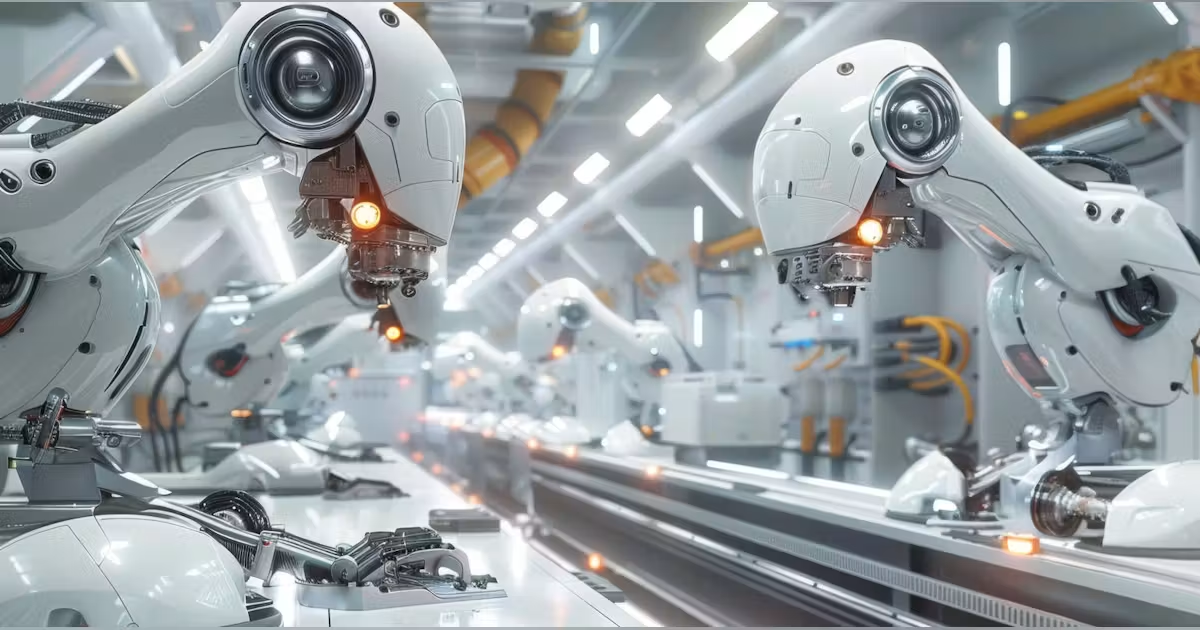
Artificial Intelligence (AI) is transforming the manufacturing industry by enabling robots to perform tasks with greater precision, speed, and intelligence. Unlike traditional industrial robots that follow fixed programming, AI-powered robots can learn from data, adapt to changing conditions, and make real-time decisions. This combination of robotics and AI helps manufacturers improve product quality, increase productivity, and create safer workplaces.
What Are AI-Powered Robots?
AI-powered robots are intelligent machines equipped with artificial intelligence technologies such as machine learning, computer vision, natural language processing, and advanced sensors. These robots can analyze information, recognize patterns, make decisions, and continuously improve their performance without constant human intervention.

How AI-Powered Robots Work
1. Data Collection
Robots gather information from cameras, sensors, laser scanners, and connected manufacturing equipment.
2. AI Processing
Machine learning algorithms analyze production data to identify patterns, detect defects, and optimize operations.
3. Decision Making
The robot determines the best action based on real-time information, improving efficiency and accuracy.
4. Continuous Learning
AI systems learn from previous tasks and production outcomes, allowing robots to improve performance over time.
Benefits of AI-Powered Robots in Smart Manufacturing
1. Improved Product Quality
AI robots perform highly accurate inspections and detect defects that may be difficult for the human eye to identify.
Quality improvements include:
- Fewer production errors
- Better product consistency
- Automated quality inspections
- Reduced waste
- Higher customer satisfaction
2. Faster Production
AI robots can operate continuously with minimal downtime.
Speed advantages include:
- Faster assembly lines
- Reduced production delays
- 24/7 operation
- Shorter manufacturing cycles
- Increased production capacity
3. Enhanced Workplace Safety
Robots handle hazardous, repetitive, and physically demanding tasks, reducing the risk of workplace injuries.
Safety improvements include:
- Handling toxic materials
- Working in high-temperature environments
- Lifting heavy equipment
- Performing dangerous inspections
- Reducing human exposure to hazardous conditions
4. Predictive Maintenance
AI monitors machine performance and predicts equipment failures before they occur.
Benefits include:
- Reduced downtime
- Lower maintenance costs
- Longer equipment lifespan
- Improved production reliability
5. Increased Productivity
AI robots automate repetitive tasks while employees focus on higher-value activities such as innovation, quality control, and process improvement.
Key AI Technologies Used
Machine Learning
Helps robots improve their performance through experience and production data.
Computer Vision
Allows robots to recognize objects, inspect products, and detect manufacturing defects.
Deep Learning
Processes complex manufacturing data to improve decision-making accuracy.
Internet of Things (IoT)
Connects robots with machines, sensors, and production systems for real-time communication.
Edge Computing
Enables robots to process data locally, reducing delays and supporting faster decisions.
Applications of AI Robots in Manufacturing
Automotive Industry
- Vehicle assembly
- Welding
- Painting
- Parts inspection
- Material handling
Electronics Manufacturing
- Circuit board assembly
- Component placement
- Product testing
- Precision soldering
Food and Beverage Industry
- Packaging
- Quality inspection
- Sorting
- Labeling
- Palletizing
Pharmaceutical Manufacturing
- Medicine packaging
- Sterile production
- Quality control
- Laboratory automation
Metal and Heavy Industries
- Welding
- Cutting
- Grinding
- Machine tending
- Heavy material transport
Features of Smart Manufacturing Robots
- AI-powered vision systems
- Real-time monitoring
- Autonomous navigation
- Predictive maintenance
- Human-robot collaboration (Cobots)
- Automatic defect detection
- Intelligent scheduling
- Data analytics
- Cloud connectivity
- Self-learning capabilities
Challenges
Although AI robots offer many advantages, manufacturers also face several challenges:
- High initial investment
- Cybersecurity risks
- Integration with legacy systems
- Workforce training requirements
- Data privacy concerns
- Ongoing maintenance and software updates
Future Trends
The future of AI-powered manufacturing robots includes:
- More collaborative robots working alongside people
- AI-driven digital twins for factory simulation
- Autonomous mobile robots (AMRs)
- 5G-enabled industrial automation
- Sustainable and energy-efficient manufacturing
- Generative AI for production planning and optimization
- Advanced predictive analytics for supply chain management
Best Practices for Successful Implementation
- Identify tasks suitable for automation.
- Start with pilot projects before large-scale deployment.
- Train employees to work effectively with AI systems.
- Maintain strong cybersecurity measures.
- Continuously monitor robot performance and update AI models.
- Combine human expertise with robotic automation for the best results.
Conclusion
Smart manufacturing is changing because to AI-powered robots that provide safer working conditions, quicker production, and better product quality. Their ability to learn, adapt, and make data-driven decisions enables manufacturers to improve efficiency, reduce costs, and remain competitive in a rapidly evolving industrial landscape. As AI, robotics, and connected technologies continue to advance, intelligent automation will play an increasingly important role in building the factories of the future.


Post Comment