AI Skill Development in Tech: Trends, Benefits, and Best Practices
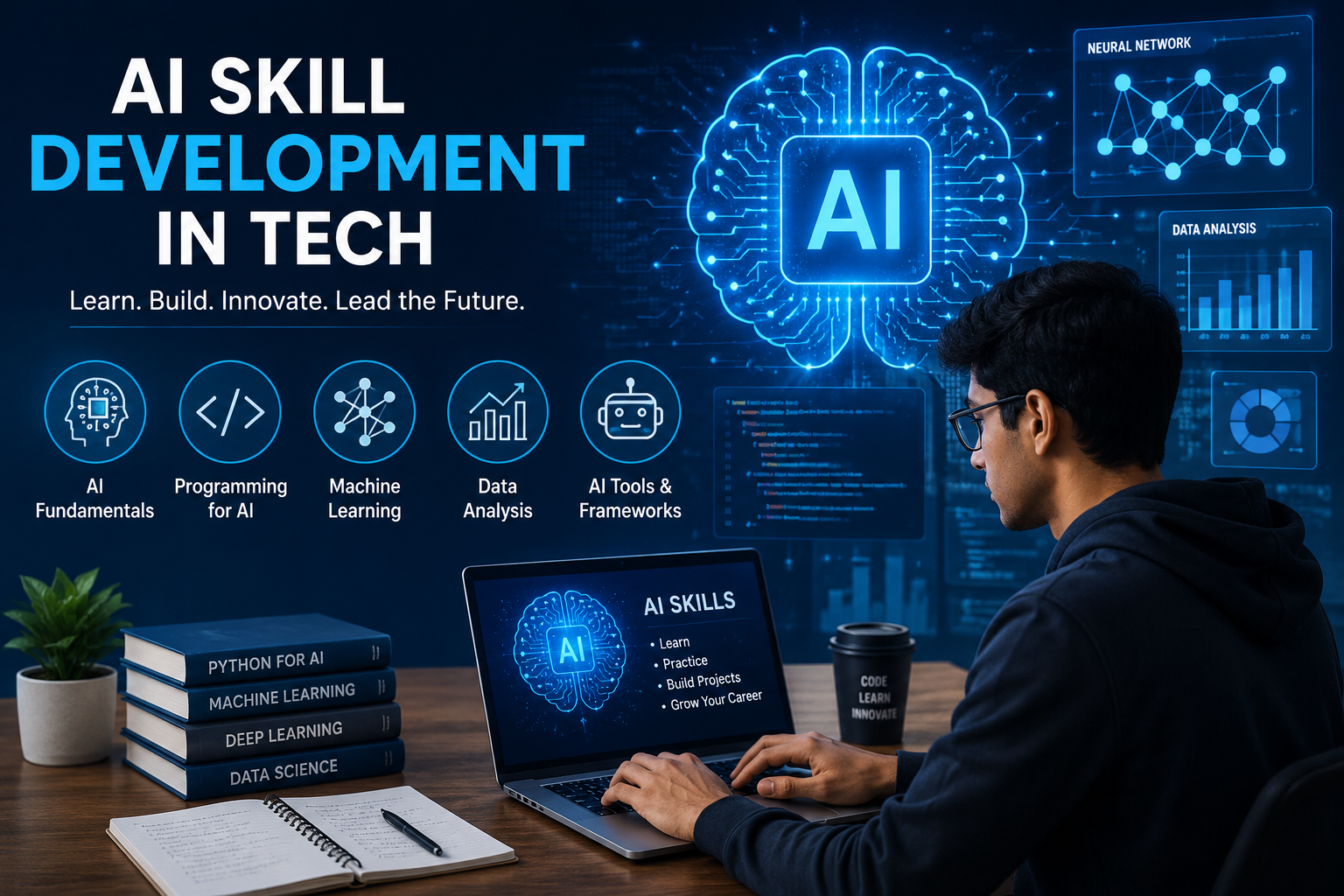
Artificial intelligence (AI) is transforming the technology industry by changing how people learn, work, and develop new skills. Technology workers now have access to increasingly intelligent tools that speed up, enhance, and improve learning, such as AI-powered coding assistants and tailored learning platforms. Developing AI-related abilities is now crucial AI Skill Development in Tech for long-term success and professional advancement as companies continue to use AI-driven solutions.
What Is AI Skill Development in Tech?
AI skill development in tech refers to the process of learning and improving technical and professional skills with the help of artificial intelligence. It entails developing proficiency in fields including cloud computing, cybersecurity, machine learning, data analysis, programming, and AI-assisted software development. AI-powered learning platforms analyze a learner’s progress and provide personalized recommendations, making education more efficient than traditional methods.

Latest Trends in AI Skill Development
1. Personalized Learning Experiences
AI platforms create customized learning paths based on an individual’s knowledge, strengths, and learning pace. This personalized approach helps learners focus on areas that need improvement while avoiding unnecessary repetition.
2. AI-Powered Coding Assistants
Modern AI coding tools assist developers by suggesting code, identifying bugs, generating documentation, and improving productivity. These tools help beginners learn programming faster while enabling experienced developers to work more efficiently.
3. Adaptive Learning Platforms
Adaptive learning systems continuously evaluate learner performance and adjust lessons accordingly. This ensures that users receive content suited to their current skill level.
4. Microlearning and Smart Content
AI supports short, focused learning modules that make it easier for professionals to acquire new skills during busy work schedules. Bite-sized lessons improve retention and encourage consistent learning.
5. Virtual Tutors and AI Chatbots
AI-powered tutors provide instant explanations, answer technical questions, and offer practice exercises at any time. This creates a flexible learning environment without requiring constant instructor support.
6. AI-Based Skill Assessments
Organizations increasingly use AI to evaluate employee skills, identify knowledge gaps, and recommend targeted training programs that improve workforce performance.
Benefits of AI Skill Development in Tech
Faster Learning
AI identifies learning gaps quickly and recommends relevant content, reducing the time needed to master new technologies.
Personalized Education
Each learner receives customized recommendations, making the learning process more engaging and effective.
Improved Productivity
AI tools automate repetitive tasks such as debugging, documentation, and code suggestions, allowing professionals to focus on problem-solving and innovation.
Better Career Opportunities
Employers increasingly seek professionals with AI-related knowledge. Learning AI skills improves employability and opens opportunities in software engineering, data science, cybersecurity, cloud computing, and automation.
Continuous Skill Improvement
AI systems assist professionals stay up to date with quickly evolving technologies by updating learning materials on a regular basis to reflect industry trends.
Cost-Effective Learning
Many AI-powered platforms offer affordable online courses, reducing the cost of acquiring advanced technical skills.
Best Practices for AI Skill Development
Set Clear Learning Goals
Identify the technical skills you want to develop, such as Python programming, machine learning, cloud computing, or data analytics.
Build Strong Fundamentals
Before studying advanced AI concepts, strengthen your understanding of programming, mathematics, statistics, and computer science basics.
Learn Through Hands-On Projects
Apply new knowledge by creating real-world projects, building applications, or contributing to open-source software. Practical experience reinforces theoretical concepts.
Use AI Responsibly
AI tools can improve productivity, but they should support—not replace—critical thinking and problem-solving. Always review AI-generated outputs for accuracy and quality.
Stay Updated
The AI landscape evolves quickly. Follow industry news, attend webinars, participate in developer communities, and regularly update your skills.
Develop Soft Skills
Technical expertise is important, but communication, teamwork, adaptability, and creative thinking remain valuable in AI-driven workplaces.
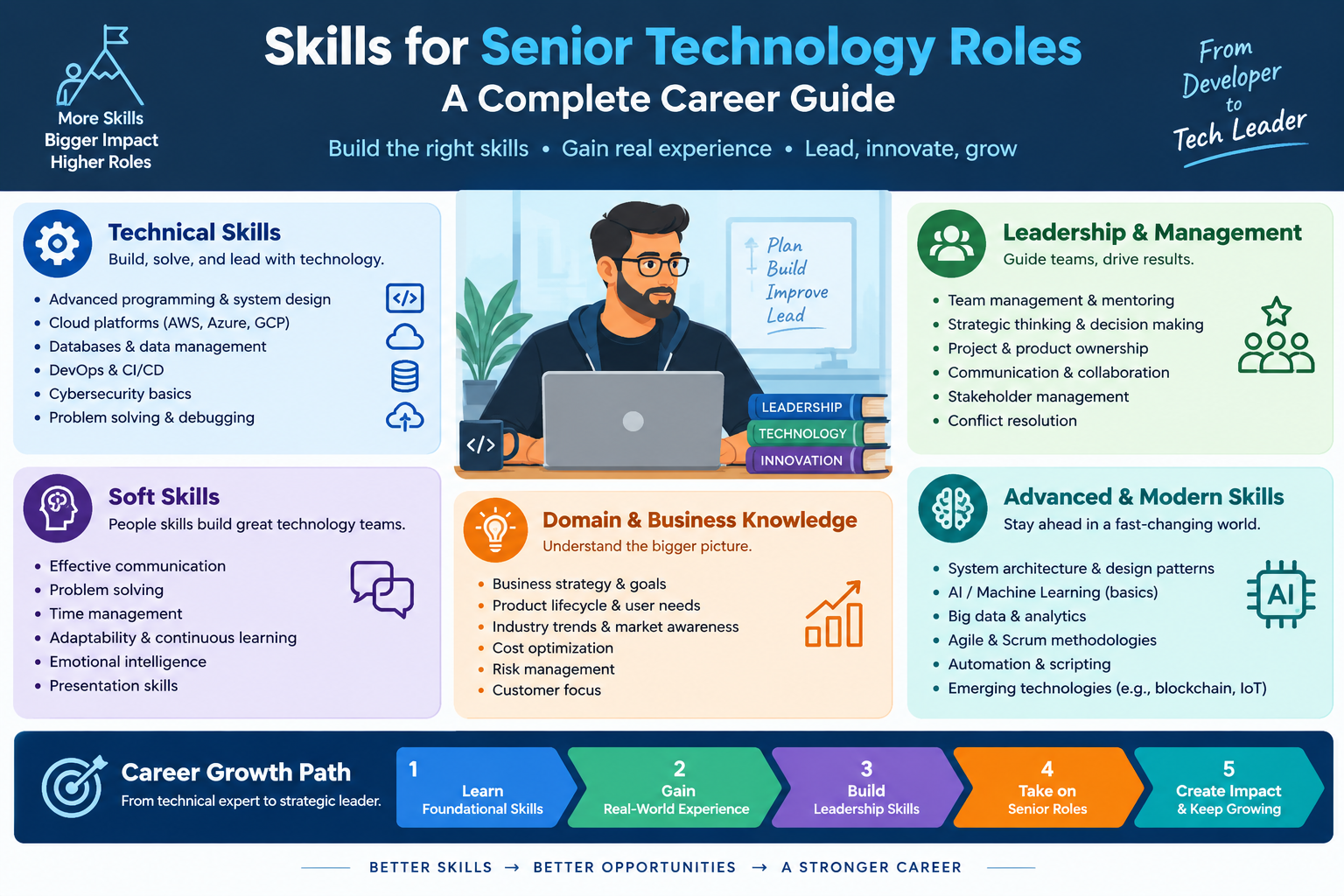
Essential Skills to Learn
To succeed in an AI-focused technology career, professionals should consider developing skills in:
- Python and other programming languages
- Machine learning fundamentals
- Data analysis and visualization
- Cloud computing
- Cybersecurity
- AI ethics and responsible AI
- Prompt engineering
- Automation and workflow optimization
- Problem-solving and critical thinking
Challenges of AI Skill Development
Despite its advantages, AI-based learning presents some challenges:
- Dependence on AI-generated recommendations
- Privacy and data security concerns
- The need for ongoing education because of the speed at which technology is developing
- Potential bias in AI-generated educational content
- Difficulty verifying AI-generated information without trusted sources
Recognizing these challenges helps learners use AI more effectively while maintaining independent judgment.
The Future of AI Skill Development
More immersive learning opportunities via virtual reality (VR), augmented reality (AR), intelligent simulations, and sophisticated AI tutors are probably in store for the future of AI skill development. Organizations are expected to invest further in personalized employee training, while educational institutions continue integrating AI into their curricula. Professionals who combine technical expertise with adaptability and lifelong learning will be well positioned for success.
Conclusion
AI skill development in tech is reshaping how individuals acquire knowledge and build successful careers. Learning is now more effective and accessible than ever thanks to personalized instruction, intelligent coding assistants, adaptive teaching, and ongoing skill evaluation. By following best practices, building practical experience, and staying informed about emerging technologies, learners can take full advantage of AI to remain competitive in the evolving technology industry.

Post Comment