AI Infrastructure Stocks: Everything You Need to Know in 2026
Introduction
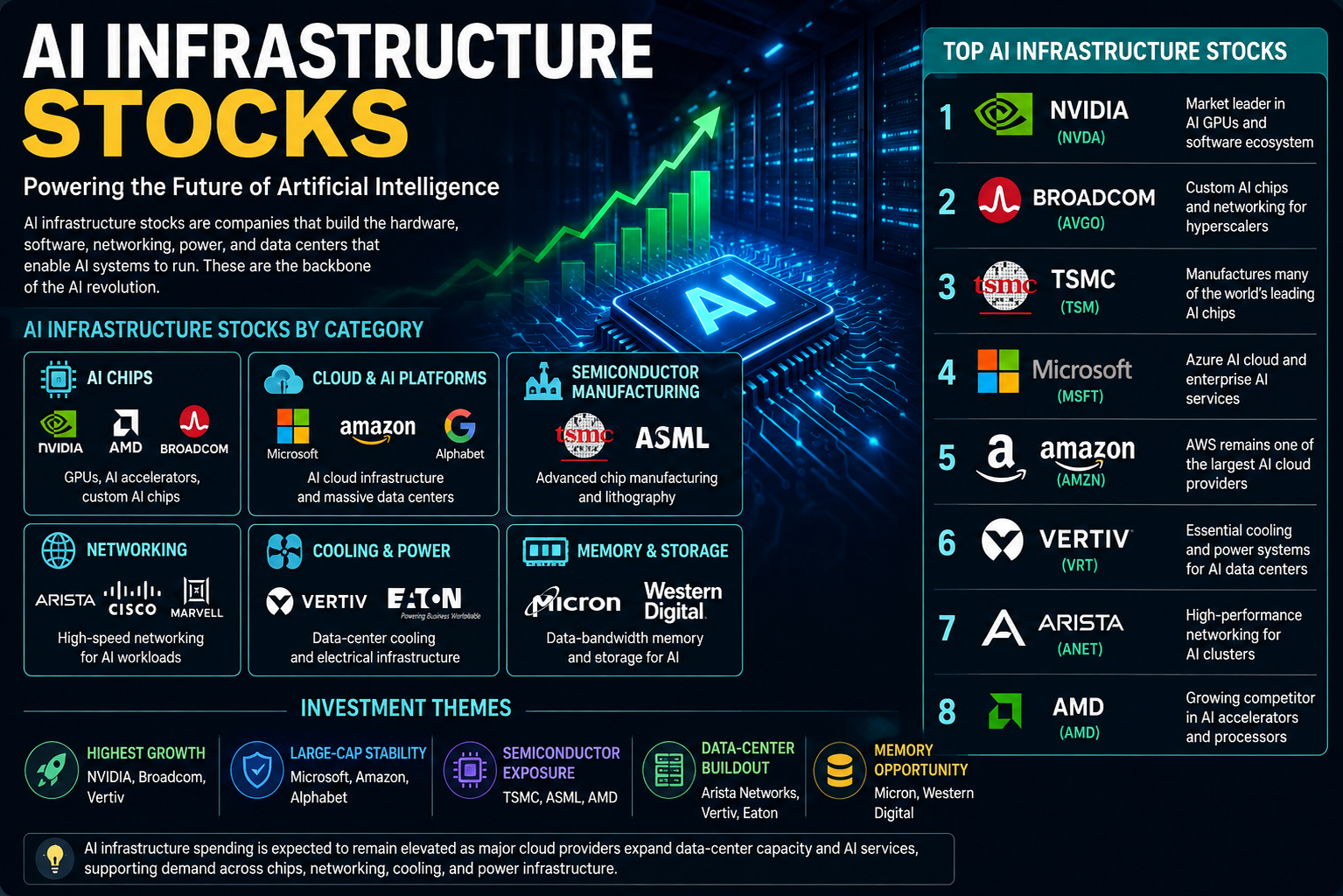
Artificial intelligence is transforming industries at an unprecedented pace, creating massive demand for the infrastructure that powers AI applications. From high-performance AI chips and cloud computing platforms to data centers, networking equipment, and advanced memory technologies, the companies building AI infrastructure are becoming critical players in the global technology ecosystem. As businesses make significant investments in automation, machine learning, and generative AI, AI Infrastructure Stocks have become a desirable sector for investors looking for long-term development prospects.
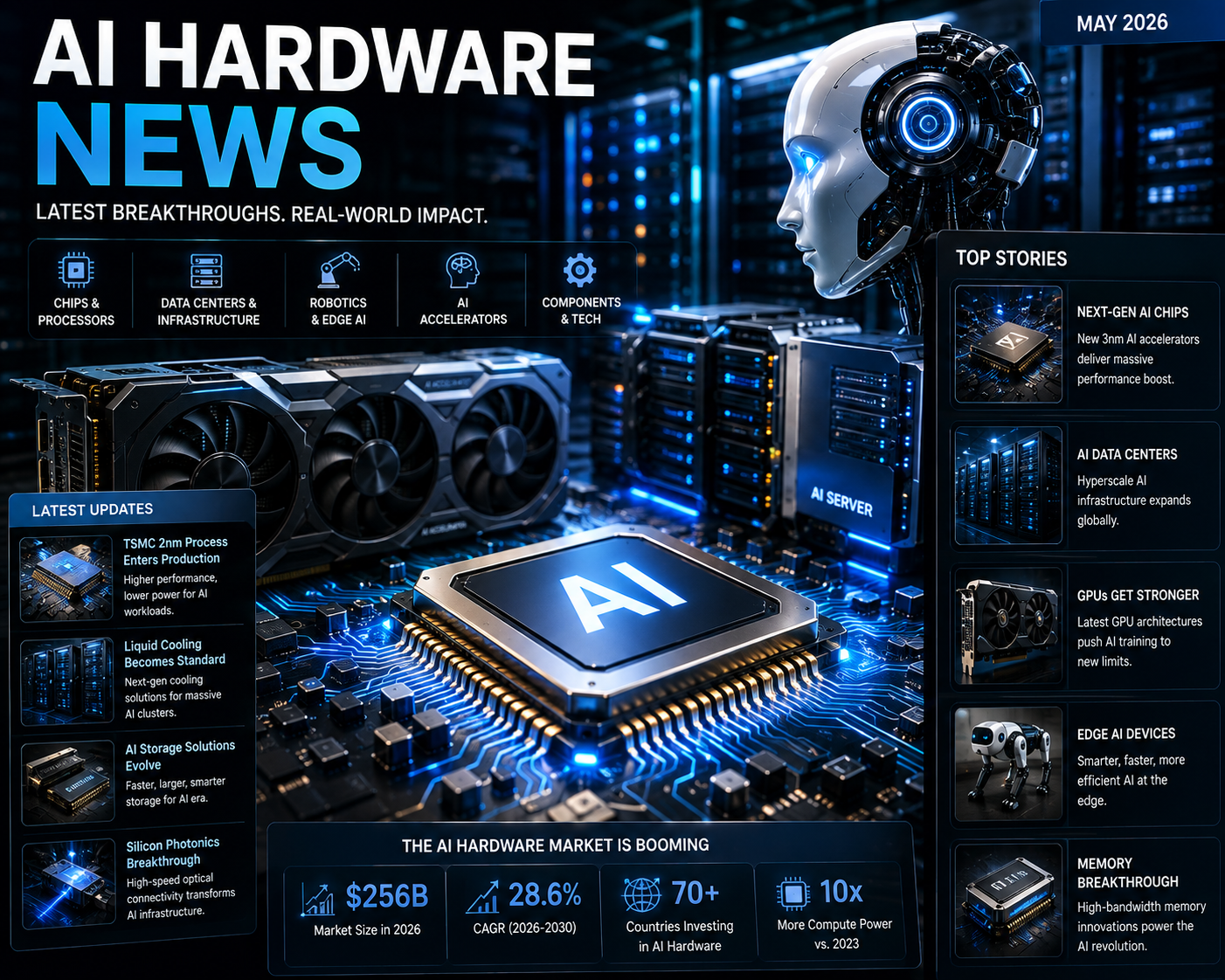
In 2026, AI infrastructure spending continues to accelerate as businesses expand AI capabilities across healthcare, finance, manufacturing, retail, transportation, and scientific research. The definition of AI infrastructure stocks, their significance, the major firms in the sector, investment opportunities, risks, and future trends are all covered in this guide.
What Are AI Infrastructure Stocks?
AI Infrastructure Stocks are shares of companies that develop and provide the hardware, software, networking, cloud services, and physical infrastructure required to build, train, deploy, and operate artificial intelligence systems.
These companies operate across several key sectors, including:
- AI semiconductor manufacturers
- GPU and AI accelerator developers
- Cloud computing providers
- Data center operators
- Networking equipment companies
- Memory and storage manufacturers
- AI server manufacturers
- Power and cooling technology providers
- Edge AI hardware companies
Rather than creating AI applications themselves, these businesses supply the technologies that make AI possible.
Why AI Infrastructure Is Important
Artificial intelligence models require enormous computing power, storage capacity, and networking bandwidth. As models become larger and more complex, demand for specialized infrastructure continues to grow.
AI infrastructure supports:
- Large Language Models (LLMs)
- Generative AI
- Machine learning
- Deep learning
- Autonomous vehicles
- Robotics
- Edge computing
- Healthcare AI
- Financial AI
- Scientific simulations
Without powerful infrastructure, modern AI applications would not be able to deliver fast, reliable, and scalable performance.
Types of AI Infrastructure Companies
Semiconductor Manufacturers
These companies design processors optimized for AI workloads, including GPUs, CPUs, TPUs, NPUs, and AI accelerators.
Cloud Computing Providers
Cloud platforms offer scalable computing resources that allow organizations to train and deploy AI models without building their own infrastructure.
Data Center Operators
Modern AI requires specialized data centers equipped with high-performance servers, advanced cooling systems, and high-speed networking.
Networking Companies
High-bandwidth networking equipment enables AI clusters to exchange data quickly and efficiently.
Memory and Storage Providers
AI applications rely on high-speed memory and storage technologies to process massive datasets with minimal latency.
Benefits of Investing in AI Infrastructure Stocks
Long-Term Industry Growth
Global investment in artificial intelligence is expected to continue growing across nearly every major industry.
High Demand
Every AI application requires computing infrastructure, creating sustained demand for hardware and cloud services.
Diverse Revenue Streams
Many AI infrastructure companies generate income from cloud computing, enterprise software, networking, semiconductors, and related technologies.
Innovation Leadership
Leading infrastructure providers invest heavily in research and development, helping them maintain competitive advantages.
Enterprise Adoption
Businesses of all sizes are increasing investments in AI infrastructure to improve productivity and accelerate digital transformation.
Leading AI Infrastructure Companies
Several companies play major roles in the AI infrastructure ecosystem.
NVIDIA
A global leader in AI GPUs and accelerated computing used for AI training and inference.
Advanced Micro Devices (AMD)
creates AI accelerators, CPUs, and GPUs for cloud infrastructure and enterprise computing.
Intel
Provides processors, networking technologies, and AI hardware for businesses and industrial applications.
Taiwan Semiconductor Manufacturing Company (TSMC)
Manufactures advanced semiconductor chips for many leading AI companies.
broad-com
Supplies networking hardware and custom AI silicon for modern data centers.
Microsoft
Expands AI infrastructure through Azure cloud services, enterprise AI platforms, and custom AI hardware.
Amazon
Amazon Web Services (AWS) delivers scalable cloud computing, AI chips, and machine learning services.
Alphabet
Google Cloud and Tensor Processing Units (TPUs) power AI research and enterprise AI applications.
Arista Networks
Provides high-performance networking solutions that connect AI servers and data center infrastructure.
Super Micro Computer
Builds AI-optimized servers and enterprise computing platforms for demanding AI workloads.
Risks of Investing in AI Infrastructure Stocks
Investors should be aware of potential hazards even if AI infrastructure has many prospects.
Market Volatility
Technology stocks can experience rapid price fluctuations due to changing investor sentiment.
High Valuations
Some AI companies trade at premium valuations, increasing downside risk during market corrections.
Supply Chain Disruptions
Semiconductor manufacturing depends on complex global supply chains that may face shortages or geopolitical challenges.
Competitive Pressure
Rapid innovation means companies must continuously invest in research and development to remain competitive.
Regulatory Changes
Government policies regarding AI, semiconductor exports, cybersecurity, and data privacy may affect industry growth.
Factors to Consider Before Investing
Before purchasing AI infrastructure stocks, investors should evaluate:
- Revenue growth
- Profit margins
- AI product portfolio
- Research and development spending
- Market leadership
- Financial stability
- Customer diversification
- Cloud computing exposure
- Competitive advantages
- Long-term innovation strategy
A comprehensive analysis helps identify companies with strong growth potential.
Future Trends
Several trends are expected to shape AI infrastructure investments beyond 2026.
Custom AI Chips
Companies are developing application-specific AI processors to improve efficiency and performance.
Edge AI Computing
More AI workloads will move closer to users through intelligent edge devices.
High-Bandwidth Memory (HBM)
Advanced memory technologies will support larger AI models and faster data processing.
Sustainable AI Infrastructure
Organizations are investing in energy-efficient processors, liquid cooling, and renewable-powered data centers.
AI Networking Innovation
Ultra-fast networking technologies will reduce latency and improve AI cluster performance.
Quantum Computing Integration
Hybrid AI and quantum computing systems may accelerate scientific research and complex optimization problems.
Best Practices for Investors
To build a balanced AI infrastructure investment strategy:
- Diversify across multiple AI infrastructure sectors.
- Focus on financially strong companies with proven innovation.
- Review earnings reports and AI product announcements.
- Monitor semiconductor and cloud computing trends.
- Consider long-term growth rather than short-term market movements.
- Periodically re balance your portfolio in response to shifting market conditions.
These practices can help manage risk while benefiting from long-term AI industry expansion.
Conclusion
AI Infrastructure Stocks represent one of the most promising investment themes in the rapidly growing artificial intelligence market. Companies building AI chips, cloud platforms, networking equipment, servers, memory technologies, and data centers provide the essential foundation for modern AI applications. As enterprises continue investing in generative AI, automation, and machine learning, demand for advanced computing infrastructure is expected to remain strong. Although investors should carefully evaluate risks such as market volatility, competition, and regulatory changes, AI infrastructure companies are well positioned to benefit from the continued expansion of the global AI economy in the years ahead.



Post Comment