Silicon Batteries for AI: Everything You Need to Know in 2026
Introduction
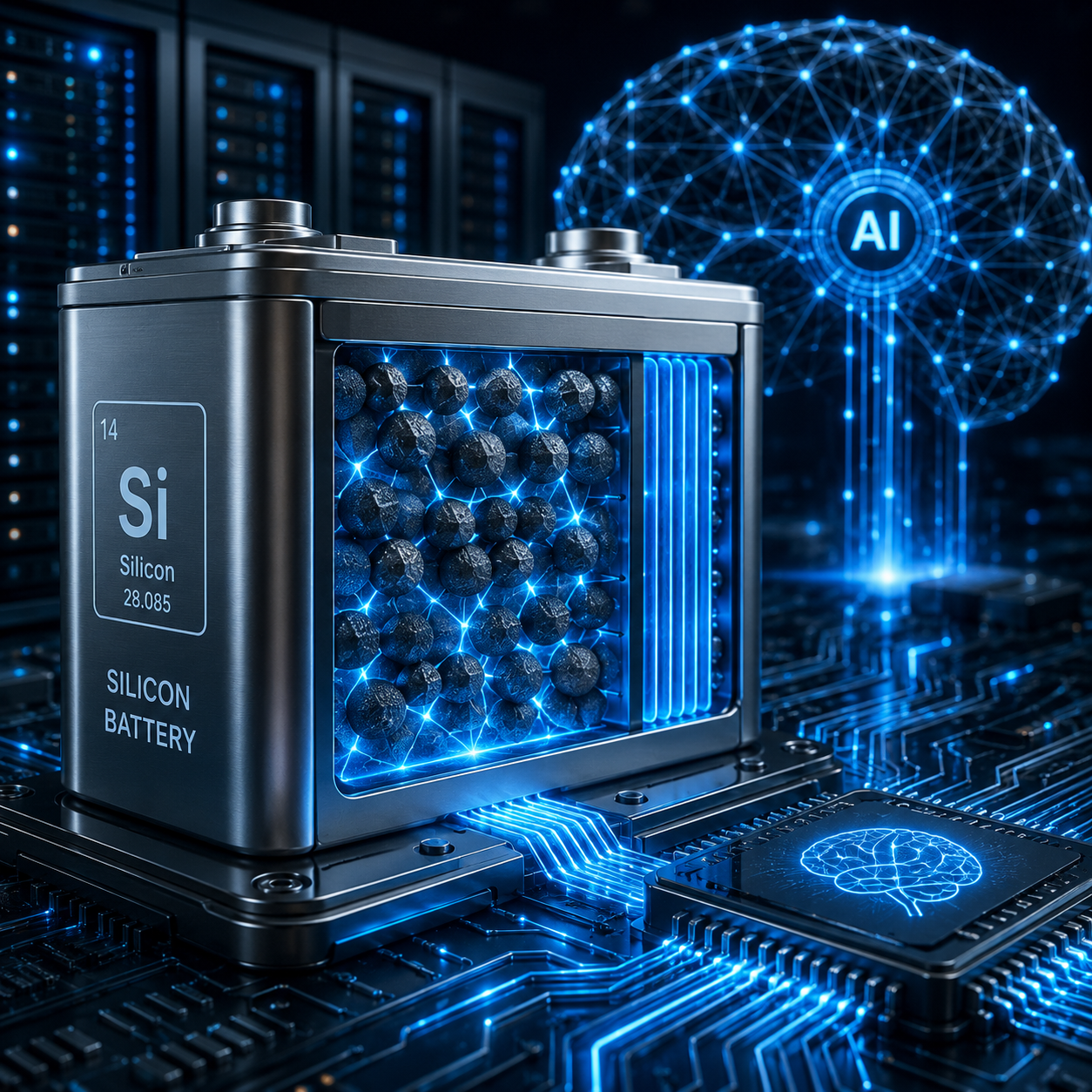
Artificial intelligence is driving unprecedented demand for computing power, from large language models and AI assistants to autonomous vehicles and advanced robotics. As AI workloads grow, so does the need for reliable, high-performance energy storage. Traditional lithium-ion batteries have powered electronic devices and data centers for years, but increasing energy demands are pushing researchers and manufacturers to develop more efficient alternatives. Silicon Batteries for AI are emerging as one of the most promising next-generation energy storage technologies.
By replacing or enhancing traditional graphite anodes with silicon, these batteries can store more energy, charge faster, and improve overall performance. In 2026, silicon battery technology is gaining attention for its potential to support AI data centers, edge computing, robotics, electric vehicles, and other power-intensive applications.
This guide explains what silicon batteries are, how they work, their benefits, applications, challenges, and future trends.
What Are Silicon Batteries?
Silicon batteries are rechargeable batteries that use silicon-based materials—typically silicon anodes—instead of or alongside conventional graphite anodes. Silicon can hold significantly more lithium ions than graphite, allowing batteries to achieve much higher energy density.
While most commercial silicon batteries still use lithium-ion chemistry, incorporating silicon improves battery performance without completely replacing existing battery designs.

Why AI Needs Better Battery Technology
Artificial intelligence requires massive computational resources that consume substantial amounts of electricity. As AI adoption expands, energy infrastructure faces increasing pressure.
Key drivers include:
- AI training clusters
- Large-scale data centers
- Edge AI devices
- Autonomous robots
- Smart manufacturing systems
- Autonomous vehicles
- Industrial IoT networks
- High-performance computing (HPC)
Improved battery technology helps support these systems by delivering greater efficiency, reducing energy waste, and enhancing backup power capabilities.
How Silicon Batteries Work
Silicon batteries operate similarly to conventional lithium-ion batteries but use silicon-rich anodes.
During charging:
- Lithium ions move from the cathode to the silicon anode.
- The silicon stores a much larger number of lithium ions than graphite.
During discharge:
- Lithium ions travel back to the cathode.
- Electrical energy powers AI hardware and connected systems.
Because silicon has a much higher storage capacity, batteries can deliver greater energy without significantly increasing size.
Key Benefits of Silicon Batteries for AI
Higher Energy Density
Silicon anodes can store significantly more energy than traditional graphite, allowing batteries to power AI systems for longer periods.
Faster Charging
Many silicon battery designs support quicker charging, reducing downtime for AI-powered devices and equipment.
Longer Runtime
Greater energy capacity allows AI hardware such as robots, drones, and edge computing devices to operate for extended periods.
Improved Performance
Higher power output supports demanding AI workloads, including real-time analytics and machine learning inference.
Better Space Efficiency
Higher energy density enables manufacturers to build smaller batteries while maintaining similar or greater capacity.
Reduced Environmental Impact
As manufacturing processes improve, silicon batteries may help reduce material usage and improve overall battery efficiency.
Applications of Silicon Batteries for AI
AI Data Centers
Silicon batteries provide backup power systems that improve resilience during outages while supporting growing AI workloads.
Edge AI Devices
Smart cameras, industrial sensors, and edge servers benefit from longer battery life and faster charging.
Robotics
Industrial and service robots require compact, high-capacity batteries to maximize operating time and productivity.
Autonomous Vehicles
AI-powered vehicles use silicon batteries to increase driving range and improve energy efficiency.
Drones
AI-enabled drones benefit from lighter batteries that deliver longer flight times.
Healthcare
Medical AI devices and portable diagnostic equipment can operate longer with higher-capacity batteries.
Smart Manufacturing
Factories use AI-powered automation systems supported by reliable energy storage for continuous operations.
Silicon Batteries vs Traditional Lithium-Ion Batteries
| Feature | Silicon Batteries | Traditional Lithium-Ion Batteries |
| Anode Material | Silicon or silicon composite | Graphite |
| Energy Density | Much higher | Standard |
| Charging Speed | Faster | Moderate |
| Battery Capacity | Higher | Lower |
| Weight Efficiency | Better | Standard |
| AI Workload Support | Excellent | Good |
| Future Potential | Very High | Mature Technology |
Challenges of Silicon Battery Technology
Although silicon batteries offer major advantages, several technical challenges remain.
Material Expansion
Silicon expands significantly during charging, which can reduce battery lifespan if not properly managed.
Manufacturing Complexity
Producing high-quality silicon anodes requires advanced manufacturing techniques.
Cost
Early silicon battery technologies can be more expensive than traditional lithium-ion batteries.
Commercial Scaling
Mass production continues to improve, but widespread deployment across industries is still developing.
Companies Developing Silicon Battery Technology
Several technology companies and battery manufacturers are investing in silicon battery innovation, including:
- Sila Nanotechnologies
- Group14 Technologies
- Amprius Technologies
- Enovix
- Panasonic
- Samsung SDI
- LG Energy Solution
- CATL
These companies are working to increase battery performance while improving durability and lowering production costs.
Future Trends
Silicon battery technology is expected to advance rapidly over the coming years.
Emerging developments include:
- Higher silicon-content anodes
- Longer battery lifespans
- Faster ultra-fast charging
- AI-optimized battery management systems
- Sustainable battery manufacturing
- Advanced solid-state battery integration
- Large-scale deployment in AI data centers
- Improved recycling technologies
- Integration with renewable energy storage
These innovations could make silicon batteries a cornerstone of future AI infrastructure.
Best Practices for Businesses
Organizations considering silicon batteries should:
- Evaluate workload energy requirements.
- Compare battery lifecycle costs rather than purchase price alone.
- Select reputable battery suppliers with proven testing data.
- Integrate intelligent battery management systems.
- Monitor battery performance using AI-powered analytics.
- Plan for future scalability as AI workloads increase.
Conclusion
Silicon Batteries for AI represent one of the most exciting developments in next-generation energy storage. By delivering higher energy density, faster charging, and improved efficiency, they address many of the power challenges created by modern AI applications. Although technical hurdles such as material expansion, manufacturing complexity, and cost remain, ongoing research and commercial investment continue to improve the technology. As AI systems become more powerful and widespread, silicon batteries are expected to play a critical role in supporting data centers, robotics, autonomous vehicles, edge computing, and other energy-intensive applications, helping build a more efficient and sustainable AI-powered future.


Post Comment