AI Chatbot Development Services: How to Choose the Right Provider
Introduction
Artificial intelligence has transformed the way businesses interact with customers, automate workflows, and deliver personalized experiences. From customer support and lead generation to internal knowledge management and sales assistance, AI-powered chat-bots are becoming a core part of digital transformation strategies. Choosing the right AI chatbot Development Services provider is one of the most important decisions a business can make, as the quality of the chatbot directly impacts customer satisfaction, operational efficiency, and return on investment.
In 2026, AI chatbot development has evolved beyond simple rule-based bots. Modern solutions use generative AI, large language models (LLMs), natural language processing (NLP), and machine learning to understand context, manage complex conversations, and integrate seamlessly with business systems. This guide explains what AI chatbot development services include, how to evaluate providers, key features to look for, common challenges, and best practices for a successful implementation.
What Are AI chat bot Development Services?
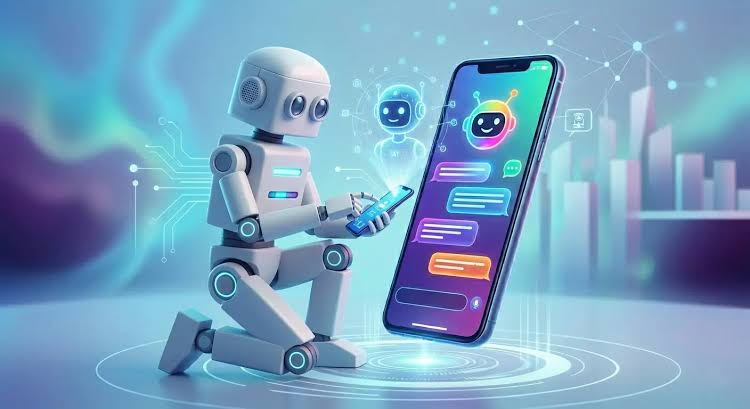
AI chat bot Development Services involve the design, development, deployment, and ongoing maintenance of AI-powered conversational assistants tailored to business needs. Service providers create chat-bots that can communicate naturally with users through websites, mobile apps, messaging platforms, and enterprise software.
These services may include:
- chat bot strategy and consulting
- Custom chatbot design
- Conversational flow development
- Generative AI integration
- Large language model (LLM) implementation
- API and third-party integrations
- CRM and ERP connectivity
- Knowledge base integration
- chat bot testing and optimization
- Security and compliance implementation
- Ongoing monitoring and support
Benefits of AI chat bot Development Services
Working with an experienced provider offers several advantages:
Improved Customer Support
AI chat-bots provide instant responses to common questions, reducing wait times and improving customer satisfaction.
Increased Operational Efficiency
Routine tasks such as appointment scheduling, order tracking, and FAQ handling are automated, allowing employees to focus on higher-value work.
Cost Savings
Automation reduces customer service costs while enabling businesses to support more users without significantly increasing staffing.
Personalized User Experiences
AI chat-bots analyze customer data to deliver relevant recommendations and tailored interactions.
callable Communication
Businesses can manage thousands of conversations simultaneously without compromising response quality.
Key Features to Look For
When comparing AI chatbot development providers, prioritize the following capabilities:
- Natural language processing (NLP)
- Generative AI and LLM support
- Multi-language capabilities
- Omnichannel deployment
- CRM and ERP integration
- Secure data handling
- Analytics and reporting dashboards
- Workflow automation
- Voice assistant compatibility
- Human handoff functionality
- Custom branding
- API integration
- Knowledge base connectivity
- Continuous learning and optimization
How to Choose the Right AI chat bot Development Provider
Understand Your Business Goals
Define whether the chatbot will focus on customer support, sales, employee assistance, lead generation, or another use case. Clear objectives help identify providers with the right expertise.
Evaluate Industry Experience
Choose a provider with experience in your industry. Businesses in healthcare, finance, retail, or education often have unique compliance and workflow requirements.
Review Technical Expertise
Assess the provider’s capabilities in AI technologies, including:
- Large language models (LLMs)
- Machine learning
- Natural language processing
- Retrieval-augmented generation (RAG)
- Cloud platforms
- API development
- Data security
Assess Customization Options
Every business has unique workflows and branding requirements. Look for providers that offer custom chatbot development rather than one-size-fits-all solutions.
Check Integration Capabilities
Ensure the chatbot can connect with existing business systems such as:
- Customer Relationship Management (CRM)
- Enterprise Resource Planning (ERP)
- Help desk software
- Marketing platforms
- Payment systems
- Internal knowledge bases
Prioritize Security
Your provider should follow strong security practices, including:
- Data encryption
- Role-based access controls
- Secure API authentication
- Compliance with privacy regulations
- Regular security updates
Review Analytics Features
Advanced analytics help measure chatbot performance through metrics such as:
- Conversation success rates
- Customer satisfaction
- Response times
- Resolution rates
- Conversion rates
- User engagement
Questions to Ask Before Hiring a Provider
Before signing a contract, ask questions such as:
- What industries have you worked with?
- Which AI models and technologies do you support?
- Can the chatbot integrate with our existing software?
- How do you handle data privacy and security?
- What customization options are available?
- What support and maintenance services do you provide?
- How is chatbot performance monitored and improved?
- What is the expected implementation timeline?
Common Challenges
Although AI chatbot development offers significant benefits, businesses should be aware of potential challenges.
Poor Training Data
Low-quality or incomplete knowledge sources can reduce chatbot accuracy.
Integration Complexity
Connecting chat-bots with legacy business systems may require additional development.
User Adoption
Employees and customers may need guidance to fully utilize AI-powered assistants.
Ongoing Maintenance
Chatbots require regular updates to maintain accuracy, incorporate new information, and improve performance.
Best Practices for Successful Implementation
To maximize the value of AI chatbot development services:
- Clearly define business objectives.
- Start with a limited pilot project before scaling.
- Use high-quality knowledge sources.
- Continuously monitor chatbot performance.
- Collect user feedback for ongoing improvements.
- Provide seamless human escalation when needed.
- Regularly update AI models and content.
- Measure return on investment using business metrics.
Future Trends
The future of AI chatbot development is evolving rapidly. Key trends expected beyond 2026 include:
- Autonomous AI agents capable of completing complex business tasks
- Multimodal chat-bots supporting text, voice, images, and video
- Hyper-personalized customer interactions
- Industry-specific AI assistants
- Real-time language translation
- Advanced reasoning and decision-making capabilities
- Stronger enterprise security and governance
- Deeper integration with business automation platforms
- AI copilots for employees and executives
These innovations will make AI chat-bots even more valuable for organizations across industries.
Conclusion
Choosing the right AI chatbot Development Services provider is essential for building secure, scalable, and effective conversational AI solutions. By evaluating industry experience, technical expertise, integration capabilities, security standards, customization options, and ongoing support, businesses can select a partner that aligns with their operational goals. As AI technologies continue to advance, well-designed chat-bots will play an increasingly important role in customer service, employee productivity, sales, and digital transformation. Investing in the right provider today can deliver long-term value through improved efficiency, better customer experiences, and sustainable business growth.



Post Comment