AI Hardware News: Everything You Need to Know About Next-Generation AI Systems
Introduction
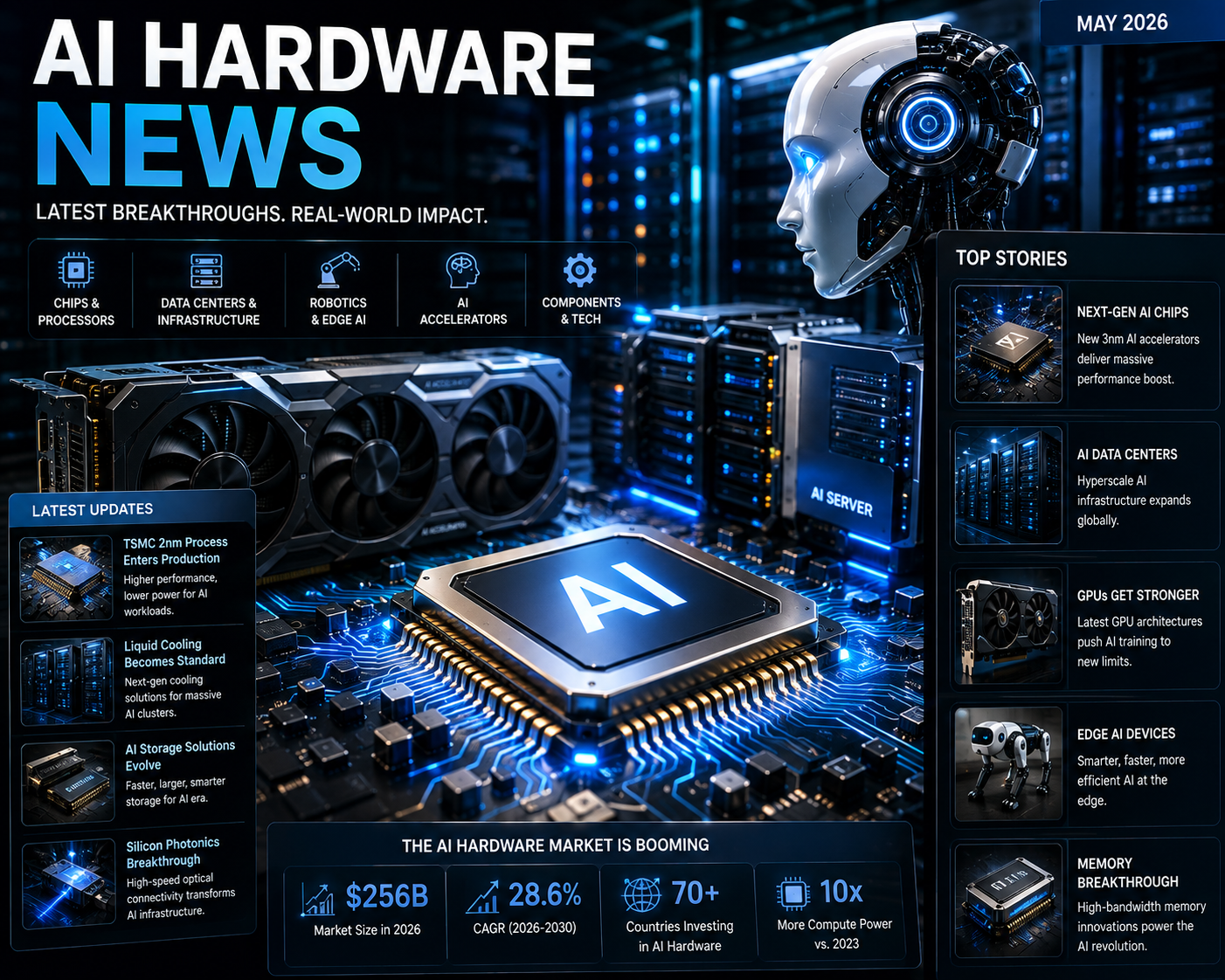
Artificial intelligence is advancing at an unprecedented pace, and the hardware powering these innovations is evolving just as quickly. From next-generation AI chips and GPUs to specialized AI accelerators and edge computing devices, the latest breakthroughs in AI hardware are enabling faster model training, real-time inference, and more energy-efficient computing. Staying updated with AI Hardware News is essential for businesses, developers, researchers, and technology enthusiasts who want to understand how new hardware is shaping the future of artificial intelligence.
In 2026, demand for AI computing infrastructure continues to rise as organizations deploy increasingly sophisticated models for generative AI, robotics, autonomous vehicles, healthcare, finance, and scientific research. This guide explores the latest trends in AI hardware, key technologies, industry applications, leading manufacturers, and what the future holds.
What Is AI Hardware?
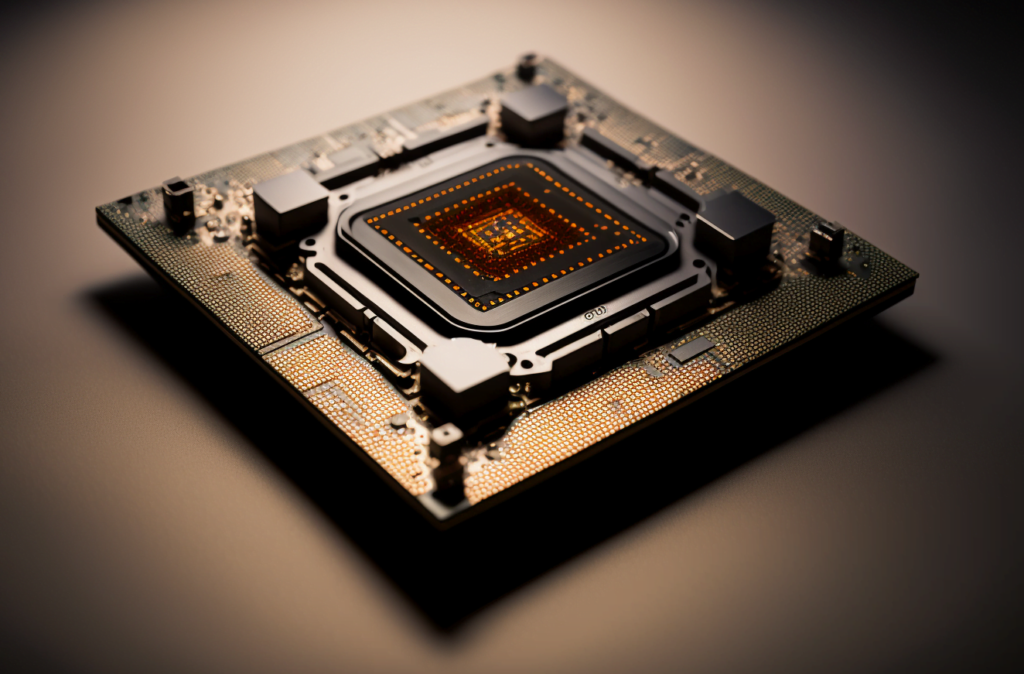
AI hardware refers to specialized computing components designed to accelerate artificial intelligence workloads such as machine learning, deep learning, and generative AI. Unlike traditional CPUs, AI hardware is optimized to process massive datasets and perform complex mathematical operations more efficiently.
Common types of AI hardware include:
- AI GPUs (Graphics Processing Units)
- AI CPUs (Central Processing Units)
- AI accelerators
- AI inference chips
- AI training processors
- Neural Processing Units (NPUs)
- Tensor Processing Units (TPUs)
- Edge AI chips
- AI servers
- High-bandwidth memory (HBM)
These technologies work together to support AI applications across cloud platforms, enterprise systems, and edge devices.
Why AI Hardware Matters
As AI models become larger and more complex, conventional computing systems struggle to meet performance requirements. Advanced AI hardware provides:
- Faster model training
- Lower inference latency
- Higher computing efficiency
- Reduced power consumption
- Improved scalability
- Better support for multimodal AI
- Enhanced real-time decision-making
These capabilities are essential for organizations building AI-powered products and services.
Latest AI Hardware Trends in 2026
Advanced AI Chips
Chip manufacturers are developing processors with higher performance, larger memory capacity, and improved energy efficiency to support increasingly demanding AI workloads.
AI Accelerators
Dedicated AI accelerators improve machine learning performance while reducing processing time for training and inference.
Edge AI Hardware
Compact AI processors enable real-time intelligence in smartphones, drones, industrial equipment, security cameras, and Internet of Things (IoT) devices.
High-Bandwidth Memory (HBM)
HBM technology increases data transfer speeds, allowing AI processors to handle larger models with lower latency.
AI Data Center Infrastructure
Cloud providers continue investing in AI-optimized servers, networking equipment, liquid cooling systems, and high-performance storage to support enterprise-scale AI deployments.
Energy-Efficient Computing
Manufacturers are focusing on hardware designs that reduce power consumption while maintaining high computational performance.
Major Components of Next-Generation AI Systems
AI Processors
Specialized processors handle neural network training and inference more efficiently than general-purpose CPUs.
GPUs
Modern GPUs remain the backbone of AI training because they can perform thousands of parallel calculations simultaneously.
NPUs
Neural Processing Units provide efficient AI acceleration for mobile devices, laptops, and embedded systems.
AI Servers
High-performance servers combine multiple processors, GPUs, memory modules, and networking technologies for large-scale AI workloads.
Networking
High-speed interconnect technologies enable faster communication between AI processors inside data centers.
Storage
Fast storage solutions ensure rapid access to the massive datasets required for AI model development.
Applications of AI Hardware
Generative AI
Powerful hardware accelerates text generation, image synthesis, video creation, and multimodal AI applications.
Autonomous Vehicles
AI processors enable real-time object detection, navigation, and decision-making.
Healthcare
Medical AI systems analyze imaging data, support diagnostics, and accelerate biomedical research.
Manufacturing
Factories use AI hardware for predictive maintenance, quality inspection, robotics, and industrial automation.
Financial Services
Banks and financial institutions deploy AI hardware for fraud detection, algorithmic trading, and risk analysis.
Scientific Research
Researchers use AI supercomputers to simulate climate models, discover new drugs, and analyze genomic data.
Leading Companies Driving AI Hardware Innovation
Several companies are shaping the future of AI hardware through continuous innovation:
- NVIDIA
- AMD
- Intel
- Microsoft
- Amazon Web Services (AWS)
- Qualcomm
- Apple
- Broadcom
- Cerebras Systems
- Groq
- Tenstorrent
- Samsung Electronics
- IBM
- MediaTek
These companies continue investing in faster processors, AI accelerators, cloud infrastructure, and energy-efficient computing technologies.
Challenges Facing AI Hardware
Despite rapid innovation, several challenges remain.
High Development Costs
Designing advanced AI chips requires significant investment in research, manufacturing, and testing.
Power Consumption
Large AI clusters consume enormous amounts of electricity, increasing operational costs.
Supply Chain Constraints
Demand for advanced semiconductors can exceed manufacturing capacity, creating shortages.
Cooling Requirements
High-performance AI systems generate substantial heat and require advanced cooling solutions.
Sustainability
The industry continues working to reduce environmental impacts through energy-efficient architectures and greener manufacturing processes.
Future Trends
The future of AI hardware is expected to include:
- More powerful AI accelerators
- Custom AI processors for specific workloads
- Photonic and optical computing
- Neuromorphic chips inspired by the human brain
- Quantum-AI hybrid systems
- Greater edge AI adoption
- Advanced semiconductor manufacturing
- AI-optimized memory technologies
- Sustainable data center infrastructure
- Autonomous AI computing platforms
These innovations will support increasingly intelligent applications while improving efficiency and scalability.
Best Practices for Businesses
Organizations planning AI infrastructure investments should:
- Assess current and future AI workload requirements.
- Balance performance with energy efficiency.
- Choose hardware compatible with existing software frameworks.
- Invest in scalable cloud and on-premises infrastructure.
- Prioritize cybersecurity for AI systems.
- Monitor hardware performance using AI-driven analytics.
- Plan for regular upgrades as AI technology evolves.
Conclusion
Following AI Hardware News is essential for understanding the technologies powering the next generation of artificial intelligence. Advances in AI chips, GPUs, NPUs, accelerators, and data center infrastructure are enabling faster training, smarter inference, and more efficient computing across industries. While challenges such as energy consumption, manufacturing costs, and supply chain constraints remain, continued innovation is driving significant improvements in performance and sustainability. As AI applications expand across healthcare, finance, manufacturing, autonomous systems, and scientific research, next-generation AI hardware will remain the foundation of future intelligent computing.




Post Comment