The Complete Guide to the Best AI Tools for Lawyers in 2025

Introduction
Artificial intelligence (AI) is transforming the legal profession by helping lawyers work faster, improve accuracy, and deliver better client services. From legal research and contract analysis to document drafting and case management, AI-powered tools are automating repetitive tasks and allowing legal professionals to focus on strategic work. AI Tools for Lawyers in 2025 law firms of all sizes are adopting AI to increase productivity, reduce costs, and stay competitive in an increasingly digital legal landscape.
Whether you’re a solo practitioner, an in-house counsel, or part of a large law firm, choosing the right AI tools can significantly improve efficiency while maintaining high standards of legal practice.
Why Lawyers Are Using AI
Legal work often involves reviewing thousands of pages of documents, researching case law, drafting contracts, and managing deadlines. AI helps streamline these tasks by analysing large volumes of information quickly and accurately.
Key benefits include:
- Faster legal research
- Improved document accuracy
- Reduced administrative workload
- Enhanced contract review
- Better case preparation
- Increased productivity
- Lower operational costs
- Improved client communication
- Greater compliance with legal standards

Best AI Tools for Lawyers in 2025
1. AI Legal Research Tools
AI-powered legal research platforms help lawyers find relevant statutes, regulations, court decisions, and legal precedents within minutes.
Common features include:
- Natural language search
- Case law analysis
- Citation checking
- Legal summarisation
- Jurisdiction-specific research
- Predictive legal insights
These tools reduce research time while improving accuracy.
2. AI Contract Review Software
Contract analysis is one of the most valuable applications of AI in legal practice.
AI can automatically:
- Identify risky clauses
- Compare contract versions
- Detect missing provisions
- Highlight inconsistencies
- Suggest revisions
- Extract important information
This speeds up contract negotiations and reduces legal risk.
3. AI Document Drafting
Drafting legal documents manually can be time-consuming.
AI drafting tools assist with creating:
- Contracts
- Agreements
- Legal letters
- Motions
- Pleadings
- Non-disclosure agreements
- Employment contracts
- Client correspondence
Lawyers can review and customize AI-generated drafts before finalising them.
4. AI Document Review
Litigation often requires reviewing thousands of documents.
AI accelerates document review by:
- Identifying relevant evidence
- Detecting duplicate files
- Organising documents
- Categorising legal materials
- Searching specific clauses
- Flagging privileged information
This reduces review time significantly.
5. AI Case Management
Modern legal practice management software uses AI to organise legal operations.
Capabilities include:
- Case tracking
- Task automation
- Calendar management
- Deadline reminders
- Workflow automation
- Client file organisation
- Billing integration
AI helps law firms stay organised and meet critical deadlines.
6. AI Legal Chatbots
Legal chatbots improve client communication by providing instant responses to common questions.
They can:
- Schedule consultations
- Collect client information
- Answer basic legal queries
- Track case status
- Provide document checklists
- Direct enquiries to appropriate legal teams
This improves client satisfaction while reducing administrative work.
7. AI Compliance Management
Businesses face increasing regulatory requirements across multiple industries.
AI compliance tools help lawyers:
- Monitor regulatory changes
- Generate compliance reports
- Manage audits
- Track policy updates
- Identify compliance risks
- Automate documentation
These solutions reduce compliance-related errors.
8. AI E-Discovery Tools
Electronic discovery (e-discovery) involves reviewing large volumes of digital evidence.
AI improves e-discovery by:
- Analysing emails
- Reviewing electronic documents
- Identifying key evidence
- Detecting communication patterns
- Prioritising relevant files
- Reducing manual review
AI shortens discovery timelines while lowering litigation costs.
9. AI Time Tracking and Billing
AI simplifies law firm billing through automated time recording.
Features include:
- Activity tracking
- Invoice generation
- Billing analysis
- Expense management
- Productivity reports
- Revenue forecasting
Accurate billing improves profitability and transparency.
10. AI Meeting Assistants
AI meeting tools record and summarise legal consultations.
They provide:
- Automatic transcription
- Meeting summaries
- Action items
- Searchable notes
- Task creation
- Client follow-up reminders
Lawyers spend less time taking notes and more time engaging with clients.
Essential Features to Look For
When selecting AI tools for legal practice, consider solutions that offer:
- Strong data security
- End-to-end encryption
- Compliance with privacy regulations
- Secure cloud storage
- User-friendly interface
- Integration with legal software
- Customisable workflows
- Collaboration features
- Reliable customer support
- Regular software updates
These features help ensure efficient and secure legal operations.
Benefits of AI for Law Firms
Adopting AI provides numerous advantages, including:
- Faster legal research
- More efficient document drafting
- Improved contract accuracy
- Reduced administrative costs
- Better client service
- Increased lawyer productivity
- Enhanced collaboration
- Improved compliance management
- Better knowledge management
- Greater scalability
These benefits allow firms to focus on high-value legal work while improving overall efficiency.
Challenges of Using AI in Legal Practice
Despite its advantages, AI should be implemented thoughtfully.
Common challenges include:
- Protecting confidential client data
- Ensuring AI-generated content is accurate
- Addressing ethical considerations
- Complying with data protection regulations
- Integrating AI with existing systems
- Training legal professionals to use AI effectively
- Managing implementation costs
Lawyers should always review AI-generated outputs before relying on them in legal matters.
Best Practices for Implementing AI
To maximise the benefits of AI:
- Identify repetitive tasks suitable for automation.
- Choose AI tools designed specifically for legal workflows.
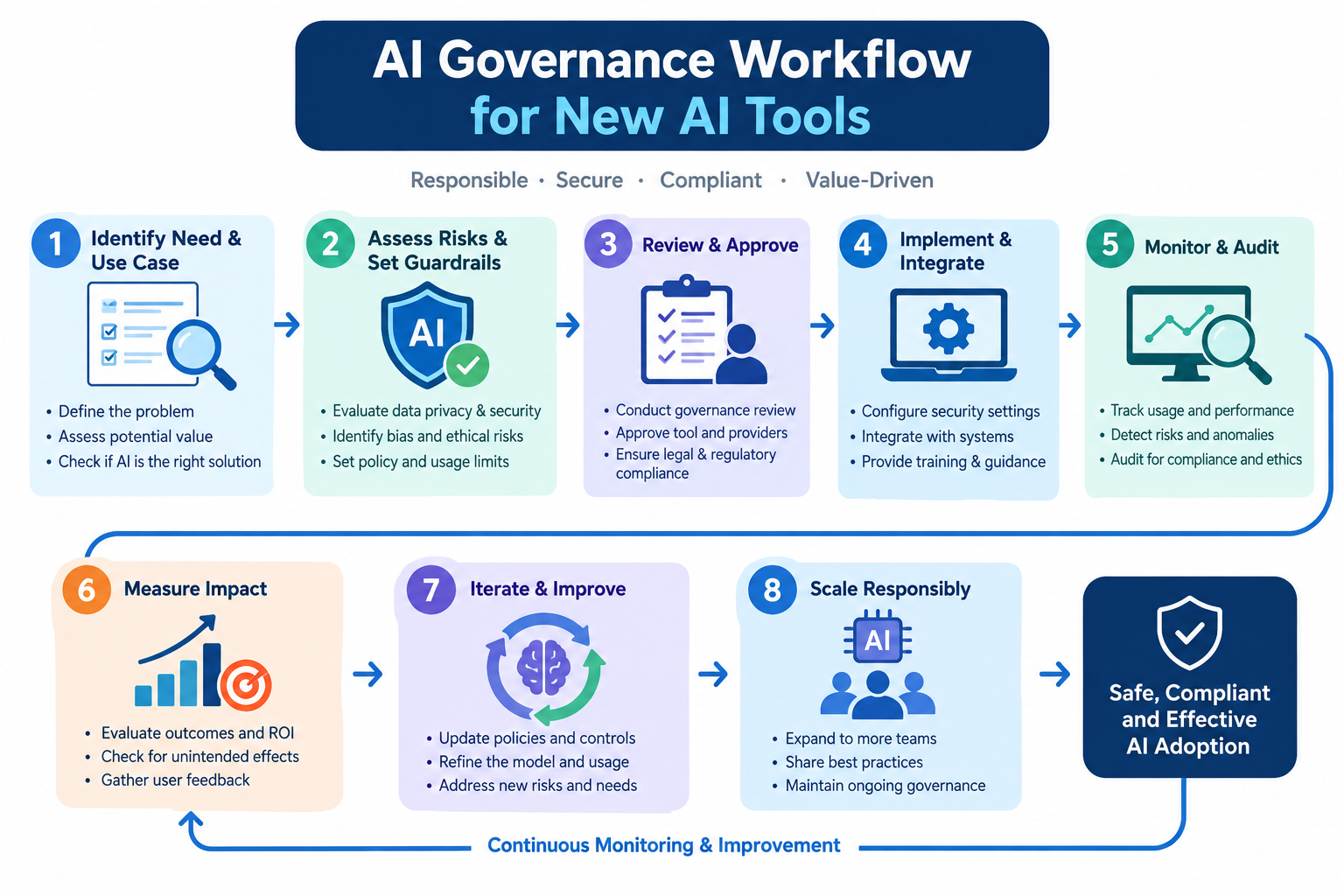
- Establish clear policies for AI use within the firm.
- Train staff on AI capabilities and limitations.
- Protect confidential client information with robust security controls.
- Review AI-generated research and documents for accuracy.
- Monitor AI performance regularly and update workflows as needed.
Combining AI with legal expertise leads to better outcomes than relying on automation alone.
Future Trends in Legal AI
The legal technology landscape continues to evolve rapidly. Key trends expected beyond 2025 include:
- Generative AI for legal drafting
- Predictive litigation analytics
- AI-assisted legal negotiations
- Intelligent contract lifecycle management
- Voice-enabled legal research
- Automated regulatory monitoring
- Advanced legal knowledge management
- AI-powered client portals
- Enhanced multilingual legal translation
- More transparent and explainable AI systems
These developments are expected to make legal services more accessible, efficient, and data-driven.
How to Choose the Right AI Tool
Before investing in an AI solution, evaluate:
- Your firm’s size and practice areas
- The types of legal tasks you want to automate
- Integration with existing case management software
- Data privacy and security features
- Scalability for future growth
- Ease of implementation
- Vendor reputation and support
- Pricing and long-term value
Selecting the right tool should align with your firm’s goals, compliance requirements, and client expectations.
Conclusion
AI is reshaping the legal profession by helping lawyers automate routine tasks, improve research, strengthen contract review, and manage cases more efficiently. The best AI tools for lawyers in 2025 combine intelligent automation with robust security and seamless integration into existing legal workflows. While AI cannot replace professional legal judgement, it serves as a powerful assistant that enhances productivity, accuracy, and client service. Law firms that adopt AI responsibly and strategically will be well positioned to deliver faster, more effective, and higher-quality legal services in an increasingly competitive legal market.



Post Comment