How to Build Trust in AI: Best Practices and Strategies

Introduction
Artificial intelligence is transforming industries by automating processes, improving decision-making, and creating new opportunities for innovation. From healthcare and finance to retail and manufacturing, AI is helping organizations become more efficient and competitive. However, widespread adoption depends on one critical factor: Trust in AI. If customers, employees, and stakeholders do not trust AI systems, they are unlikely to embrace or rely on them, regardless of how advanced the technology becomes.
Building trust requires more than accurate algorithms. Organizations must ensure AI systems are transparent, fair, secure, accountable, and aligned with ethical principles. In 2026, governments, regulators, and businesses are placing greater emphasis on responsible AI development to increase confidence in AI-powered products and services.
This guide explores why trust in AI matters, the challenges organizations face, and the best practices for creating trustworthy AI systems.
What Is Trust in AI?
Trust in AI refers to the confidence that users, businesses, and regulators have in artificial intelligence systems to operate reliably, ethically, securely, and accurately. A trustworthy AI system should make consistent decisions, protect user data, minimize bias, and provide explanations for important outcomes.
Trust is built when AI systems demonstrate:
- Accuracy
- Reliability
- Transparency
- Fairness
- Security
- Privacy protection
- Accountability
- Human oversight
Organizations that prioritize these principles are more likely to gain user confidence and encourage long-term AI adoption.
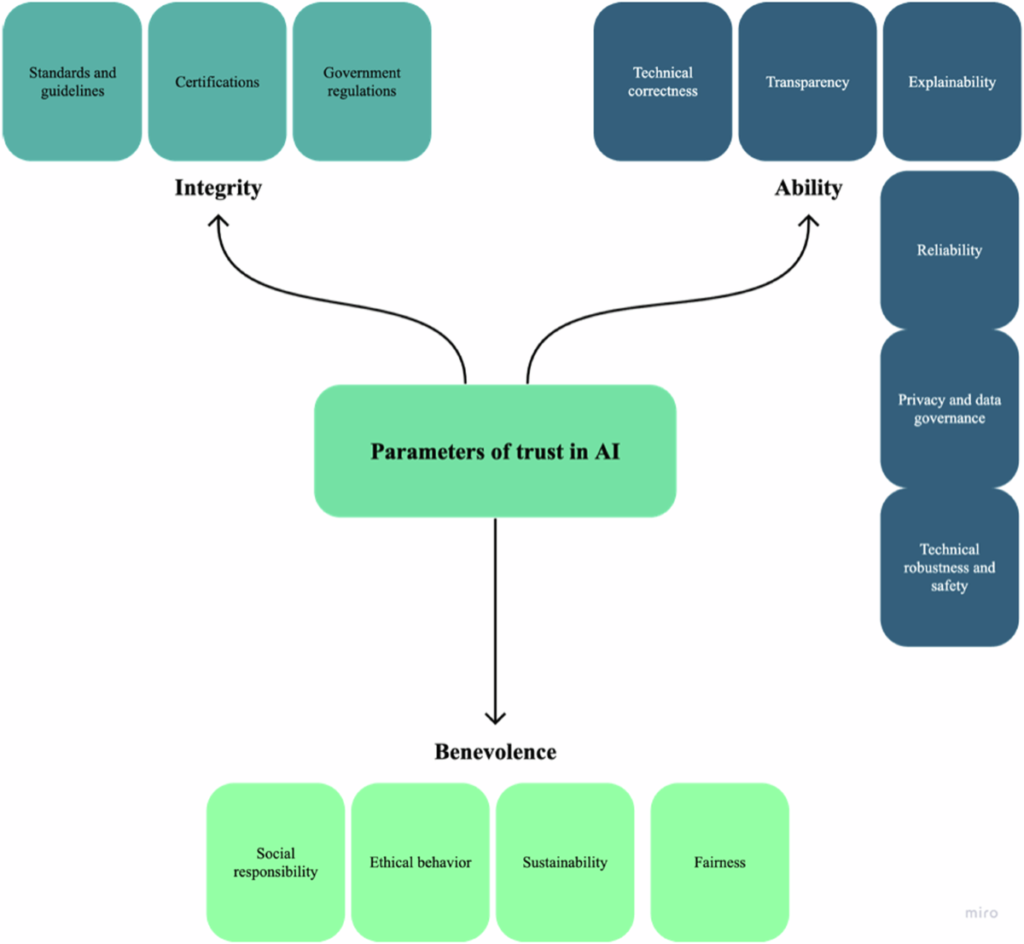
Why Trust in AI Matters
AI increasingly influences important decisions that affect individuals and businesses. Without trust, organizations may struggle to realize the full benefits of AI.
Key reasons trust matters include:
- Greater customer confidence
- Higher employee adoption
- Improved business reputation
- Better regulatory compliance
- Reduced operational risk
- Increased AI investment returns
- Stronger long-term innovation
Trust enables organizations to deploy AI responsibly while maintaining positive relationships with users and stakeholders.
Common Challenges to Trust in AI
Lack of Transparency
Many AI models function as “black boxes,” making it difficult for users to understand how decisions are made.
Algorithmic Bias
AI systems trained on biased or unrepresentative data can produce unfair outcomes in hiring, lending, healthcare, and other areas.
Data Privacy Concerns
AI often relies on large amounts of personal and business data, making strong privacy protections essential.
Security Risks
AI systems may be vulnerable to cyberattacks, data breaches, or malicious manipulation if not properly secured.
Inaccurate Outputs
Generative AI and predictive models can sometimes produce incorrect or misleading information, reducing user confidence.
Best Practices for Building Trust in AI
Prioritize Transparency
Clearly explain how AI systems collect data, make decisions, and generate recommendations. Documentation and user-friendly explanations improve understanding.
Ensure High-Quality Data
Train AI models using accurate, diverse, and representative datasets to reduce errors and improve fairness.
Reduce Bias
Regularly test AI systems for bias and implement strategies to identify and mitigate unfair outcomes.
Protect Privacy
Adopt strong data governance practices, including encryption, access controls, anonymization, and compliance with privacy regulations.
Strengthen Security
Implement cybersecurity measures such as secure authentication, continuous monitoring, vulnerability testing, and incident response planning.
Maintain Human Oversight
AI should support—not replace—human decision-making in high-impact areas such as healthcare, finance, law, and hiring. Human review helps ensure accountability and ethical judgment.
Monitor Performance
Continuously evaluate AI systems using key performance indicators such as accuracy, reliability, fairness, and user satisfaction.
Follow Ethical AI Principles
Develop AI systems that respect human rights, promote fairness, avoid discrimination, and support responsible innovation.
The Role of AI Governance
AI governance provides the policies, processes, and oversight needed to ensure AI systems are developed and used responsibly.
An effective AI governance framework typically includes:
- Ethical AI guidelines
- Risk management processes
- Compliance monitoring
- Data governance policies
- AI model documentation
- Independent audits
- Accountability structures
- Continuous performance reviews
Strong governance helps organizations reduce legal, operational, and reputational risks.
Building Trust Across Industries
Healthcare
Healthcare organizations build trust by validating AI-assisted diagnoses, protecting patient data, and ensuring clinicians review AI recommendations.
Financial Services
Banks and fintech companies increase trust through explainable credit decisions, fraud detection transparency, and secure financial data management.
Retail
Retailers strengthen trust by providing transparent product recommendations, protecting customer information, and offering personalized experiences responsibly.
Manufacturing
Manufacturers use AI responsibly by monitoring automated systems, ensuring workplace safety, and maintaining quality standards.
Government
Public sector organizations improve trust through transparent AI policies, public accountability, and responsible use of citizen data.
Future Trends in Trust in AI
Several emerging trends are expected to strengthen trust in AI over the coming years:
- Explainable AI (XAI) for greater transparency
- Independent AI audits and certification programs
- Stronger global AI regulations
- Privacy-preserving AI technologies
- AI governance platforms
- Ethical AI frameworks integrated into development lifecycles
- Real-time monitoring for AI performance and risk
- Industry-specific standards for responsible AI
- Human-centered AI design
These developments will help organizations deploy AI with greater confidence while meeting regulatory and societal expectations.
Best Practices for Organizations
To establish long-term trust in AI, organizations should:
- Develop clear AI governance policies.
- Train employees on responsible AI use.
- Communicate openly about AI capabilities and limitations.
- Regularly evaluate models for bias and accuracy.
- Protect sensitive data using robust cybersecurity practices.
- Include human oversight for critical decisions.
- Monitor AI performance continuously.
- Adapt governance practices as regulations and technologies evolve.
Conclusion
Building Trust in AI is essential for successful AI adoption and long-term business success. While artificial intelligence can automate tasks, analyze data, and improve efficiency, it must also be transparent, fair, secure, and accountable to earn the confidence of users and stakeholders. By implementing strong governance, protecting privacy, reducing bias, maintaining human oversight, and continuously monitoring AI performance, organizations can create responsible AI systems that deliver reliable results. As AI continues to shape the future of business and society, trust will remain the foundation for sustainable innovation and widespread adoption.



Post Comment