AI in Professional Services: The Future of Smarter Business
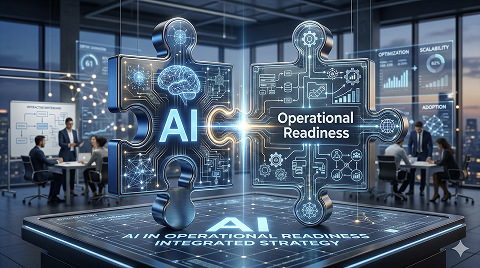
Artificial intelligence is changing how businesses operate, make decisions, and serve their customers. From accounting and legal services to consulting, marketing, finance, and IT, organizations are increasingly adopting AI to improve efficiency and deliver better results. AI in professional services is becoming an important part of this transformation because it allows firms to automate repetitive work, analyze large amounts of information, and provide more personalized services.
Unlike traditional automation, modern AI can understand language, identify patterns, generate content, support decision-making, and interact with professionals through intelligent tools. As these capabilities continue to develop, AI is moving beyond simple productivity improvements toward a broader transformation of professional services.
What Is AI in Professional Services?
AI in professional services refers to the use of artificial intelligence technologies to support or enhance services delivered by professional firms and specialists.
These technologies can include:
- Generative AI
- Machine learning
- Natural language processing
- AI-powered analytics
- Intelligent automation
- Computer vision
- AI agents
- Predictive analytics
Professional service providers can use these technologies to process information, automate administrative tasks, research documents, analyze data, communicate with clients, and support complex business decisions.
The goal is not necessarily to replace professionals. Instead, AI can help professionals spend less time on repetitive activities and more time on work that requires expertise, creativity, judgment, and human interaction.

Why AI Is Becoming Important for Professional Services
Professional services depend heavily on knowledge, information, communication, and analytical work. These characteristics make the industry particularly suitable for AI adoption.
For example, an accountant may need to review thousands of financial records, while a lawyer may need to analyze lengthy contracts and case documents. Similarly, consultants often work with large datasets before developing recommendations for clients.
AI can help accelerate these processes.
Faster Information Processing
AI systems can process large volumes of information much faster than traditional manual workflows. Professionals can use AI to summarize documents, identify important information, organize data, and locate relevant patterns.
Improved Productivity
Repetitive administrative activities can consume significant amounts of professional time. AI can assist with tasks such as document preparation, scheduling, research, data entry, reporting, and email drafting.
Better Business Insights
AI-powered analytics can identify patterns and trends that may be difficult to detect manually. These insights can support strategic planning, forecasting, risk management, and decision-making.
More Personalized Client Services
AI can help professional firms understand client requirements and deliver more personalized recommendations. This can improve the overall customer experience while allowing professionals to manage larger client portfolios.
How AI Is Transforming Different Professional Services
The impact of AI varies across industries, but several sectors are already exploring significant applications.
AI in Accounting and Finance
Accounting firms can use AI to automate transaction processing, invoice management, financial analysis, and reporting.
AI-powered systems can also identify unusual transactions and potential errors. This may help finance professionals improve accuracy while spending more time on strategic financial planning and client advisory services.
AI in Legal Services
Law firms handle large quantities of documents and information. AI can assist with legal research, contract analysis, document summarization, and information retrieval.
Generative AI can also help lawyers create initial drafts of certain documents. However, professional review remains essential because legal work requires accuracy, confidentiality, and expert judgment.
AI in Consulting
Consulting firms can use AI to analyze market information, summarize research, identify trends, and support strategic recommendations.
AI can help consultants process information more efficiently, allowing them to focus on interpreting findings and developing solutions for clients.
AI in Marketing Services
Marketing agencies can use AI for customer research, content creation, campaign analysis, audience segmentation, and performance forecasting.
AI can help marketers understand customer behavior and create more data-driven campaigns. Human creativity and brand knowledge remain important for developing effective strategies.
AI in IT Services
IT service providers can use AI to monitor systems, detect potential problems, automate support tasks, and analyze technical data.
AI-powered assistants can also help employees troubleshoot common issues and find relevant information without waiting for manual support.
AI in Human Resources
HR professionals can use AI to support recruitment, employee communication, workforce analytics, and administrative processes.
For example, AI can help organize candidate information or analyze workforce trends. However, organizations must carefully manage potential bias and ensure that important employment decisions receive appropriate human oversight.
AI Agents Are the Next Step
One of the most significant developments in professional services is the emergence of AI agents.
Traditional AI tools often respond to individual prompts. AI agents can potentially perform multiple connected tasks within a workflow. For example, an AI agent could gather information, analyze documents, prepare a report, and present the results for professional review.
This could change how professional firms structure their operations.
Instead of simply automating individual tasks, businesses may begin designing entire workflows around human-AI collaboration.
From Productivity to Business Transformation
The biggest opportunity may be that AI can move professional services beyond simple productivity gains.
Initially, many organizations adopted AI to save time. For example, employees could use AI to summarize documents or draft emails.
The next stage is more strategic.
Businesses can redesign workflows around AI and rethink how services are delivered. This could result in new service models, faster response times, personalized customer experiences, and entirely new professional offerings.
AI becomes more than just a tool for productivity in this setting.It becomes part of the business model itself.
Benefits of AI in Professional Services
Organizations adopting AI can potentially gain several advantages.
1. Reduced Administrative Work
AI can handle or assist with repetitive tasks, reducing the amount of manual work professionals need to perform.
2. Faster Service Delivery
Automated research, analysis, and document processing can help firms complete certain workflows more quickly.
3. Improved Decision-Making
AI-powered analytics can provide professionals with additional information and insights to support business decisions.
4. Greater Scalability
Professional firms may be able to serve more clients without increasing administrative workloads at the same rate.
5. Enhanced Customer Experience
Faster communication and more personalized services can improve client satisfaction.
6. New Revenue Opportunities
AI can enable firms to create new services, such as AI-powered advisory solutions, automated analytics, intelligent reporting, and specialized digital services.
Challenges of AI Adoption
Despite its potential, implementing AI in professional services is not without challenges.
Data Privacy and Security
Professional firms often manage sensitive financial, legal, business, and customer information. Organizations must carefully control how AI systems access, process, and store data.
Accuracy and Reliability
AI can produce incorrect or misleading information. Professionals should verify important AI-generated outputs before using them in client-facing or high-stakes situations.
Regulatory Requirements
Different professional industries have specific regulations and ethical standards. AI implementation must comply with applicable requirements.
Workforce Adaptation
Employees need training to understand how to use AI effectively. The future workforce will increasingly require both professional expertise and AI literacy.
Trust
Clients need confidence that AI is being used responsibly. Transparency about AI-assisted processes can become an important part of maintaining professional relationships.
Human Expertise Still Matters
The growth of AI does not eliminate the importance of professional expertise.
AI can process information and generate recommendations, but professionals provide context, judgment, accountability, empathy, and strategic thinking.
For example, an AI system may identify potential risks in a business document, but an experienced professional must determine what those risks mean in the client’s specific situation.
The strongest model is therefore likely to be human-AI collaboration rather than complete replacement.
How Businesses Can Prepare for AI Adoption
Professional firms should take a structured approach to AI adoption.
Identify High-Value Use Cases
Start by identifying repetitive or time-consuming processes where AI can provide measurable benefits.
Establish Data Governance
Create clear policies for data access, privacy, security, and AI usage.
Train Employees
Employees should understand both the capabilities and limitations of AI tools.
Keep Humans in the Loop
Important decisions should receive appropriate human review, particularly in areas involving legal, financial, medical, employment, or other high-impact consequences.
Measure Results
Organizations should track improvements in productivity, quality, customer satisfaction, costs, and service delivery.
Develop an AI Strategy
Rather than adopting random AI tools, firms should develop a broader strategy that connects AI investments with business objectives.
The Future of AI in Professional Services
The future of AI in professional services will likely involve increasingly intelligent systems that work alongside professionals.
AI agents may handle larger portions of business workflows. Generative AI may become integrated into everyday professional software. Predictive analytics could provide more proactive recommendations, while AI-powered platforms may deliver personalized services at greater scale.
Professional roles may also evolve.
Instead of spending most of their time gathering and processing information, professionals could increasingly focus on interpreting AI-generated insights, managing client relationships, solving complex problems, and making strategic decisions.
This shift could create a new model of professional work in which technology handles information-heavy processes while humans concentrate on judgment and value creation.
Conclusion
AI in professional services is evolving from a productivity technology into a broader force for business transformation. Accounting, legal, consulting, marketing, IT, finance, and other professional sectors can use AI to automate repetitive processes, analyze information, improve client experiences, and develop new services.
However, successful AI adoption requires more than purchasing AI software. Organizations need strong data governance, employee training, responsible implementation, human oversight, and a clear business strategy.
The future of professional services is unlikely to be simply about humans versus AI. Instead, the competitive advantage may come from businesses that successfully combine AI capabilities with human expertise to create faster, smarter, and more valuable professional services.


Post Comment