AI Computer Vision in VR: A Complete Guide to Smarter Virtual Reality
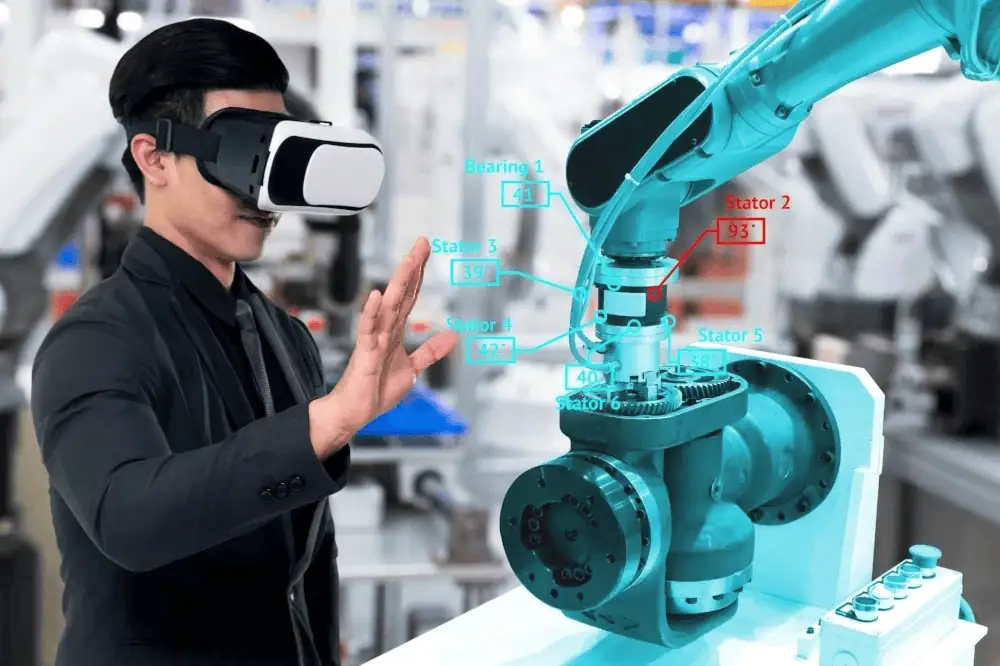
Virtual reality (VR) has transformed how people interact with digital environments, but the technology is becoming even more powerful with artificial intelligence (AI). One of the most important technologies driving this change is AI computer vision in VR.
Computer vision allows machines to understand and interpret visual information from cameras and sensors. When combined with VR, it can help virtual environments recognize objects, track movements, understand gestures, monitor surroundings, and create more responsive experiences.
From gaming and education to healthcare, training, and industrial applications, AI-powered computer vision is helping make virtual reality more intelligent and interactive.
What Is AI Computer Vision in VR?
AI computer vision in VR refers to the use of artificial intelligence and computer vision technologies to help virtual reality systems understand visual information and respond to users and their surroundings.
Traditional VR systems primarily focus on creating and displaying a digital environment. AI computer vision adds another layer of intelligence by allowing the system to interpret information captured through cameras, sensors, and other input devices.
For example, a VR headset can use computer vision to identify a user’s hand movements and translate them into actions inside a virtual environment.
This combination can make VR experiences feel more natural because users can interact with digital content using movements, gestures, and real-world objects instead of relying only on traditional controllers.
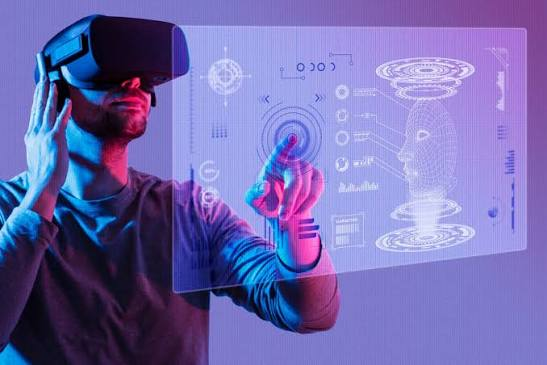
How Does Computer Vision Work in Virtual Reality?
AI computer vision in VR generally works through several interconnected steps:
1. Capturing Visual Information
Cameras and sensors collect information about the user’s environment, body movements, hands, and other objects.
2. Processing the Data
AI algorithms analyze the captured information to identify patterns, shapes, movements, and objects.
3. Understanding the Environment
Computer vision models determine what is happening in the user’s physical surroundings and how the user is interacting with them.
4. Translating Actions Into VR
The system converts recognized movements or gestures into digital actions within the virtual environment.
5. Providing Real-Time Responses
The VR application responds to the user’s actions, creating a more interactive and immersive experience.
The speed of this process is important. Low-latency processing helps maintain natural interactions and can improve the overall VR experience.
Key Applications of AI Computer Vision in VR
AI computer vision has applications across many areas of virtual reality.
AI-Powered Hand Tracking
One of the most useful applications is hand tracking. Instead of requiring physical controllers, computer vision can identify the position and movement of a user’s hands.
This allows users to:
- Point at virtual objects
- Grab and move items
- Make gestures
- Interact with virtual interfaces
- Control digital environments
Hand tracking can make VR interactions more intuitive, particularly for users who are new to virtual reality.
Body and Motion Tracking
Computer vision can also analyze body movements. AI systems can track a user’s head, arms, hands, legs, and other movements to create a digital representation inside VR.
This technology is useful for:
- VR fitness
- Sports training
- Medical rehabilitation
- Gaming
- Professional simulations
- Virtual meetings
Accurate motion tracking can help virtual characters move more naturally in response to the user’s physical actions.
Object Recognition
AI computer vision can identify objects within physical or virtual environments.
For example, an intelligent VR system could recognize furniture, tools, equipment, or other objects and incorporate that information into the user’s experience.
Object recognition can also support training simulations where users need to identify and interact with specific equipment.
Facial Recognition and Expression Tracking
Advanced computer vision systems can analyze facial movements and expressions.
In social VR environments, this can help create more realistic avatars by translating facial movements into digital expressions.
Instead of displaying a static avatar, an AI-powered system can potentially reflect changes in the user’s facial expressions, making virtual communication more engaging.
Spatial Understanding
Another important application is understanding physical spaces.
AI computer vision can help VR systems detect walls, floors, furniture, and other environmental features. This information can be used to create safer and more responsive mixed-reality experiences.
Spatial understanding can help digital objects appear more naturally positioned within a user’s physical surroundings.
AI Computer Vision in VR Gaming
Gaming is one of the most promising areas for AI-powered computer vision.
Traditional VR games often depend on controllers and predefined interactions. Computer vision can introduce more natural forms of interaction.
Players may be able to use their hands, body movements, and facial expressions to control characters or interact with objects.
AI can also analyze player behavior and adjust experiences dynamically. For example, an intelligent VR game could modify difficulty based on how a player performs.
The combination of computer vision, generative AI, and VR could eventually enable highly adaptive virtual worlds where characters and environments respond dynamically to individual players.
AI Computer Vision in VR Healthcare
Healthcare is another important application.
VR is already used in areas such as medical training, rehabilitation, therapy, and surgical simulation. Computer vision can make these applications more responsive by tracking patient or trainee movements.
For example, a rehabilitation application could monitor how a person performs a physical movement and provide feedback during a virtual exercise.
In medical education, AI computer vision can also support realistic simulations where students practice procedures in controlled virtual environments.
These applications can provide valuable training and monitoring capabilities while reducing the need for some physical simulation equipment.
AI Computer Vision for Education and Training
Virtual reality can place students and employees inside realistic learning environments.
AI computer vision can make these environments interactive by recognizing gestures, objects, and movements.
For example, a technical training simulation could identify whether a trainee correctly interacts with virtual equipment.
Potential applications include:
- Employee training
- Industrial safety simulations
- Medical education
- Engineering training
- Aviation simulations
- Military training
- Vocational education
The ability to track and analyze user actions can also provide instructors with useful performance information.
Benefits of AI Computer Vision in VR
Combining AI with computer vision can provide several advantages.
More Natural Interaction
Users can interact with virtual environments through gestures and movements instead of relying exclusively on controllers.
Greater Immersion
Real-time tracking can make digital environments respond more closely to the user’s physical actions.
Personalized Experiences
AI can analyze user behavior and potentially adjust VR experiences according to individual needs and preferences.
Better Accessibility
Controller-free interaction may make certain VR experiences easier to use for people who have difficulty operating traditional input devices.
Improved Training
Organizations can create realistic simulations and analyze how users perform specific tasks.
Smarter Virtual Environments
AI can help virtual environments become more responsive rather than simply displaying predefined content.
Challenges of AI Computer Vision in VR
Despite its potential, AI computer vision in VR still faces several challenges.
Privacy Concerns
VR systems may collect sensitive information about users, including movements, surroundings, and potentially facial or behavioral data.
Companies need strong privacy and data protection practices when handling this information.
Processing Requirements
Real-time computer vision requires significant computational resources. Processing large amounts of visual data quickly can be challenging for smaller or less powerful devices.
Accuracy
Computer vision systems are not perfect. Poor lighting, unusual movements, occlusion, and complex environments can affect tracking accuracy.
Latency
Even small delays between a user’s movement and the VR system’s response can reduce immersion and potentially cause discomfort.
Cost
Advanced cameras, sensors, processors, and AI software can increase the cost of VR hardware and applications.
AI Computer Vision vs. Traditional VR Tracking
Traditional VR tracking typically relies on controllers, sensors, or predefined tracking systems.
AI computer vision introduces more intelligent visual interpretation.
| Feature | Traditional VR | AI Computer Vision VR |
| Hand interaction | Often controller-based | Can use camera-based tracking |
| Object recognition | Limited | AI-powered recognition |
| Gesture recognition | Basic or limited | Advanced gesture interpretation |
| Environment understanding | Limited | More intelligent spatial analysis |
| Personalization | Limited | AI-driven adaptation |
| Interaction | Mostly predefined | More dynamic |
The two approaches can also work together. AI computer vision does not necessarily replace traditional VR tracking; instead, it can enhance the capabilities of existing systems.
The Future of AI Computer Vision in VR
The future of AI computer vision in VR is likely to involve increasingly intelligent and responsive experiences.
Generative AI could work alongside computer vision to create virtual environments that change according to user behavior. AI avatars could become more expressive, while virtual characters could understand gestures and respond more naturally.
Multimodal AI may also allow VR systems to combine visual information with voice, movement, text, and other forms of input.
As hardware becomes more powerful and AI models become more efficient, these technologies could make immersive computing more practical across consumer and enterprise applications.
AI Computer Vision and the Growth of Immersive Technology
AI computer vision is part of a broader shift toward intelligent immersive technology.
Rather than simply placing users inside a digital environment, next-generation VR systems are increasingly focused on understanding users and their surroundings.
This could lead to virtual experiences that are:
- More responsive
- More personalized
- More interactive
- More realistic
- More accessible
- More intelligent
The combination of AI, computer vision, VR, and related technologies could therefore become an important part of the future of digital interaction.
Conclusion
AI computer vision in VR is helping transform virtual reality from a primarily visual experience into a more intelligent and interactive technology.
By enabling systems to understand gestures, movements, objects, facial expressions, and physical environments, computer vision can create more natural ways for people to interact with virtual worlds.
Although challenges involving privacy, processing power, accuracy, latency, and cost remain, continued advances in AI and computer vision could make VR experiences increasingly sophisticated.
As AI technology continues to evolve, the combination of artificial intelligence, computer vision, and virtual reality could play a major role in the future of gaming, healthcare, education, training, business, and immersive digital experiences.


Post Comment