AI and 5G Technology: Everything You Need to Know in 2026
Introduction
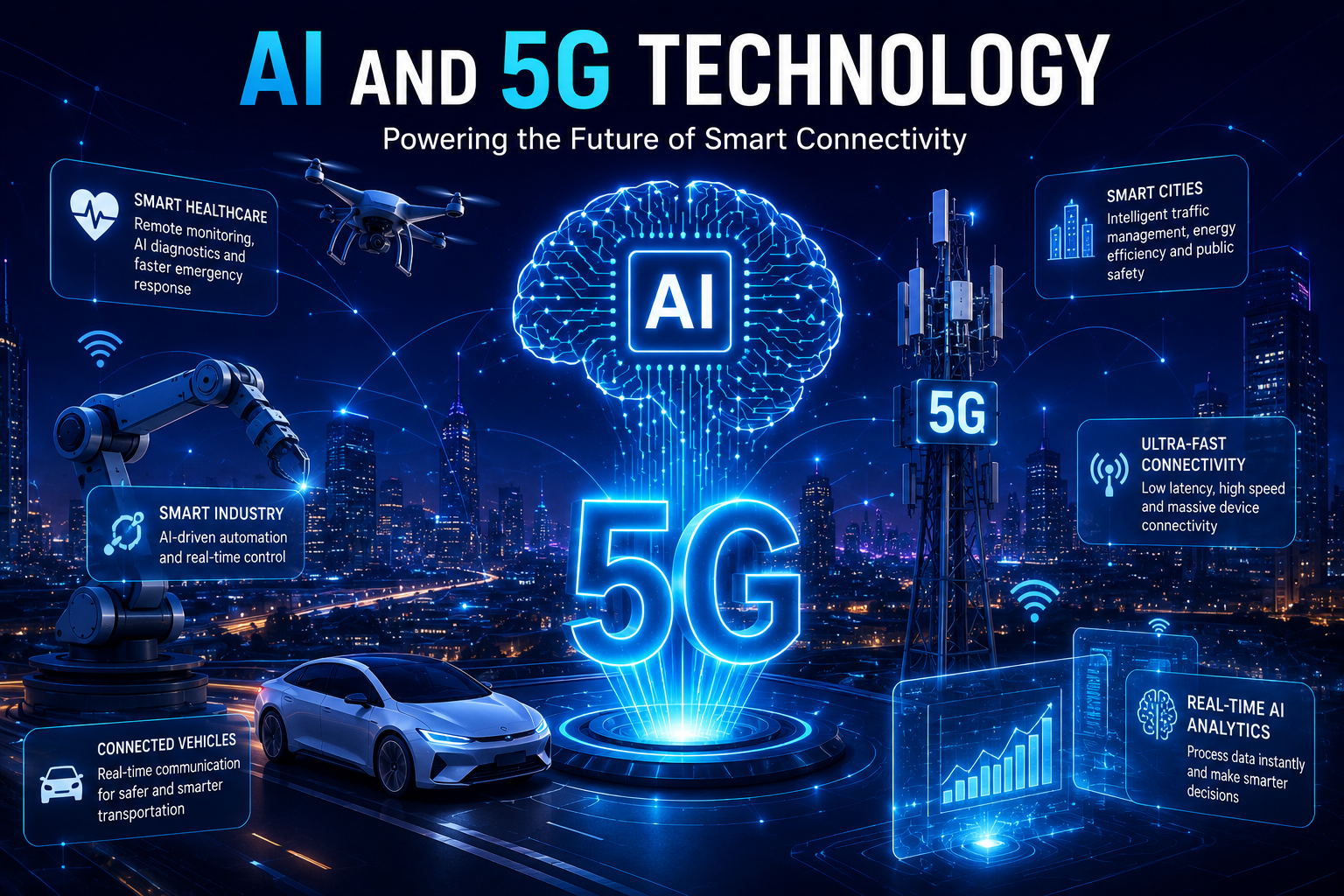
Artificial Intelligence (AI) and 5G technology are two of the most transformative innovations shaping the digital world in 2026. Individually, they have revolutionized industries by enabling automation, faster communication, and data-driven decision-making. Together, AI and 5G Technology create a powerful combination that supports real-time intelligence, ultra-fast connectivity, and highly responsive digital services.
Businesses, governments, healthcare providers, manufacturers, and technology companies are increasingly adopting AI and 5G to improve efficiency, reduce costs, and deliver smarter customer experiences. From autonomous vehicles and smart cities to advanced healthcare and industrial automation, the integration of AI with 5G is driving the next wave of digital transformation.
What Is AI and 5G Technology?
AI refers to computer systems that can perform tasks requiring human intelligence, such as learning, reasoning, language understanding, image recognition, and decision-making.
5G, or the fifth generation of mobile network technology, offers:
- Ultra-fast internet speeds
- Low latency
- High reliability
- Massive device connectivity
- Improved network capacity
When combined, AI processes massive amounts of data generated over 5G networks in real time, enabling faster and smarter decision-making.

Why AI and 5G Work Together
AI requires access to large volumes of data, while 5G provides the high-speed connectivity needed to transmit that data almost instantly.
Together they enable:
- Real-time analytics
- Intelligent automation
- Faster cloud computing
- Edge AI applications
- Connected smart devices
- Autonomous systems
This combination supports applications that would be difficult or impossible with previous network technologies.
Key Benefits of AI and 5G Technology
Faster Decision-Making
5G allows AI systems to receive and process data with minimal delay, making real-time decision-making possible for applications like autonomous vehicles and industrial robotics.
Improved Automation
AI-powered automation becomes more efficient with high-speed connectivity, enabling businesses to optimize operations and reduce manual tasks.
Enhanced Customer Experiences
Companies use AI and 5G to provide:
- Personalized recommendations
- Intelligent chatbots
- Voice assistants
- Faster customer support
- Real-time services
Better Data Processing
Massive volumes of data are produced by billions of linked devices. AI analyzes this information while 5G enables rapid data transfer.
Increased Business Efficiency
Organizations benefit from:
- Predictive maintenance
- Workflow automation
- Smart monitoring
- Inventory optimization
- Operational insights
Real-World Applications
Healthcare
AI and 5G are transforming healthcare through:
- Remote patient monitoring
- Telemedicine
- AI-assisted diagnostics
- Medical imaging analysis
- Robotic surgery support
- Predictive healthcare analytics
Manufacturing
Manufacturers use AI and 5G for:
- Smart factories
- Predictive equipment maintenance
- Quality inspection
- Supply chain optimization
- Industrial robotics
Smart Cities
Cities are deploying AI and 5G to improve:
- Traffic management
- Public transportation
- Energy efficiency
- Waste management
- Emergency response
- Public safety
Autonomous Vehicles
While 5G allows for quick connection between cars, infrastructure, and cloud systems, self-driving cars rely on AI for navigation and decision-making.
Retail and E-Commerce
Retail businesses use AI and 5G for:
- Personalized shopping experiences
- Smart inventory management
- Automated checkout
- Customer behavior analysis
- Real-time product recommendations
Agriculture
Modern farming benefits from:
- Smart sensors
- AI-powered crop monitoring
- Precision irrigation
- Drone surveillance
- Weather prediction
- Livestock monitoring
AI and Edge Computing
Edge computing processes data closer to where it is generated instead of relying solely on cloud servers.
Combined with AI and 5G, edge computing provides:
- Lower latency
- Faster AI inference
- Reduced bandwidth usage
- Improved privacy
- Better reliability
This is especially useful for industrial automation, healthcare equipment, and autonomous systems.
Business Benefits
Organizations adopting AI and 5G can achieve:
- Faster innovation
- Reduced operational costs
- Better decision-making
- Improved cybersecurity
- Higher productivity
- Greater scalability
- Enhanced customer satisfaction
Challenges
Despite their advantages, AI and 5G adoption comes with challenges:
Cybersecurity Risks
More connected devices increase potential security vulnerabilities, requiring strong cybersecurity measures.
High Infrastructure Costs
Deploying 5G networks and AI infrastructure requires significant investment.
Data Privacy
Organizations must protect sensitive customer and business data while complying with privacy regulations.
Skills Gap
Companies need professionals with expertise in AI, networking, cybersecurity, cloud computing, and data science.
Integration Complexity
Integrating AI with existing business systems and 5G infrastructure can be technically challenging.
Future Trends in 2026 and Beyond
Several trends are expected to shape the future of AI and 5G:
- AI-powered 5G network optimization
- Autonomous AI agents
- Smart factories with real-time automation
- Expanded edge AI deployments
- AI-driven cybersecurity
- Connected autonomous transportation
- More intelligent smart cities
- Advanced robotics
- Digital twins powered by AI and 5G
- Growth of 6G research and development
Best Practices for Businesses
Organizations planning to adopt AI and 5G should:
- Define clear business objectives
- Build secure data infrastructure
- Invest in employee training
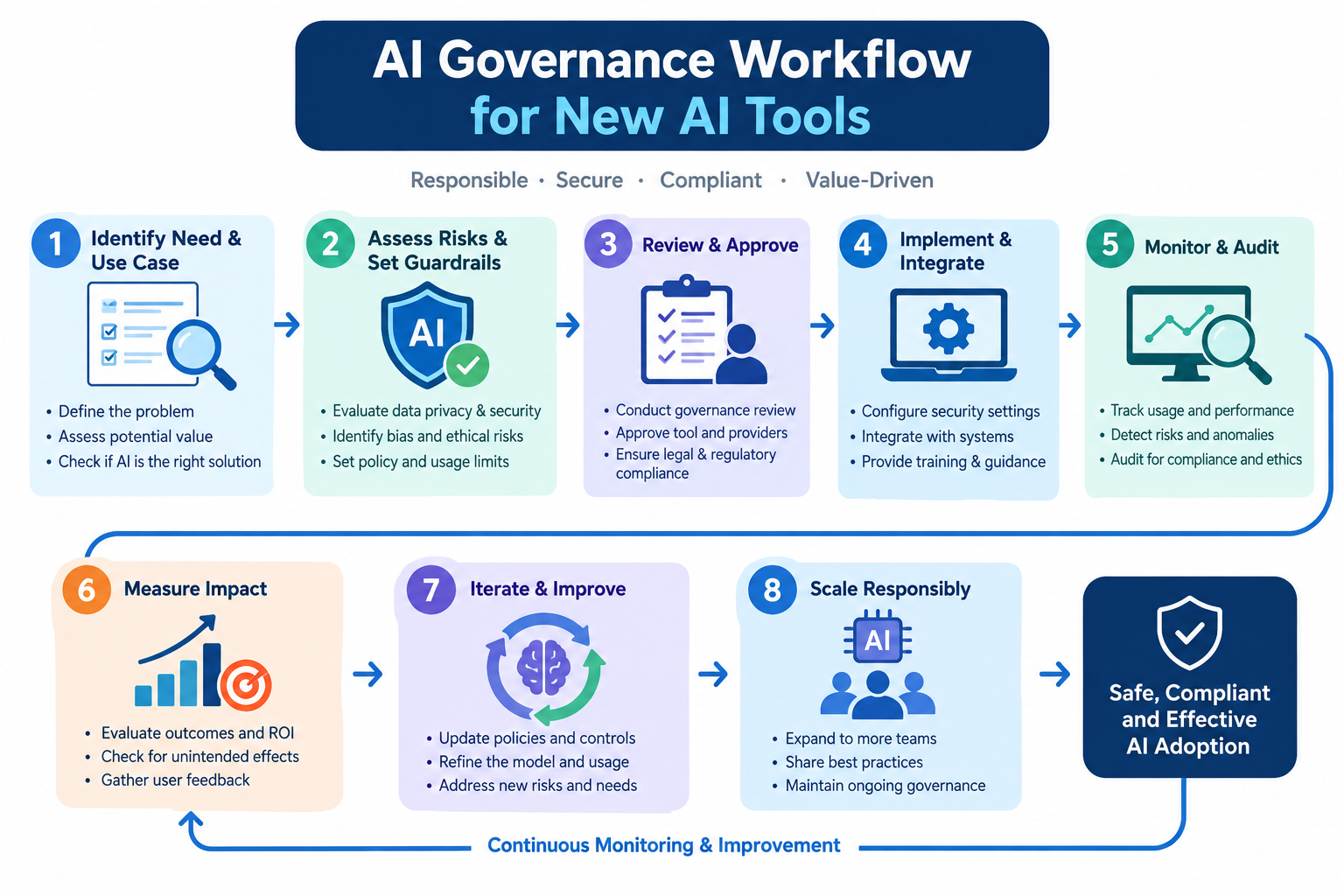
- Implement responsible AI governance
- Strengthen cybersecurity
- Start with high-impact pilot projects
- Continuously monitor AI performance
Conclusion
AI and 5G technology are transforming how businesses, governments, and industries operate in 2026. By combining intelligent decision-making with ultra-fast, low-latency connectivity, they enable innovative applications across healthcare, manufacturing, transportation, retail, agriculture, and smart cities.
Although challenges such as cybersecurity, infrastructure costs, and data privacy remain, the benefits far outweigh the obstacles. Organizations that strategically invest in AI and 5G today will be better positioned to drive innovation, improve operational efficiency, and remain competitive in the rapidly evolving digital economy.


Post Comment