AI vs Human Content: Why the Best Strategy Combines Both

Introduction
Artificial intelligence has transformed content creation, enabling businesses to produce blog posts, social media updates, emails, product descriptions, and marketing copy in a fraction of the time it once took. AI-powered writing tools can generate ideas, draft articles, and optimize content for search engines within minutes. However, despite these impressive capabilities, human writers remain essential for creating authentic, trustworthy, and emotionally engaging content.
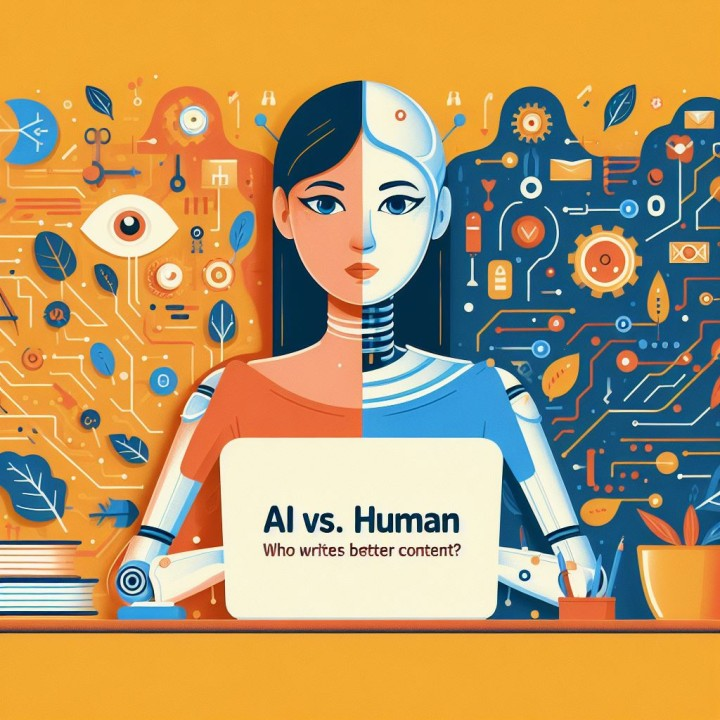
Rather than viewing AI vs Human Content writers as competitors, many successful businesses now use a hybrid approach. AI handles repetitive and data-driven tasks, while humans provide creativity, critical thinking, storytelling, and strategic oversight. This combination helps organizations publish content more efficiently without sacrificing quality.
Why AI Content Is So Popular
AI writing tools have gained widespread adoption because they offer several advantages:
- Generate content quickly
- Reduce production costs
- Brainstorm article ideas
- Create SEO-friendly outlines
- Produce content in multiple languages
- Rewrite and summarize existing text
- Assist with keyword optimization
For businesses managing large volumes of content, AI can significantly improve productivity and shorten publishing timelines.
Where AI Performs Best
AI excels at tasks that rely on patterns, structure, and large amounts of existing information.
Content Research
AI can quickly summarize information from multiple sources, identify trends, and organize key points.
First Drafts
Instead of starting from a blank page, writers can use AI to create an initial draft and refine it later.
SEO Optimization
AI tools can suggest:
- Target keywords
- Meta descriptions
- Title ideas
- Internal linking opportunities
- Content structure
Content Repurposing
AI can transform one article into:
- Social media posts
- Email newsletters
- Video scripts
- FAQs
- Product descriptions
Where Human Writers Excel
While AI is efficient, human expertise remains critical in areas that require originality, judgment, and emotional intelligence.
Storytelling
Humans create compelling narratives that connect with readers on an emotional level.
Personal Experience
AI cannot genuinely share firsthand experiences, opinions, or lessons learned.
Brand Voice
A consistent and authentic brand voice is easier to maintain with human oversight.
Critical Thinking
Human writers evaluate facts, identify nuances, and make informed decisions about what information to include.
Creativity
Original ideas, humor, cultural references, and innovative perspectives are still strengths of human creators.
Why Combining AI and Human Writers Works Best
The most effective content strategies use AI as an assistant rather than a replacement.
A typical workflow might look like this:
- AI generates topic ideas.
- AI creates a detailed outline.
- AI drafts the initial content.
- Human writers fact-check the information.
- Human editors improve readability and flow.
- Subject-matter experts add insights and examples.
- Final proofreading ensures accuracy and consistency.
This approach saves time while maintaining high editorial standards.
Benefits of a Hybrid Content Strategy
Organizations that combine AI with human expertise often gain several advantages:
- Faster content production
- Improved content quality
- Better search engine optimization
- More engaging articles
- Stronger brand identity
- Higher reader trust
- Greater consistency across content channels
Common Mistakes to Avoid
Even with AI, content quality can suffer if it’s not reviewed carefully.
Avoid these common mistakes:
- Publishing AI-generated text without editing
- Including inaccurate or outdated information
- Creating repetitive or generic articles
- Ignoring brand voice and audience needs
- Overusing keywords for SEO
- Failing to cite reliable sources when appropriate
Human review is essential to catch errors and ensure content meets quality standards.
Tips for Using AI Effectively
To get the most value from AI tools:
- Use detailed prompts to improve output quality.
- Verify facts before publishing.
- Add original examples, case studies, or expert opinions.
- Edit for clarity, tone, and readability.
- Optimize content based on audience feedback and analytics.
- Keep human editors involved throughout the publishing process.
The Future of Content Creation
As AI continues to evolve, it will become an even more valuable tool for research, drafting, translation, and content optimization. At the same time, readers increasingly value authenticity, expertise, and unique perspectives—qualities that AI vs Human Content writers provide.
Businesses that combine AI’s efficiency with human creativity will be better positioned to produce content that is informative, engaging, and trustworthy.
Conclusion
AI and human writers each bring unique strengths to the content creation process. AI excels at speed, scalability, and automation, while humans contribute creativity, judgment, empathy, and strategic thinking. Instead of choosing one over the other, the most effective approach is to combine both.
By using AI to streamline repetitive tasks and relying on human expertise for editing, storytelling, and decision-making, businesses can create high-quality content that resonates with audiences and performs well in search results.



Post Comment