Top AI Trends 2026: Emerging Technologies Every Business Should Know
Introduction
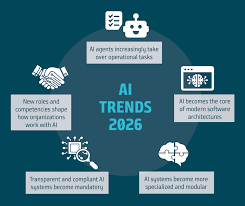
Artificial intelligence (AI) is evolving at an unprecedented pace, becoming a key driver of innovation across industries. In 2026, companies will use AI not simply to automate repetitive jobs but also to protect cybersecurity, improve consumer experiences, make better decisions, and generate new revenue streams. Organizations that understand and adopt the latest AI trends 2026 will be better positioned to compete in an increasingly digital economy.
This guide explores the top AI trends of 2026 and explains how these emerging technologies are transforming businesses worldwide.
1. AI Agents Become Mainstream
One of the most significant developments in 2026 will be AI agents. Unlike traditional chatbots, AI agents can plan tasks, make decisions, use software tools, and complete multi-step workflows with minimal human intervention.
Businesses are using AI agents for:
- Customer support automation
- Sales and lead generation
- Marketing campaign management
- HR recruitment assistance
- Software development
- Financial reporting
These smart assistants lower operating expenses while increasing productivity.
2. Multimodal AI
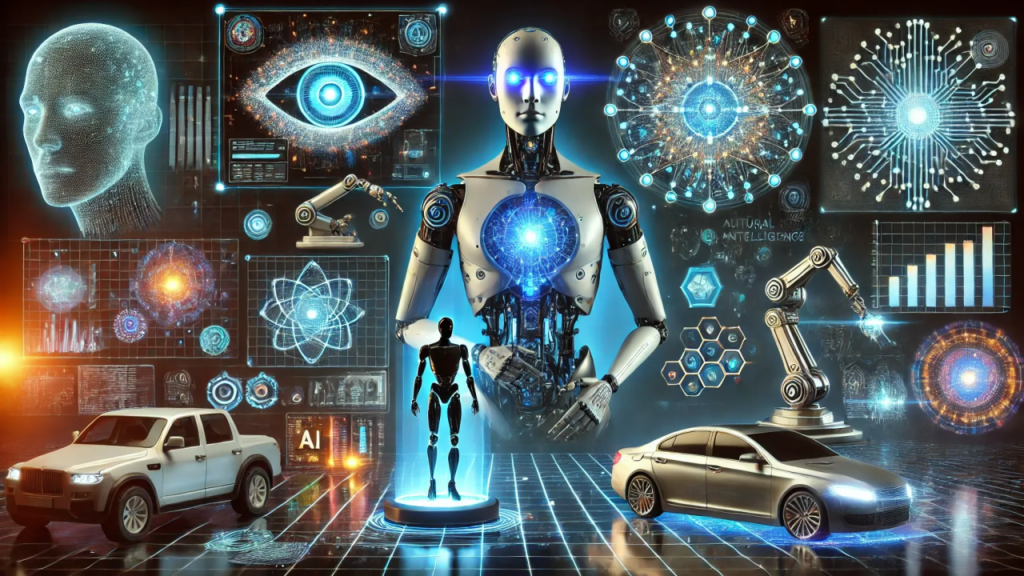
Multimodal AI can understand and generate text, images, audio, video, and code within a single system. This capability enables businesses to create richer customer experiences and automate complex workflows.
Common applications include:
- AI-powered design
- Video generation
- Voice assistants
- Image analysis
- Interactive customer service
- Content creation
Multimodal AI makes communication with AI systems more natural and efficient.
3. Smaller and More Efficient AI Models
Organizations are increasingly adopting compact AI models that require fewer computing resources while delivering high performance.
Benefits include:
- Lower infrastructure costs
- Faster response times
- Better privacy
- Easier deployment
- Improved energy efficiency
These models allow companies to implement AI without relying exclusively on large cloud infrastructure.
4. Edge AI Expansion
Edge AI processes data directly on local devices instead of sending everything to the cloud.
Industries benefiting from Edge AI include:
- Manufacturing
- Healthcare
- Retail
- Automotive
- Smart cities
- Industrial automation
Advantages include reduced latency, stronger privacy, lower bandwidth costs, and faster real-time decision-making.
5. AI-Powered Cybersecurity
AI is becoming increasingly important in safeguarding digital assets as cyber attacks become more complex.
AI security solutions can:
- Detect suspicious activity
- Identify malware
- Prevent phishing attacks
- Monitor networks continuously
- Respond to threats automatically
Businesses are investing heavily in AI-driven security platforms to strengthen cyber resilience.
6. Generative AI for Business Operations
Generative AI has expanded beyond content creation to support everyday business operations.
Companies use it for:
- Writing reports
- Creating marketing content
- Summarizing meetings
- Drafting emails
- Product design
- Software coding
- Customer service
Generative AI helps employees complete tasks faster while maintaining consistency.
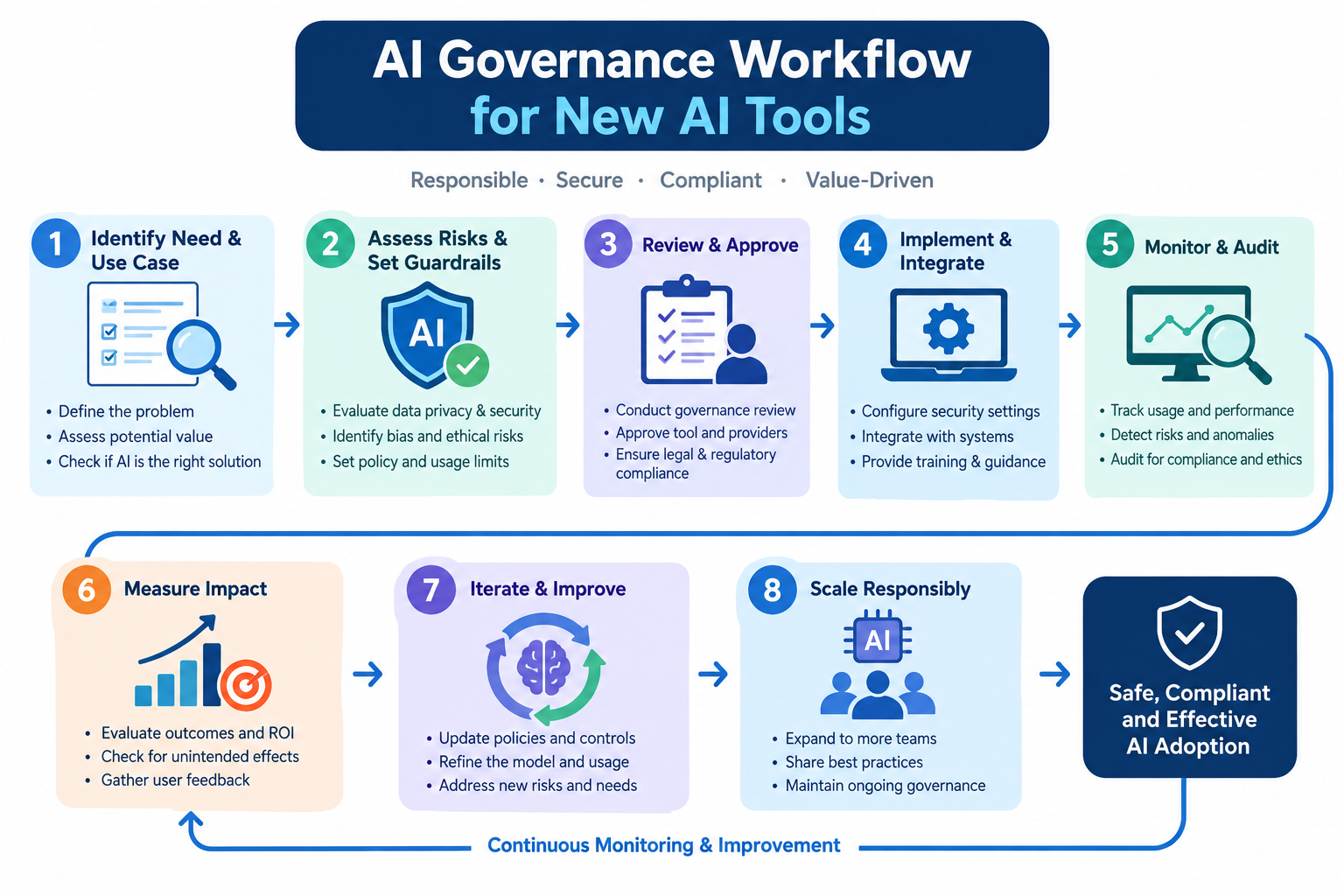
7. AI Governance and Responsible AI
Organisations are concentrating on appropriate AI practices as the use of AI increases
Key priorities include:
- Transparency
- Fairness
- Bias reduction
- Data privacy
- Regulatory compliance
- Human oversight
Strong AI governance lowers ethical and legal concerns while assisting companies in gaining the trust of their clients.
8. AI-Powered Business Intelligence
Modern analytics platforms now combine AI with business intelligence to deliver predictive insights instead of simply reporting historical data.
Organizations use AI analytics for:
- Demand forecasting
- Financial planning
- Customer behavior analysis
- Sales optimization
- Supply chain management
- Risk assessment
This enables faster and more informed decision-making.
9. Hyper automation
Hyper automation combines AI, robotic process automation (RPA), machine learning, and workflow automation to streamline end-to-end business processes.
Popular use cases include:
- Invoice processing
- Employee onboarding
- Document management
- Procurement
- Customer support
- Compliance reporting
Hyper automation increases accuracy and efficiency while decreasing manual labour.
10. AI for Personalized Customer Experiences
Businesses increasingly use AI to personalize every customer interaction.
Examples include:
- Product recommendations
- Personalized marketing
- Dynamic pricing
- Virtual shopping assistants
- Customer segmentation
- Predictive customer support
Personalization improves engagement, customer satisfaction, and conversion rates.
11. AI in Software Development
AI coding assistants continue to transform software engineering by helping developers write, review, debug, and optimize code more efficiently.
Benefits include:
- Faster development cycles
- Reduced coding errors
- Improved documentation
- Automated testing
- Better code quality
Development teams are integrating AI into nearly every stage of the software lifecycle.
12. Industry-Specific AI Solutions
Rather than using general-purpose AI alone, organizations are adopting specialized AI solutions tailored to their industries.
Examples include:
- Healthcare diagnostics
- Financial fraud detection
- Legal document analysis
- Retail demand forecasting
- Manufacturing quality inspection
- Agricultural monitoring
More accurate outcomes and more commercial value are produced by industry-specific AI.
Benefits of Following AI Trends
Businesses that embrace emerging AI technologies can achieve:
- Increased productivity
- Better customer experiences
- Lower operational costs
- Improved decision-making
- Enhanced cybersecurity
- Greater innovation
- Faster business growth
- Competitive advantage
Early adoption enables businesses to maintain their competitive edge in quickly evolving markets.
Challenges Businesses Should Consider
Despite its advantages, AI adoption presents several challenges:
- Data privacy concerns
- AI bias
- Regulatory compliance
- Workforce training
- Integration with existing systems
- High implementation costs
- Ethical decision-making
Careful planning, oversight, and continuous monitoring are necessary for AI efforts to be successful.
Conclusion
The top AI trends 2026 of demonstrate that artificial intelligence is becoming a core business technology rather than an experimental tool. From AI agents and multimodal systems to edge computing, cybersecurity, hyper automation, and personalized customer experiences, AI is reshaping how organizations operate and compete. Businesses that invest in responsible AI adoption, employee training, and strategic implementation will be better equipped to drive innovation, improve efficiency, and achieve long-term success in the evolving digital economy.


Post Comment