The AI Companionship Market in 2026: Growth, Business Models, and Risks

Introduction
The AI companionship market has emerged as one of the fastest-growing segments of the artificial intelligence industry. Advances in generative AI, large language models (LLMs), emotional AI, and multimodal technologies have enabled businesses to create AI companions that can engage in natural conversations, provide emotional support, assist with daily tasks, and offer personalized interactions.
In 2026, AI companionship market are being used for entertainment, productivity, education, wellness, customer engagement, and social interaction. As demand grows, companies are experimenting with new business models while addressing concerns around ethics, privacy, regulation, and user trust.
Understanding the AI Companionship Market
AI companions are software applications or digital agents designed to simulate human-like conversations and interactions. Unlike traditional chatbots, modern AI companions learn user preferences, remember context (where enabled), adapt communication styles, and provide more engaging experiences.
Key characteristics include:
- Natural language conversations
- Personalized recommendations
- Emotional awareness through sentiment analysis
- Voice and text communication
- Image and multimodal capabilities
- Integration with smart devices and productivity tools
AI companions are now more than just aides thanks to these qualities; they can now be used as long-term digital companions for both personal and professional purposes.
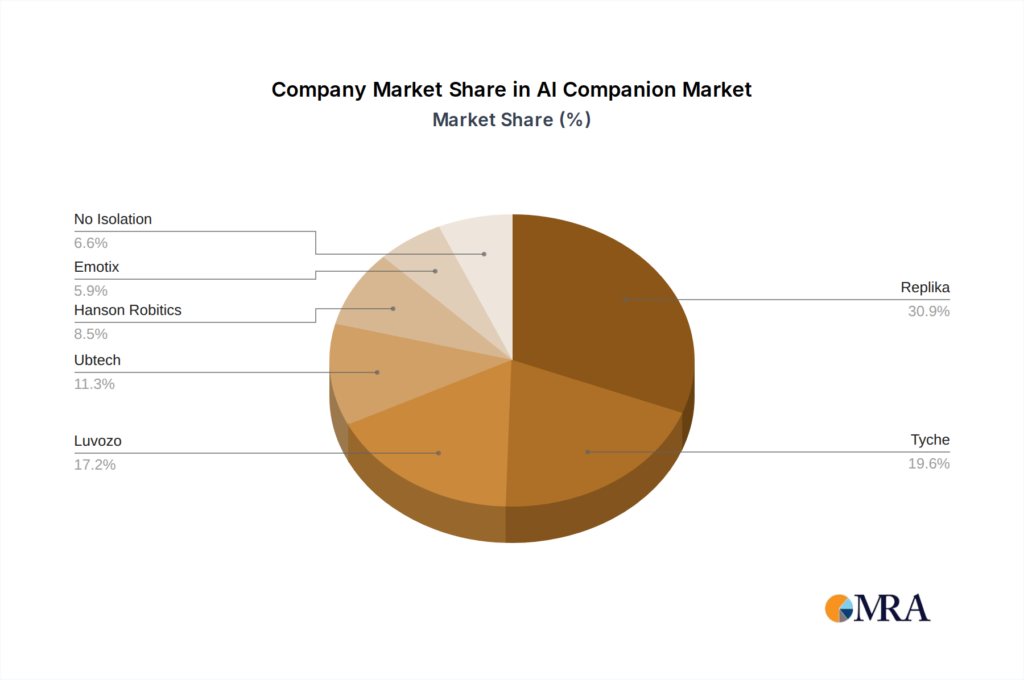
Market Growth in 2026
Several factors are driving market expansion:
Rapid Advances in Generative AI
Improved language models generate more accurate, context-aware, and human-like responses, making AI companions increasingly useful.
Consumer Acceptance
People are growing increasingly at ease using AI for everyday support, education, entertainment, and wellbeing.
Enterprise Adoption
Businesses are deploying AI companions to improve customer service, employee support, onboarding, training, and knowledge management.
Subscription Economy
Many providers have adopted recurring subscription models that create predictable revenue while offering premium features and personalized experiences.
Mobile and Cloud Technologies
Cloud computing and smartphones make AI companions accessible anytime and anywhere, supporting continuous engagement.
Major Business Models
1. Subscription Model
This is the most common revenue strategy.
Features often include:
- Unlimited conversations
- Faster AI responses
- Premium personalities
- Voice interaction
- Long-term memory
- Advanced customization
Monthly and annual subscriptions provide recurring income and improve customer retention.
2. Freemium Model
People are growing increasingly at ease using AI for everyday support, education, entertainment, and wellbeing.
Examples of premium features include:
- Enhanced AI intelligence
- Custom avatars
- Advanced conversation modes
- Longer memory retention
- Exclusive content
The freemium approach attracts a large user base while encouraging upgrades.
3. Enterprise AI Solutions
Businesses purchase customized AI companions for:
- Customer support
- Sales assistance
- HR onboarding
- Employee training
- Internal knowledge management
Enterprise contracts often provide stable, long-term revenue.
4. API and Platform Licensing
AI companies license their technology to software developers and organizations, enabling them to integrate conversational AI into websites, applications, and digital products.
Revenue comes from usage-based pricing or licensing agreements.
5. Digital Marketplace
Some AI platforms allow creators to build and monetize custom AI companions.
Revenue sources include:
- AI character sales
- Premium templates
- Creator subscriptions
- Revenue sharing
- Virtual experiences
This ecosystem encourages innovation while expanding platform offerings.
Key Market Opportunities
Healthcare and Wellness
AI companions can assist with mental wellness check-ins, habit tracking, and health education while complementing—not replacing—professional care.
Education
Students use AI companions for tutoring, language practice, coding assistance, and personalized learning support.
Customer Service
Organizations deploy conversational AI to provide 24/7 customer assistance, reducing response times and operational costs.
Productivity
AI companions help users organize schedules, summarize documents, brainstorm ideas, and automate repetitive tasks.
Entertainment
People are growing increasingly at ease using AI for everyday support, education, entertainment, and wellbeing.
Market Risks and Challenges
Privacy and Data Security
AI companions often process sensitive personal information. Companies must implement strong security measures, transparent privacy policies, and user controls over stored data.
Ethical Concerns
Businesses must address questions related to:
- Emotional dependence
- Transparency about AI capabilities
- Appropriate content moderation
- Fair and responsible AI behavior
Responsible design is essential for building trust.
Regulatory Compliance
Governments are introducing regulations related to AI safety, privacy, transparency, and accountability. Businesses operating globally must adapt to evolving legal requirements.
Competition
The AI companionship market is becoming increasingly competitive.
Companies compete through:
- Better personalization
- Higher-quality conversations
- Lower pricing
- Stronger privacy protections
- Unique features and integrations
Continuous innovation is necessary to remain competitive.
User Trust
Long-term success depends on maintaining user confidence.
Companies should:
- Clearly explain AI limitations
- Protect user data
- Avoid deceptive practices
- Offer transparent subscription policies
- Provide effective customer support
Emerging Trends
The future of AI companionship is being shaped by a number of trends:
- Multimodal AI combining text, voice, images, and video
- Personalized AI agents tailored to individual preferences
- AI companions integrated into workplace productivity tools
- Real-time language translation
- Wearable AI devices with conversational capabilities
- Stronger privacy controls and user-managed data
- Industry-specific AI companions for healthcare, education, and finance
Business Strategies for Success
Organizations entering the AI companionship market should focus on:
- Building user trust through transparency and security.
- Offering meaningful personalization while respecting privacy.
- Creating sustainable subscription and enterprise revenue models.
- Investing in responsible AI governance and compliance.
- Continuously improving AI quality using user feedback and performance monitoring.
- Developing partnerships that expand platform capabilities and reach.
Future Outlook
The AI companionship market is expected to continue expanding as AI becomes more capable, accessible, and integrated into everyday life. Success will depend not only on technological innovation but also on responsible business practices, ethical product design, and strong customer relationships.
Companies that combine advanced AI capabilities with transparency, privacy, and user-centered experiences will be better positioned to compete in this rapidly evolving market.
Conclusion
The AI Companionship Market in 2026: Growth, Business Models, and Risks reflects a dynamic industry with significant commercial potential. Subscription services, enterprise solutions, licensing, and creator ecosystems are driving new revenue opportunities, while privacy, ethics, regulation, and competition remain critical challenges.
As AI companions become more sophisticated, businesses that prioritize innovation alongside trust, security, and responsible AI practices are likely to achieve sustainable growth and long-term success in this emerging market.



Post Comment