SPY vs QQQ: Which Is Better for Investors in 2026?
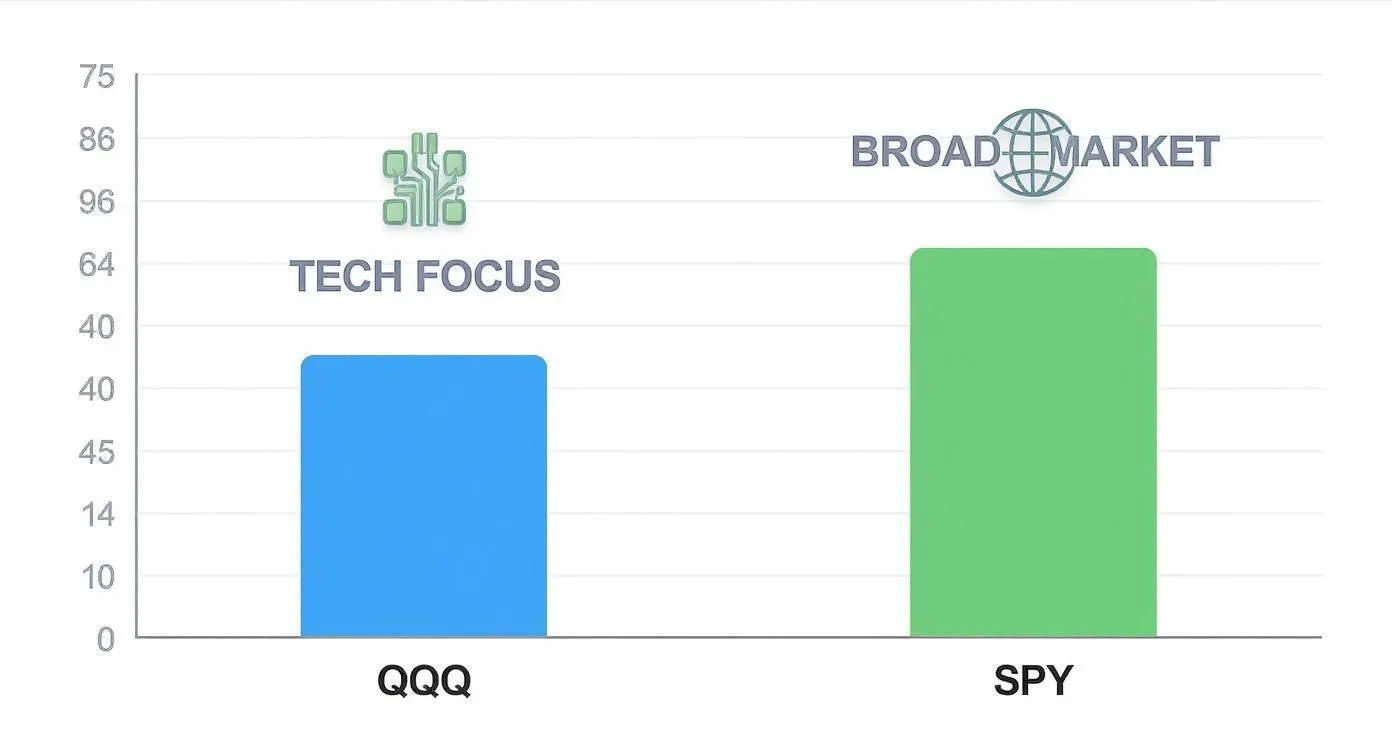
When comparing popular U.S. exchange-traded funds, SPY vs QQQ is one of the most common comparisons investors make. Both ETFs provide exposure to major American companies, but they follow different indexes and have different investment characteristics.
SPY tracks the S&P 500, providing broad exposure to large U.S. companies across many industries. QQQ, meanwhile, tracks the Nasdaq-100 and focuses on 100 of the largest non-financial companies listed on the Nasdaq.
So, which is better: SPY or QQQ? The answer depends on an investor’s goals, risk tolerance, desired diversification, and preference for growth-oriented companies.
What Is SPY?
SPY, officially the SPDR S&P 500 ETF Trust, is designed to track the S&P 500 Index.
The ETF provides exposure to large U.S. companies across sectors such as technology, financials, healthcare, communication services, consumer discretionary, industrials, energy, and utilities.
Because SPY follows a broad market index, it can be used as a core holding for investors seeking diversified exposure to the U.S. stock market.
As of September 2026, some of SPY’s largest holdings include NVIDIA, Apple, Microsoft, Amazon, Alphabet, Broadcom, Meta Platforms, Micron Technology, and Tesla.
What Is QQQ?
QQQ is the Invesco QQQ ETF. It tracks the Nasdaq-100 Index, which represents 100 of the largest non-financial companies listed on the Nasdaq.
QQQ has significant exposure to technology and other growth-oriented industries. Its holdings include many major companies involved in semiconductors, software, cloud computing, artificial intelligence, internet services, and consumer technology.
Invesco states that QQQ had 102 holdings as of May 25, 2026, with a total expense ratio of 0.18%.
SPY vs QQQ: Key Differences
| Feature | SPY | QQQ |
| Index tracked | S&P 500 | Nasdaq-100 |
| Main exposure | Broad U.S. large-cap market | Large Nasdaq-listed non-financial companies |
| Diversification | Higher across sectors | More concentrated |
| Technology exposure | Significant | Generally much higher |
| Growth focus | Balanced | Stronger growth orientation |
| Expense ratio | 0.0945% gross | 0.18% total |
| Best suited for | Broad market exposure | Growth-oriented exposure |
SPY’s expense ratio is currently lower than QQQ’s, although expense ratios can change over time.
SPY vs QQQ Holdings
The holdings are one of the biggest differences between the two ETFs.
SPY owns companies across the S&P 500. Its portfolio therefore includes technology companies as well as financial institutions, healthcare companies, industrial businesses, energy firms, consumer companies, and other major U.S. corporations.
QQQ has a narrower focus. Its benchmark consists of the largest non-financial companies listed on Nasdaq, giving investors substantial exposure to technology and other growth-oriented businesses.
There is also considerable overlap between the two ETFs. Major companies such as NVIDIA, Apple, Microsoft, Amazon, Alphabet, Broadcom, Meta Platforms, and Tesla can be important holdings in both funds.
SPY vs QQQ Performance
Historical performance is another major reason investors compare SPY and QQQ.
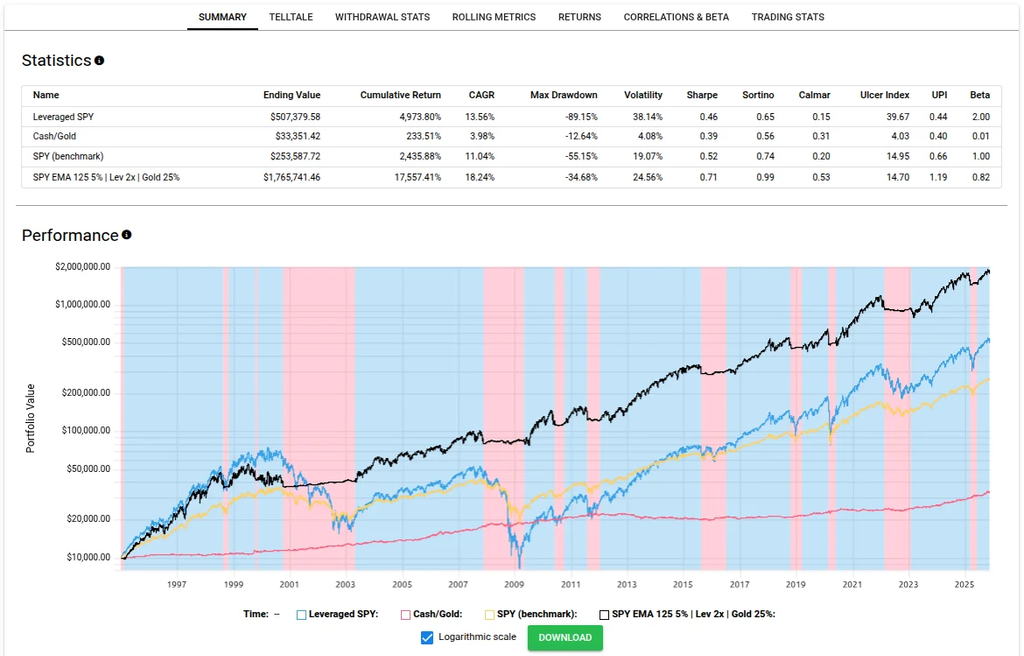
QQQ’s concentration in large growth companies can allow it to outperform a broader market ETF during periods when technology and growth stocks perform strongly. However, the same concentration can create greater downside risk when growth-oriented companies experience a major correction.
SPY offers broader exposure to the U.S. economy. Its performance is therefore influenced by a wider range of industries rather than depending as heavily on a smaller group of growth companies.
Investors should remember that past performance does not guarantee future results. Both ETFs can lose value, and neither should be viewed as a guaranteed source of returns.
SPY vs QQQ: Which Has More Risk?
Generally, QQQ can carry greater concentration risk because its portfolio is more heavily tilted toward large Nasdaq-listed growth companies.
SPY is more diversified across industries, which can help reduce dependence on one particular sector.
However, SPY is not low-risk. It remains exposed to overall U.S. stock-market declines.
The difference is mainly in the type of exposure. SPY provides broader market exposure, while QQQ provides more concentrated exposure to large growth-oriented companies.
SPY vs QQQ for Long-Term Investing
For investors seeking a broad core ETF for long-term investing, SPY may be the more diversified choice.
It provides exposure to hundreds of large U.S. companies and spreads investment exposure across numerous sectors.
QQQ may be more attractive to investors who specifically want greater exposure to technology, innovation, and growth companies.
The right choice depends on the investor’s objectives. Someone prioritizing broad diversification may prefer SPY, while someone willing to accept greater concentration in exchange for potentially stronger growth exposure may prefer QQQ.
SPY vs QQQ Dividends
SPY and QQQ can both provide dividend distributions, but investors should not choose between them based solely on dividends.
SPY’s broad portfolio includes many mature companies across different industries, while QQQ’s portfolio has a stronger growth orientation.
Investors primarily seeking income should compare dividend yield, distribution history, and other income-focused ETFs rather than assuming that either SPY or QQQ is designed specifically for high dividend income.
SPY vs QQQ Fees
ETF expenses are another factor worth considering.
State Street currently lists SPY’s gross expense ratio at 0.0945%, while Invesco lists QQQ’s total expense ratio at 0.18%.
Although the difference may appear small, investment costs can compound over long periods. Investors should consider fees alongside diversification, performance, risk, and investment objectives rather than looking at expense ratios in isolation.
SPY vs QQQ: Which Is Better?
There is no universal winner.
SPY may be better for investors who want:
- Broad U.S. stock-market exposure
- Greater sector diversification
- A potential core portfolio holding
- Exposure to large companies across many industries
- A lower expense ratio
QQQ may be better for investors who want:
- Greater exposure to growth companies
- Higher concentration in technology-related businesses
- Exposure to major Nasdaq companies
- A more growth-oriented portfolio
- Potential participation in technology and innovation trends
The better ETF ultimately depends on what an investor is trying to achieve.
SPY vs QQQ: Which Should You Choose?
If your primary goal is broad diversification, SPY may be the more suitable option.
If your primary goal is growth-oriented exposure to major Nasdaq companies, QQQ may be more appealing.
Some investors may also consider holding both ETFs. However, because the funds share several major companies, owning both does not eliminate overlap.
Before investing, consider your investment horizon, risk tolerance, diversification needs, and overall portfolio strategy.
Final Thoughts
The SPY vs QQQ debate ultimately comes down to diversification versus concentration and broad-market exposure versus a stronger growth tilt.
SPY tracks the S&P 500 and provides broad exposure to major U.S. companies across multiple sectors. QQQ tracks the Nasdaq-100 and provides more concentrated exposure to large non-financial Nasdaq companies.
For investors who want a broad-market core ETF, SPY can be a strong option. For investors seeking greater exposure to large growth-oriented Nasdaq companies, QQQ may be more suitable.
The best choice depends on individual investment goals and risk tolerance. Investors should also check the latest fund holdings, fees, and performance before making an investment decision.



Post Comment