Secure Messaging Apps: How AI Improves Privacy and Online Security
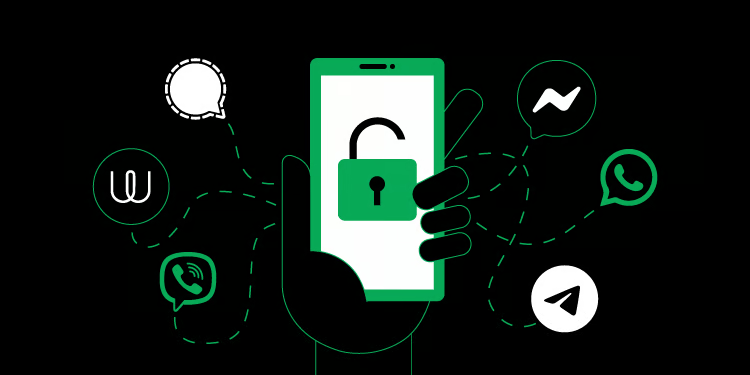
These days, messaging apps are a necessary component of daily communication. People use them to send personal messages, share photos and files, make calls, and communicate with businesses. As more private information moves through digital platforms, choosing secure messaging apps has become increasingly important.
Modern messaging platforms are also using artificial intelligence (AI) to improve security, detect suspicious activity, identify potential threats, and provide smarter privacy features. However, AI is only one part of a secure messaging system. Strong encryption, responsible data practices, privacy controls, and regular security updates remain essential.
What Are Secure Messaging Apps?
Secure messaging apps are communication platforms designed to protect messages and user information from unauthorized access. They may use technologies such as end-to-end encryption, secure authentication, encrypted backups, and privacy-focused settings.
End-to-end encryption is particularly important because it is designed to prevent anyone other than the intended participants from reading the contents of a message while it is being transmitted.
However, security can differ significantly between apps. Users should therefore examine an app’s privacy policy, encryption practices, permissions, and security features before installing it.

How AI Improves Messaging App Security
Artificial intelligence can help messaging platforms analyze patterns and detect unusual activity much faster than traditional manual systems.
1. Detecting Suspicious Activity
AI systems can analyze patterns associated with unusual account behavior. For example, repeated login attempts, abnormal message activity, or unexpected changes in account behavior may indicate a potential security threat.
AI-powered monitoring can help platforms identify these patterns and trigger additional security checks.
2. Fighting Spam and Scams
Spam and online scams are common problems across messaging platforms. AI can analyze messages and behavioral patterns to identify potentially harmful or unwanted activity.
Machine-learning systems can recognize patterns associated with phishing attempts, fake promotions, malicious links, and automated spam campaigns.
This can help messaging services protect users without relying entirely on manual moderation.
3. Identifying Malicious Links
Some messaging apps can use automated security systems to evaluate suspicious links and warn users before they interact with potentially dangerous websites.
AI can assist by analyzing link patterns, website reputation signals, and other indicators associated with online threats.
Users should still avoid clicking unfamiliar links, even when an app provides automated protection.
4. Protecting User Accounts
AI can also contribute to account protection by detecting unusual login or usage patterns.
If an account suddenly shows behavior that differs significantly from normal activity, security systems may request additional verification or temporarily restrict suspicious actions.
This can provide an additional layer of protection against compromised accounts.
AI and Privacy: What Users Should Know
While AI can improve security, it also raises important privacy questions.
AI-powered systems may process information to identify spam, scams, or suspicious behavior. The exact information used depends on how a particular messaging service is designed.
For this reason, users should review the platform’s privacy policy and understand what data is collected, how it is processed, and how long it is retained.
A secure messaging app should aim to provide strong protection without collecting unnecessary personal information.
Why End-to-End Encryption Still Matters
AI cannot replace encryption.
End-to-end encryption is one of the most important technologies used by privacy-focused messaging services. When properly implemented, it is designed so that the message is encrypted before leaving the sender’s device and can only be decrypted by the intended recipient’s device.
AI can help detect threats around a messaging platform, but encryption helps protect the actual communication.
Therefore, when comparing secure messaging apps, users should look for both strong encryption and reliable security practices.
Important Features to Look For in Secure Messaging Apps
Before installing a messaging application, consider the following features:
End-to-End Encryption
Check whether private conversations are protected with end-to-end encryption and which types of communication it covers.
Strong Account Security
Look for features such as two-factor authentication, passkeys, device verification, and login alerts.
Privacy Controls
A good messaging app should give users meaningful control over settings such as profile visibility, read receipts, disappearing messages, and contact permissions.
Secure Updates
Regular software updates are important because they can address newly discovered vulnerabilities.
Transparent Privacy Policies
Read the privacy policy to understand what information the service collects and why.
Secure Backups
Encrypted messaging does not automatically mean that backups are equally protected. Check whether cloud or local backups receive appropriate security protection.
AI-Powered Features Beyond Security
AI is also changing the way people use messaging applications.
Some platforms are introducing AI assistants, smart replies, translation tools, message summaries, and automated organization features. These capabilities can make communication faster and more convenient.
However, users should consider the privacy implications before using AI features that process message content or other personal information.
The key question is not simply whether an app uses AI, but how the AI processes user data and what privacy protections are in place.
How to Choose a Secure Messaging App
Choosing a secure messaging app should involve more than looking at its popularity.
Start by checking its encryption model and privacy practices. Then review account-security features, permissions, backup options, update history, and the company’s approach to handling user data.
It is also useful to keep the application updated and avoid downloading messaging apps from unofficial sources.
Users should remember that personal security also depends on their own behavior. Strong passwords, multi-factor authentication, cautious link handling, and regular software updates can significantly improve overall protection.
The Future of AI and Secure Messaging
AI is likely to play a growing role in digital communication security. Future systems may become better at identifying sophisticated scams, detecting unusual account behavior, and responding to emerging cyber threats.
However, privacy will continue to be a crucial factor. Messaging platforms will need to balance intelligent security tools with strong data-protection practices.
The most effective approach will combine AI-powered threat detection, strong encryption, privacy controls, and responsible data management.
Final Thoughts
Secure messaging apps are becoming increasingly important as more personal and professional communication moves online. AI can improve privacy and online security by helping detect suspicious behavior, combat scams, identify spam, and strengthen account protection.
However, AI should not be viewed as a replacement for fundamental security technologies. Before installing a messaging app, users should look for strong encryption, transparent privacy policies, secure authentication, protected backups, and regular security updates.
By combining good technology with smart digital habits, users can enjoy convenient messaging while reducing their exposure to common online security threats.




Post Comment