Heat Dome Weather by AI: Everything You Need to Know
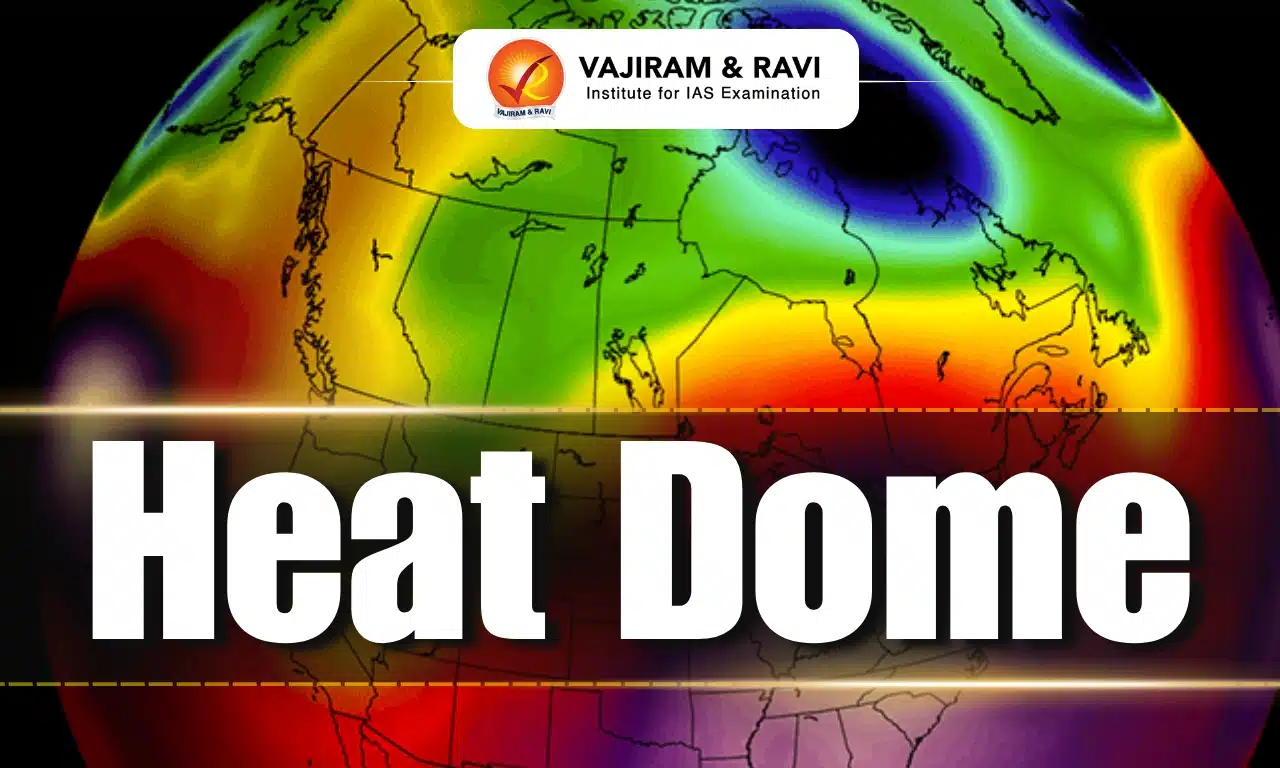
Heat Dome Weather by AI is becoming an important topic as extreme temperatures and prolonged heat waves affect different parts of the world. At the same time, artificial intelligence (AI) is changing how scientists and meteorologists analyze weather patterns and predict extreme heat.
By processing huge amounts of atmospheric data, AI weather models can identify patterns that may be difficult to detect using traditional forecasting methods. This technology can help improve our understanding of heat domes, heat waves, and other extreme-weather events.
But what exactly is a heat dome, and how does AI help predict one? Let’s explore everything you need to know.
What Is a Heat Dome?
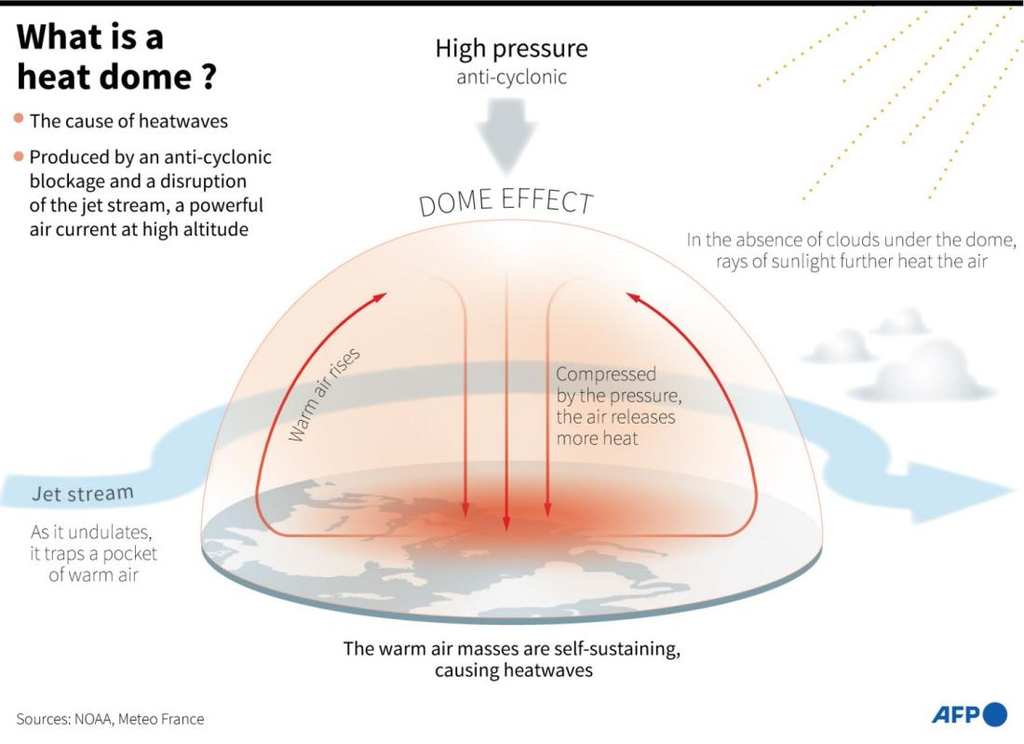
A heat dome occurs when a large area of high atmospheric pressure remains over a region for an extended period. Air is forced lower by the high-pressure system, which warms it and hinders the entry of colder air and weather systems.
Because of this, temperatures may stay abnormally high for days or even longer.
A heat dome can lead to:
- Extremely high daytime temperatures
- Warmer-than-normal nighttime temperatures
- Increased heat-wave conditions
- Higher electricity demand
- Greater wildfire risk
- Heat-related health risks
- Stress on water and agricultural resources
The longer the high-pressure system remains in place, the greater the potential impact.
How Does a Heat Dome Form?
Heat dome formation is closely associated with persistent high pressure in the upper atmosphere.
Normally, weather systems move across regions and help distribute heat. On the other hand, a strong high-pressure system may trap warm air close to the surface when it remains stationary.
Sunlight continues heating the land, while the descending air associated with high pressure can further increase temperatures.
Several atmospheric factors can therefore work together to create a prolonged period of extreme heat.
How AI Helps Predict Heat Dome Weather
Artificial intelligence is becoming an important tool in modern weather forecasting.
AI weather systems can analyze enormous datasets containing information such as:
- Atmospheric pressure
- Temperature
- Wind speed and direction
- Humidity
- Satellite observations
- Ocean temperatures
- Historical weather patterns
- Atmospheric circulation
Machine-learning models can examine relationships between these variables and identify patterns associated with extreme weather.
Instead of relying only on conventional numerical weather models, researchers can use AI models alongside existing forecasting systems.
AI Weather Forecasting and Heat Waves
One of the biggest advantages of AI weather forecasting is its ability to process large quantities of information quickly.
Traditional forecasting systems use complex mathematical equations to simulate atmospheric conditions. AI models can learn from historical weather data and atmospheric observations to recognize patterns that may indicate future changes.
For heat-wave forecasting, AI can potentially help identify:
- The development of persistent high pressure
- Rapid temperature increases
- Changes in atmospheric circulation
- Areas likely to experience extreme heat
- The possible duration of a heat event
This information can support earlier warnings and better preparation.
Can AI Predict a Heat Dome?
AI cannot guarantee that a heat dome will occur or provide a perfectly accurate prediction every time.
Weather is a highly complex system, and small changes in atmospheric conditions can affect future outcomes.
However, AI can assist meteorologists by analyzing patterns and producing forecasts that complement traditional weather models.
The most useful approach is therefore not simply replacing meteorologists with AI. Instead, AI can provide another powerful forecasting tool that experts can evaluate alongside observations and established forecasting methods.
AI vs Traditional Weather Forecasting
AI-based forecasting and traditional numerical weather prediction have different strengths.
Traditional models are based on physical laws describing the atmosphere. They simulate how temperature, pressure, moisture, wind, and other variables interact.
AI models, on the other hand, learn relationships from large quantities of historical and observational data.
Using both approaches can provide valuable advantages.
Traditional models can provide strong physical foundations, while AI can process patterns and produce forecasts rapidly.
The combination may help improve forecasting efficiency and extreme-weather monitoring.
Why Heat Dome Weather Matters
Heat domes are more than uncomfortable weather events. Prolonged extreme heat can affect public health, infrastructure, agriculture, energy systems, and the environment.
During severe heat events, people may face increased risks of heat exhaustion and heatstroke. Cities can also experience higher electricity demand because more people use air conditioning.
Agricultural areas may experience increased water requirements, while dry conditions can contribute to wildfire risk in vulnerable regions.
For these reasons, accurate and timely heat forecasting can be extremely valuable.
How AI Could Improve Extreme Heat Warnings
Earlier warnings can give governments, businesses, and individuals more time to prepare.
AI-powered forecasting systems could help identify unusual atmospheric patterns before extreme temperatures reach their peak.
For example, improved predictions could support:
- Heat-health warnings
- Emergency planning
- Energy-demand forecasting
- Agricultural decisions
- Water-resource management
- Wildfire preparedness
- Public safety campaigns
The goal is not simply to predict a high temperature. It is to provide useful information about when extreme heat may occur, how intense it could become, and how long it might last.
Heat Dome Weather and Climate Change
Heat domes are individual weather events, while climate change refers to long-term changes in Earth’s climate system.
These concepts should not be confused.
However, a warmer climate can influence the background conditions under which extreme heat occurs. As average temperatures increase, individual heat events can become more intense or reach higher temperatures.
AI can help researchers study these patterns by analyzing large historical and climate datasets.
Machine learning may also help scientists investigate relationships between atmospheric circulation, surface temperatures, and extreme-weather events.
Limitations of AI Weather Prediction
Although AI has significant potential, it is not perfect.
AI forecasting can face challenges including:
- Limited or incomplete training data
- Unusual weather conditions
- Regional differences in weather patterns
- Prediction uncertainty
- Rapidly changing atmospheric conditions
- Difficulty predicting rare extreme events
AI models can also produce incorrect forecasts if the data or assumptions behind them are inadequate.
That is why human expertise, observational data, and established forecasting methods remain important.
The Future of AI Weather Forecasting
AI is likely to become increasingly important in weather forecasting.
Future systems may combine satellite observations, radar information, traditional numerical models, and machine learning to produce faster and more detailed forecasts.
As computing technology and AI models improve, forecasting systems may become better at identifying extreme weather earlier.
Heat dome prediction is only one example. AI is also being explored for forecasting storms, rainfall, hurricanes, flooding, droughts, and other weather-related events.
Conclusion
Heat dome weather occurs when persistent high pressure traps warm air over a region, potentially producing prolonged and dangerous heat.
AI is changing how scientists approach weather forecasting by processing enormous amounts of atmospheric and historical data. While AI cannot eliminate uncertainty or perfectly predict every heat dome, it can provide valuable forecasting support and help experts identify potentially dangerous heat patterns.
As AI weather technology continues to develop, it could play an increasingly important role in preparing communities for extreme heat and other weather events.
For readers, the key takeaway is simple: AI does not cause heat domes, but it can help us understand, monitor, and predict them more effectively.


Post Comment