Future of Higher Education: The Impact of Technology on Education
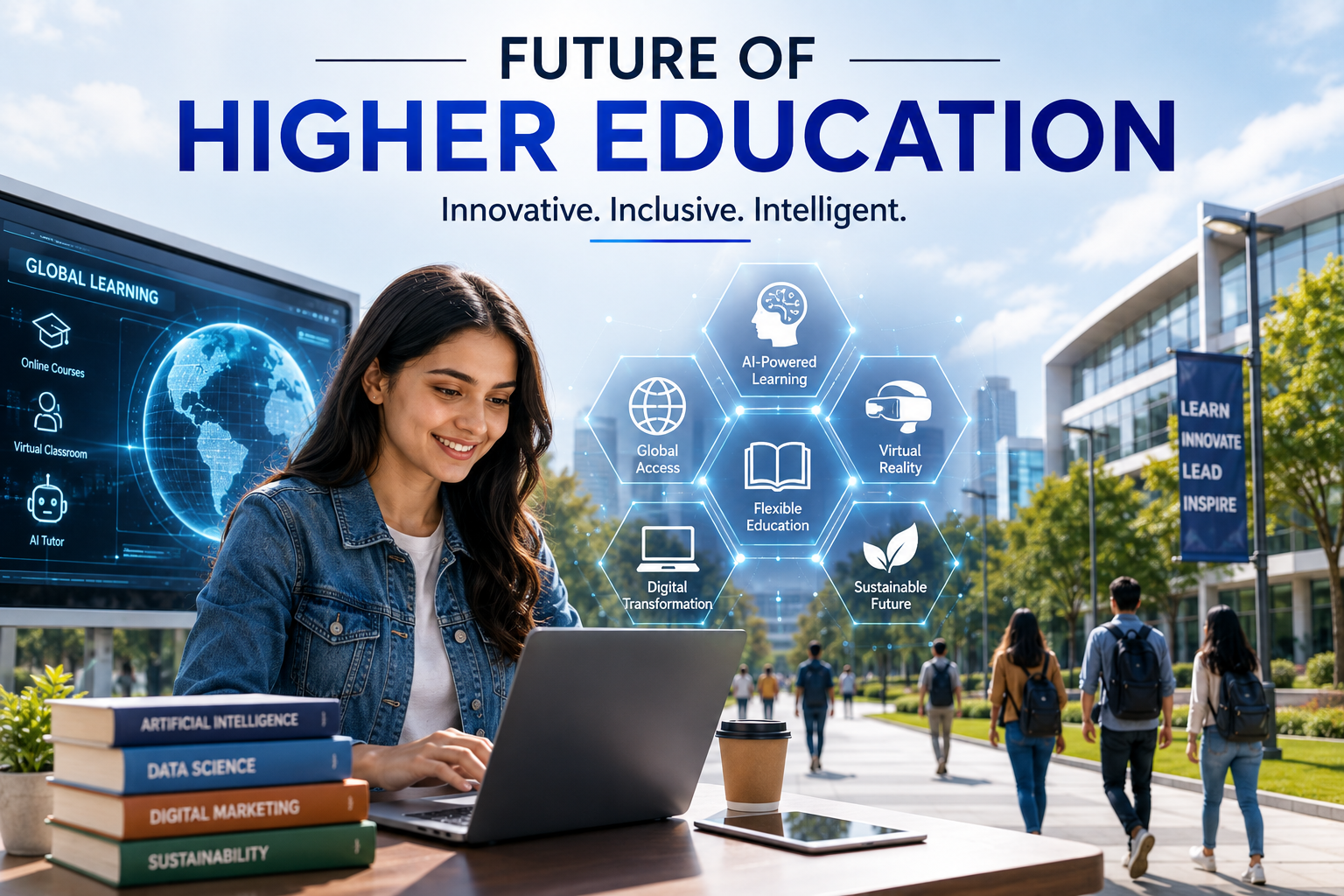
The future of higher education is being transformed by rapid advances in technology. From artificial intelligence and online learning to virtual classrooms and digital collaboration tools, technology is changing how students access knowledge, interact with instructors, and prepare for their careers. The Future of Higher Education is being shaped by technology, personalized learning, and innovative digital tools that make education more accessible and engaging.
How Technology Is Changing Higher Education
Traditional classrooms are no longer the only place where meaningful learning takes place. Universities and colleges can now combine physical teaching with digital platforms, recorded lectures, online resources, and interactive learning tools.
This shift gives students greater flexibility while allowing educators to introduce new teaching methods.

1. Online and Hybrid Learning
Online education has made higher learning more accessible to students who may not be able to attend campus every day. Hybrid programs combine classroom instruction with online activities, giving students more control over when and where they study.
This flexible approach can also help institutions reach learners beyond their local communities.
2. Artificial Intelligence in Education
The use of artificial intelligence in education is growing in importance. AI-powered tools can assist with personalized learning, research, writing support, administrative tasks, and student feedback.
However, universities must establish responsible policies for AI use. Academic integrity, privacy, transparency, and appropriate human oversight will remain important as these technologies develop.
3. Personalized Learning
Technology can help educators understand individual learning patterns and provide more targeted support. Digital platforms can track progress, identify areas where students may be struggling, and recommend additional resources.
As a result, learning can become more personalized rather than following exactly the same path for every student.
4. Virtual Reality and Interactive Education
Virtual reality and simulation-based technologies can create immersive educational experiences. Students can explore virtual environments, practice technical procedures, conduct simulations, and experience situations that may be difficult or expensive to recreate on campus.
These tools could become particularly valuable in fields such as medicine, engineering, science, and technical training.
5. Digital Skills and Career Preparation
Beyond the classroom, technology has an impact on education. Modern employers increasingly expect graduates to understand digital tools and adapt to technological change.
Universities can respond by incorporating practical technology skills, digital projects, industry partnerships, and real-world problem-solving into their programs.
6. Better Access to Educational Resources
Digital libraries, online databases, educational platforms, and open learning resources give students access to a wider range of information.
Instead of relying exclusively on physical textbooks, learners can access updated materials and research from multiple sources. This can encourage independent learning and research skills.
7. Improved Communication and Collaboration
Technology also makes collaboration easier. Students can work together through video conferencing, shared documents, discussion platforms, and digital project-management tools.
These experiences can prepare students for modern workplaces where remote and distributed teams are increasingly common.
Challenges of Technology in Higher Education
Despite its benefits, technology does not automatically improve education. Universities must consider several challenges, including:
- Unequal access to devices and reliable internet
- Data privacy and cybersecurity
- Academic dishonesty
- Teacher training
- Digital distractions
- Dependence on automated tools
- The cost of implementing new technologies
Institutions need to balance innovation with accessibility, security, and responsible use.
The Role of Educators
Technology is unlikely to eliminate the need for educators. Instead, it can give teachers more tools to support their students.
Educators can focus on mentoring, critical thinking, discussion, creativity, and personalized guidance while digital tools assist with certain repetitive or administrative tasks.
The strongest educational models will combine human expertise with useful technology rather than treating technology as a complete replacement for teachers.
What Higher Education May Look Like in the Future
Future universities may offer a combination of physical classrooms, online courses, AI-supported learning, immersive simulations, and flexible degree programs.
Students could have greater control over how they learn while institutions use technology to provide more personalized support. At the same time, universities will need to ensure that technological progress remains inclusive and focused on genuine educational outcomes.
Conclusion
The Future of Higher Education: The Impact of Technology on Education is likely to involve greater flexibility, personalization, digital collaboration, and access to learning resources. Technologies such as AI, virtual learning environments, and interactive platforms are already changing traditional educational models.
However, successful transformation will depend on how responsibly these tools are implemented. Technology can enhance higher education, but strong educators, meaningful interaction, critical thinking, and student-centered teaching will remain essential to creating a successful learning experience.



Post Comment