Banking Data Governance: Best Practices for Secure Data
Introduction
Data has become an important part of the banking industry. Financial institutions use data to understand customer needs, manage risks, and make better business decisions. However, protecting sensitive information is a major responsibility for every bank. Banking data governance provides a structured way to manage financial data, maintain its accuracy, and protect it from unauthorized access. With the right practices in place, banks can improve their operations and build stronger relationships with customers.
What Is Banking Data Governance?
Banking data governance is the process of managing financial information through clear policies, responsibilities, and security standards. It covers how data is collected, stored, accessed, updated, and shared within an organization.
A well-planned governance framework helps banks maintain reliable records and establish clear responsibilities for handling information. It also supports compliance with relevant regulations and reduces problems caused by inaccurate or poorly managed data.

Best Practices for Banking Data Governance
1. Create Clear Data Management Policies
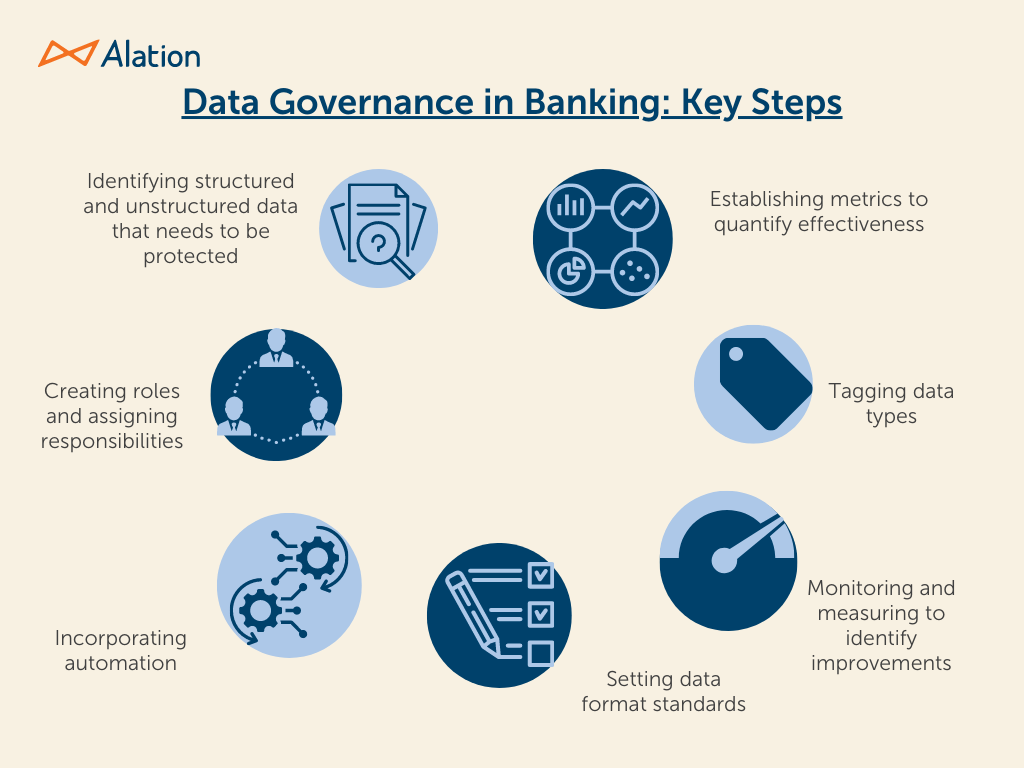
Every bank needs clear rules for managing its information. These policies should explain who is responsible for data, how it should be maintained, and which employees are allowed to access it. Assigning specific responsibilities helps different departments follow the same standards and reduces confusion when handling important financial records.
2. Protect Sensitive Financial Information
Banks store confidential customer details and transaction records, making data protection essential. Security measures such as encryption, multi-factor authentication, and role-based access controls can help prevent unauthorized access. Banks should also review their security systems regularly to identify weaknesses and address potential threats before they become serious problems.
3. Improve Data Accuracy and Quality
Reliable information helps banks make informed decisions and provide better services. Incorrect customer details, duplicate records, and outdated information can create operational difficulties. Banks can address these issues by checking data regularly, correcting errors, and following consistent data entry standards. Maintaining accurate records also helps improve reporting and reduce avoidable mistakes.
4. Follow Relevant Regulations
Banks must manage information according to the laws and regulatory requirements that apply to their operations. Effective data governance helps financial institutions maintain proper records, document important processes, and prepare for compliance reviews. Regular policy updates are also important because data protection requirements and industry standards can change over time.
5. Conduct Regular Data Reviews
Monitoring data activities helps banks understand how information is being used across their systems. Regular audits can reveal outdated records, inappropriate access permissions, and gaps in existing procedures. Banks can use monitoring tools to identify unusual activities and investigate potential problems. These reviews help keep data management practices effective and reliable.
Benefits of Banking Data Governance
Effective banking data governance offers several advantages. It helps protect confidential information, improves data accuracy, and supports better decision-making. Consistent management practices can also reduce operational errors and make regulatory reporting more reliable.
Another important benefit is customer confidence. When banks handle personal and financial information responsibly, customers have greater reason to trust their services. Strong governance also helps organizations use their data more effectively while maintaining appropriate security controls.
Conclusion
Banking data governance plays an important role in protecting financial information and maintaining reliable banking operations. By creating clear policies, improving security, maintaining accurate records, and reviewing data regularly, banks can manage information more effectively. A practical governance framework helps financial institutions reduce risks, meet relevant compliance requirements, and maintain customer trust as the banking industry continues to evolve.




Post Comment