AI Document Translator: Everything You Need to Know in 2026
Introduction
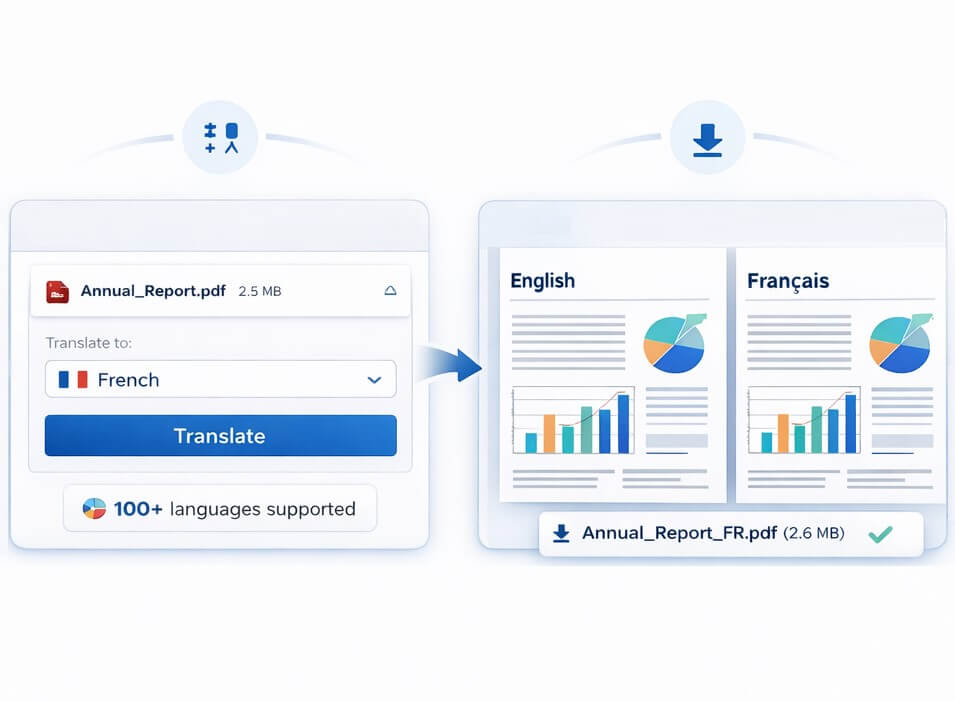
As businesses, educators, researchers, and individuals increasingly collaborate across borders, the demand for fast and accurate document translation continues to grow. An AI Document Translator uses artificial intelligence, machine learning, and natural language processing (NLP) to translate documents while preserving context, formatting, and meaning. Unlike traditional translation tools that rely on word-for-word conversion, modern AI translators understand language patterns, tone, and context, producing more natural and reliable translations.
In 2026, AI document translation has become an essential productivity tool for organizations handling multilingual communication. From contracts and business reports to PDFs, Word documents, presentations, and spreadsheets, AI-powered translation platforms make it easier than ever to communicate with global audiences.
This guide explains what an AI Document Translator is, how it works, its benefits, key features, common use cases, limitations, and future trends.
What Is an AI Document Translator?
An AI Document Translator is software that uses artificial intelligence to translate entire documents from one language to another while maintaining the original structure and formatting. These tools support a wide range of file types, including:
- Microsoft Word (DOCX)
- Excel (XLSX)
- PowerPoint (PPTX)
- Text files (TXT)
- HTML
- CSV
- eBooks
- Scanned documents using Optical Character Recognition (OCR)
Unlike conventional translation software, AI-powered solutions analyze sentence structure, grammar, context, and industry-specific terminology to improve translation quality.

How AI Document Translation Works
AI document translators combine several advanced technologies to deliver accurate results.
Natural Language Processing (NLP)
NLP enables the AI to understand grammar, sentence structure, idioms, and linguistic context instead of translating words individually.
Machine Learning
Machine learning models improve continuously by learning from billions of translated sentences and multilingual datasets.
Neural Machine Translation (NMT)
Most modern AI translators use Neural Machine Translation, which generates fluent and context-aware translations rather than literal word substitutions.
Optical Character Recognition (OCR)
OCR extracts text from scanned PDFs and images before translating the content.
Formatting Preservation
Advanced AI systems retain tables, images, charts, fonts, and page layouts, reducing the need for manual editing after translation.
Key Features of AI Document Translators
Modern AI document translation platforms typically include:
- Support for hundreds of languages
- PDF translation
- Microsoft Office document support
- OCR for scanned files
- Layout preservation
- Batch document translation
- Cloud-based collaboration
- Real-time translation
- Terminology management
- Translation memory
- API integration
- Enterprise security
- AI-powered grammar improvements
Benefits of Using an AI Document Translator
Faster Translation
AI can translate lengthy documents in minutes, significantly reducing turnaround time.
Cost Savings
Organizations lower translation expenses by automating routine translation tasks while reserving human experts for specialized content.
Improved Productivity
Employees spend less time translating documents manually and more time focusing on strategic work.
Better Consistency
AI maintains consistent terminology across multiple documents, making it especially useful for legal, technical, and corporate communication.
Global Collaboration
Businesses can communicate effectively with international clients, suppliers, partners, and remote teams.
Scalability
AI translation systems can process thousands of documents simultaneously without compromising speed.
Common Use Cases
Business
Companies translate reports, proposals, contracts, HR documents, marketing materials, and customer communications.
Healthcare
Hospitals and healthcare organizations translate patient information, medical records, consent forms, and educational resources.
Legal
Law firms translate contracts, compliance documents, patents, and legal agreements while maintaining terminology consistency.
Education
Universities and online learning platforms translate study materials, research papers, and course content for international students.
Government
Government agencies use AI translation for multilingual public services, immigration documents, and official communications.
E-commerce
Online retailers translate product descriptions, user manuals, customer support content, and websites for global markets.
Popular AI Document Translator Tools
Some widely used AI-powered document translation solutions include:
- Google Translate
- DeepL Translator
- Microsoft Translator
- Smartcat
- SDL Trados Studio
- Language Weaver
- Pairaphrase
- SYSTRAN
- Amazon Translate
- OpenAI-powered translation applications
Each platform offers different strengths, such as translation quality, language support, collaboration features, security, or enterprise integration.
Challenges and Limitations
Although AI document translation has advanced significantly, some challenges remain.
Cultural Context
Idioms, humor, and culturally specific expressions may still require human review.
Industry Terminology
Highly specialized fields such as law, medicine, and engineering often benefit from expert proofreading.
Confidential Documents
Organizations should verify that AI translation platforms meet security, privacy, and compliance requirements before uploading sensitive information.
Formatting Issues
Complex layouts, embedded graphics, or unusual fonts may occasionally require minor manual adjustments after translation.
Best Practices for Accurate AI Translation
To achieve the best results:
- Use high-quality source documents.
- Choose a translator that supports your document format.
- Enable OCR for scanned files.
- Review important translations with a professional translator.
- Maintain a glossary of industry-specific terminology.
- Protect confidential documents using secure platforms.
- Test multiple AI translation tools for quality comparisons.
- Keep the original document as a reference during review.
Future Trends
AI document translation continues to evolve rapidly. Key trends expected beyond 2026 include:
- More accurate multilingual large language models
- Real-time collaborative document translation
- Voice and document translation in a single workflow
- AI-powered localization for regional markets
- Industry-specific translation models
- Improved OCR for handwritten documents
- Enhanced data privacy and on-premises deployment
- Integration with enterprise productivity platforms
- Personalized translation based on writing style and terminology
These advancements will make AI translation even faster, more reliable, and better suited for global business operations.
Conclusion
An AI Document Translator has become an essential tool for organizations and individuals working in multilingual environments. By combining artificial intelligence, neural machine translation, and OCR technology, these platforms deliver fast, accurate, and context-aware translations while preserving document formatting. Although human expertise is still valuable for highly specialized or sensitive content, AI-powered document translation significantly improves productivity, reduces costs, and supports seamless global communication. As AI technology continues to advance, document translators will become even more accurate, secure, and capable of handling increasingly complex translation tasks across industries.


Post Comment