AI Agent Identity: The Missing Layer in Enterprise AI Security

Artificial intelligence is becoming an important part of modern enterprises. AI agents can analyze information, perform tasks, communicate with systems, and make decisions with limited human involvement. As these agents become more capable, organizations need stronger security controls. One important but often overlooked area is AI agent identity.
What Is AI Agent Identity?
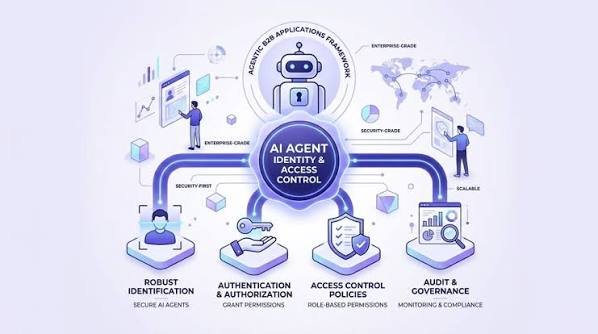
AI agent identity refers to the ability to uniquely identify an AI agent and control what it is allowed to access and do. Similar to how employees have digital identities, AI agents need identifiable credentials and permissions when interacting with business systems.
Without proper identity management, organizations may struggle to determine which AI agent accessed sensitive information, performed an action, or made a particular request.
Why AI Agent Identity Matters
Enterprise AI agents often interact with databases, cloud platforms, applications, APIs, and business data. Giving these agents unrestricted access can create significant security risks.
A strong AI agent identity system helps organizations establish clear access boundaries. Each agent can have specific permissions based on its role, reducing unnecessary access to sensitive resources.
Identity also improves accountability. Organizations can track agent activity and determine which AI system performed a particular action. This visibility can help security teams investigate unusual behavior and respond to potential threats.
Key Security Benefits
AI agent identity can support authentication, authorization, monitoring, and access control. Organizations can apply the principle of least privilege, giving each agent only the permissions it needs.
Identity-based controls can also help enterprises manage large numbers of AI agents as adoption grows. Instead of treating every agent as an anonymous software process, organizations can manage agents as identifiable digital entities.
Conclusion
AI agents are changing enterprise workflows, but their growing access to business systems creates new security challenges. AI agent identity provides an important security layer by helping organizations authenticate agents, control permissions, and monitor their activities. As enterprise AI adoption expands, strong identity management will become increasingly important for building secure and trustworthy AI environments.


Post Comment