Agentic AI and Modular Integration: Everything You Need to Know in 2026
Introduction
Artificial intelligence is evolving beyond simple automation into systems that can reason, plan, and take action with minimal human intervention. This new generation of AI, known as Agentic AI, is transforming how businesses operate by enabling intelligent agents to complete complex tasks, collaborate with other systems, and make context-aware decisions. At the same time, modular integration allows organizations to build flexible AI ecosystems by connecting specialized AI components instead of relying on a single monolithic platform.
In 2026, the combination of Agentic AI and modular integration is helping businesses improve efficiency, reduce operational costs, accelerate innovation, and adapt quickly to changing market demands. This guide explains what these technologies are, how they work, their benefits, challenges, and best practices for successful implementation.
What Is Agentic AI?
Agentic AI refers to artificial intelligence systems that can independently plan, make decisions, execute tasks, and adapt based on changing conditions while working toward defined goals.
Unlike traditional AI models that respond only to user prompts, Agentic AI can:
- Plan multi-step workflows
- Make informed decisions
- Use external tools and software
- Analyse data in real time
- Learn from previous outcomes
- Collaborate with other AI agents
- Automate complex business processes
Agentic AI acts more like a digital co-worker than a simple assistant.

What Is Modular Integration?
Modular integration is the practice of building AI systems using independent, reusable components that work together through APIs, connectors, and shared data.
Instead of replacing an entire technology stack, businesses integrate specialised AI modules into existing systems.
Common modules include:
- AI chatbots
- Document processing
- Recommendation engines
- Predictive analytics
- Computer vision
- Natural language processing
- Workflow automation
- Customer service tools
- Data analytics platforms
This modular approach allows organisations to scale AI gradually while reducing implementation risks.
Why Agentic AI and Modular Integration Matter in 2026
Businesses face increasing demands for automation, efficiency, and rapid innovation.
Agentic AI combined with modular integration enables organisations to:
- Automate complex workflows
- Reduce manual effort
- Improve decision-making
- Scale AI projects more easily
- Integrate AI with existing business systems
- Increase operational agility
- Accelerate digital transformation
- Deliver better customer experiences
How Agentic AI Works
Agentic AI generally follows a structured workflow:
Goal Definition
The AI receives a business objective or task.
Planning
The agent creates a sequence of actions required to achieve the objective.
Information Gathering
It collects information from databases, cloud platforms, websites, or enterprise software.
Decision-Making
The AI evaluates available options and selects the best course of action.
Task Execution
The agent performs tasks using integrated applications, APIs, and automation tools.
Continuous Learning
Performance data helps improve future decisions and optimize workflows.
Key Components of Agentic AI
Successful Agentic AI systems typically include:
Large Language Models (LLMs)
Provide reasoning, language understanding, and communication capabilities.
Memory
Stores previous interactions, workflows, and contextual information.
Planning Engine
Breaks complex objectives into manageable tasks.
Tool Integration
Connects with business software, databases, CRMs, and productivity platforms.
Decision Engine
Evaluates data and determines the most effective actions.
Monitoring System
Tracks performance, detects errors, and supports continuous improvement.
Benefits of Modular Integration
Modular integration offers several advantages:
Greater Flexibility
Businesses can add or replace individual AI components without rebuilding entire systems.
Scalability
New AI capabilities can be introduced as business needs evolve.
Lower Costs
Organisations invest only in the modules they require.
Faster Deployment
Independent modules reduce development and implementation time.
Better Reliability
If one module experiences issues, the rest of the system can continue operating.
Easier Maintenance
Updates can be applied to individual modules without disrupting the entire platform.
Business Applications
Customer Service
Agentic AI can:
- Resolve customer enquiries
- Route support tickets
- Personalise responses
- Escalate complex cases
Sales
Businesses use Agentic AI for:
- Lead qualification
- Sales forecasting
- Proposal generation
- CRM updates
Marketing
AI agents support:
- Campaign optimisation
- Audience segmentation
- Content creation
- Performance analysis
Human Resources
Applications include:
- Resume screening
- Interview scheduling
- Employee onboarding
- Workforce analytics
Finance
Agentic AI assists with:
- Fraud detection
- Financial forecasting
- Invoice processing
- Compliance monitoring
Supply Chain
AI agents improve:
- Inventory management
- Demand forecasting
- Logistics planning
- Supplier management
Why Modular Integration Is Better Than Monolithic AI
Traditional AI platforms often require organisations to adopt a single, complex solution.
Modular AI offers greater flexibility because organisations can:
- Select specialised tools
- Replace outdated components
- Integrate existing software
- Expand gradually
- Reduce implementation risk
This approach supports continuous innovation while protecting previous technology investments.
Challenges
Despite its advantages, organisations should prepare for several challenges.
Integration Complexity
Connecting multiple AI modules requires careful planning.
Data Quality
Poor-quality data reduces AI accuracy and performance.
Security
AI systems must protect sensitive business information.
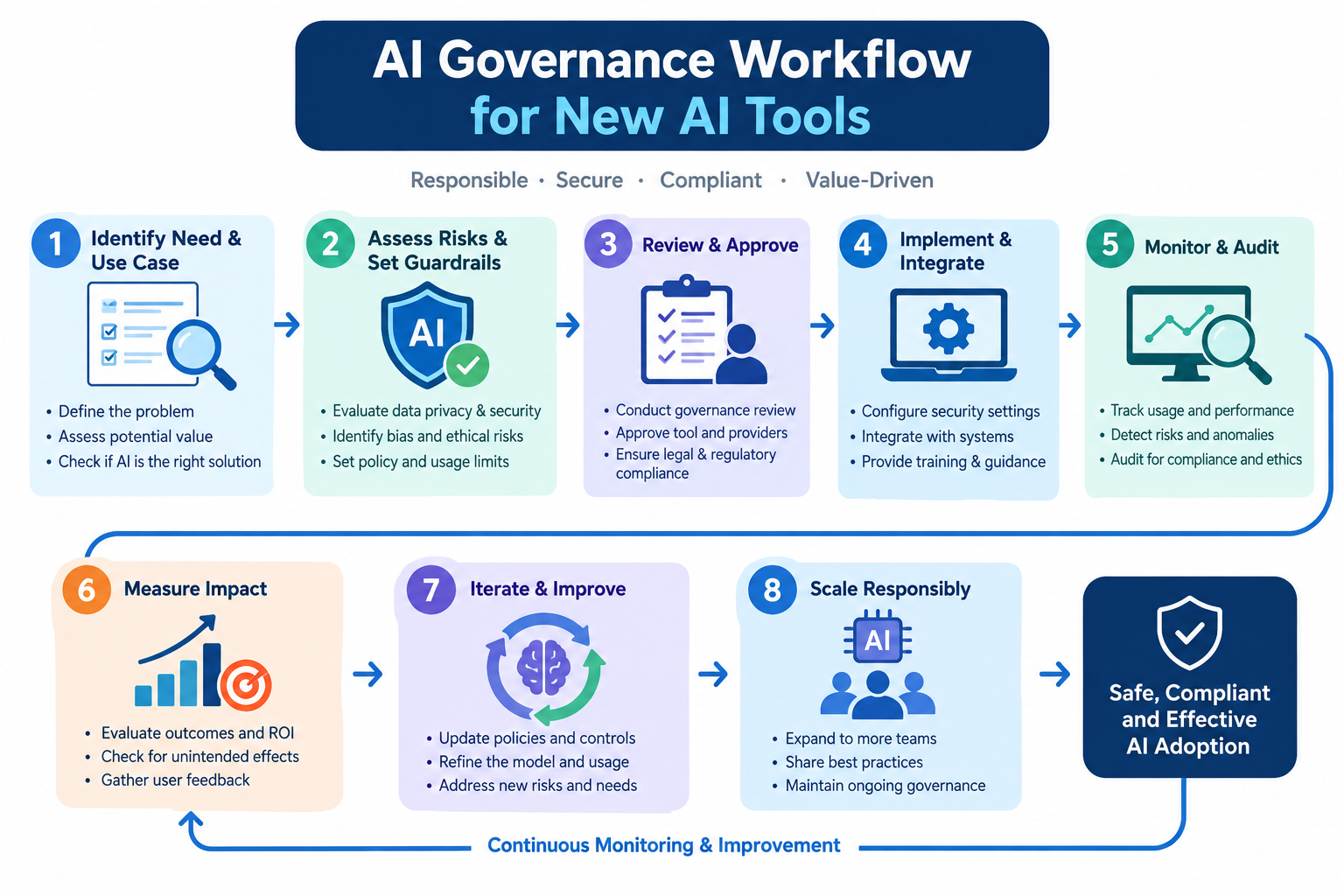
Governance
Clear policies are required to ensure responsible AI use.
Workforce Training
Employees need training to collaborate effectively with AI systems.
Cost Management
Although modular systems reduce long-term costs, initial integration may require investment.
Best Practices
To maximise success:
- Define clear business objectives.
- Start with small pilot projects.
- Use high-quality, well-governed data.
- Choose interoperable AI solutions with robust APIs.
- Maintain human oversight for important decisions.
- Implement strong cybersecurity measures.
- Continuously monitor AI performance.
- Update AI models and integrations regularly.
Future Trends in 2026
Several developments are shaping the future of Agentic AI and modular integration:
- Multi-agent collaboration
- Autonomous business workflows
- AI-powered software development
- Advanced reasoning capabilities
- Industry-specific AI agents
- Improved interoperability standards
- Explainable AI for greater transparency
- Stronger AI governance and compliance
- Real-time decision intelligence
- Deeper integration with enterprise platforms
Common Mistakes to Avoid
Businesses should avoid:
- Deploying AI without a clear strategy
- Ignoring data governance
- Relying entirely on AI without human review
- Integrating incompatible systems
- Overlooking cybersecurity
- Failing to train employees
- Neglecting ongoing monitoring and optimisation
How to Get Started
If your organisation is beginning its AI journey:
- Identify business processes suitable for automation.
- Evaluate existing technology infrastructure.
- Select modular AI tools that integrate easily.
- Launch a pilot project with measurable goals.
- Monitor performance and refine workflows.
- Expand gradually based on proven results.
Conclusion
Agentic AI and modular integration are reshaping enterprise technology in 2026 by enabling intelligent, autonomous systems that work seamlessly with existing business applications. Rather than replacing entire technology stacks, organisations can adopt flexible AI modules that improve productivity, automate complex workflows, and support smarter decision-making. By investing in strong data governance, secure integrations, employee training, and responsible AI practices, businesses can build scalable AI ecosystems that deliver long-term efficiency, innovation, and competitive advantage in an increasingly digital world.


Post Comment