What Are Prediction Markets? A Beginner’s Guide
Introduction
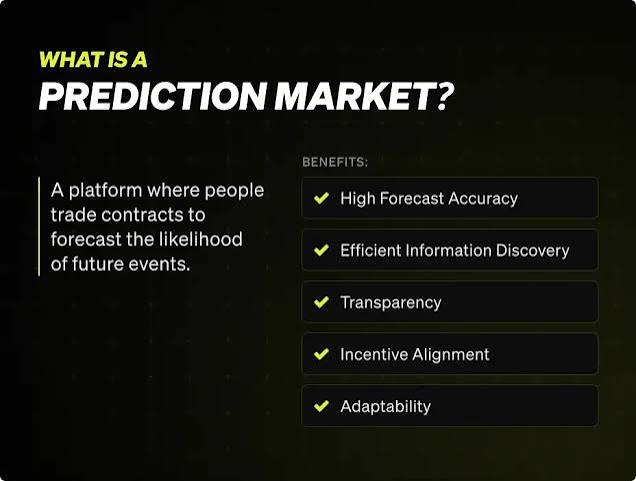
Prediction markets are online platforms where people trade contracts based on the possible outcomes of future events. These events can include elections, economic changes, sports results, cryptocurrency prices, and major global developments. By combining the opinions and expectations of many participants, prediction markets provide an estimate of how likely an event is to happen.
As technology advances, prediction markets are becoming increasingly popular among traders, researchers, and people interested in understanding future trends.
How Do Prediction Markets Work?
Prediction markets allow participants to buy and sell contracts associated with specific outcomes. The price of a contract often reflects the market’s estimated probability of that outcome.
Consider a market enquiring, for instance, “Will inflation decline next year?” Participants who believe inflation will decrease may buy contracts predicting that result. Others may take the opposite position.
In a market where a winning contract pays $1, a price of $0.70 can roughly indicate a 70% implied probability, before fees and other market effects. However, prices do not guarantee that an event will occur.
When the event is resolved, contracts are settled according to the platform’s rules and the verified outcome.
Popular Prediction Market Platforms
Several platforms have helped bring prediction markets to a wider audience.
- Polymarket: A platform known for markets covering politics, cryptocurrency, economics, and world events.
- Kalshi: A regulated US prediction market exchange offering contracts on various economic, political, and other events.
The availability of platforms and contracts depends on location, applicable laws, and eligibility requirements.
Why Are Prediction Markets Important?
Prediction markets can provide useful information about public expectations and changing beliefs. Their potential benefits include:
1. Forecasting future events: Market prices can help estimate the likelihood of specific outcomes.
2. Aggregating information: Participants bring different knowledge, opinions, and research to a shared marketplace.
3. Monitoring real-time changes: Contract prices can change as new information becomes available.
4. Supporting research: Analysts can study market movements to understand how people respond to economic reports, political developments, and other events.
However, prediction markets are not always accurate. Low liquidity, biased participation, misleading information, and sudden developments can affect prices.
The Role of Automated Data Collection
Automated data collection is becoming increasingly important in prediction markets. Software can gather information from public APIs, platform data feeds, and other permitted sources to monitor contract prices, trading volumes, and market activity.
These systems can help analysts compare related markets, detect price differences, track historical trends, and identify potential arbitrage opportunities.
For example, an automated system might compare similar contracts across two platforms and flag a price discrepancy. Traders can then investigate whether the difference represents an opportunity after accounting for fees, liquidity, settlement rules, and other risks.
Automation can also help researchers analyze large amounts of historical data more efficiently. Nevertheless, automated tools cannot eliminate uncertainty or guarantee profitable trades.
Risks and Challenges
Despite their benefits, prediction markets involve several risks. Participants may lose money, particularly when trading with limited information or misunderstanding contract conditions.
Other challenges include market manipulation, insufficient liquidity, regulatory restrictions, and uncertainty about how particular events will be resolved. Automated trading also introduces technical risks, such as faulty data, software errors, and unexpected market movements.
Understanding these limitations is essential before participating in any prediction market.
Conclusion
What Are Prediction Markets? Prediction markets provide a way to trade on future outcomes and observe how expectations change over time. Platforms such as Poly market and Kalshi have increased interest in this approach, while automated data collection is making market information easier to monitor and analyze.
As these markets continue to develop, reliable data, transparent rules, responsible participation, and appropriate regulation will remain important. Prediction markets can offer valuable insights into collective expectations, but their prices should be treated as estimates rather than certain predictions.




Post Comment