How to Mind the AI Gap: A Practical Guide for Businesses

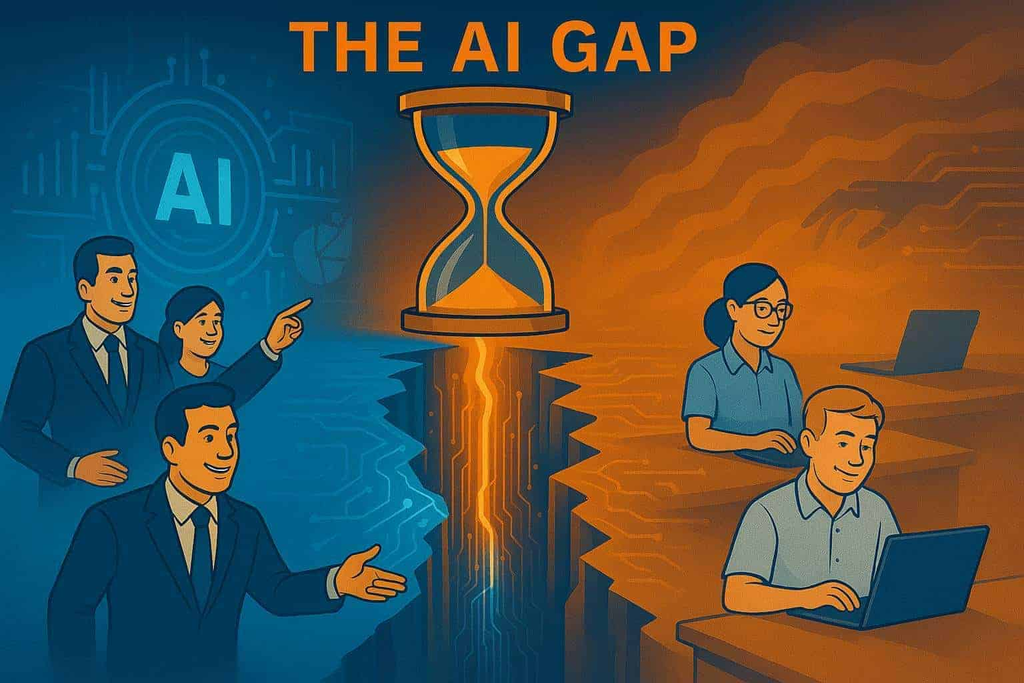
The rapid growth of artificial intelligence is creating a new Mind the AI gap between organizations and workers that are quickly adopting AI and those that are struggling to keep up. Understanding this gap can help businesses improve AI skills, technology adoption, and workforce readiness.
What Is the AI Gap?
The AI gap refers to the difference between the level of AI technology, skills, knowledge, and adoption available to different businesses, industries, or workers.
Some organizations are already using AI for automation, analytics, customer service, and productivity, while others are still exploring how the technology can fit into their operations.
Why Is the AI Gap Growing?
Several factors can contribute to the growing AI gap:
- Limited AI skills
- Lack of employee training
- High technology costs
- Poor access to AI tools
- Resistance to technological change
- Weak digital infrastructure
- Limited understanding of AI applications
Businesses that fail to address these challenges may find it harder to compete as AI adoption increases.
How to Mind the AI Gap
1. Invest in AI Skills
Businesses should provide employees with practical AI training. Workers do not necessarily need advanced programming skills; understanding how to use AI tools effectively can already improve productivity.
2. Identify AI Skills Gaps
Organizations should evaluate which AI capabilities their teams already have and where additional training is needed.
For example, employees may need training in:
- AI tools
- Data analysis
- Prompt writing
- Automation
- AI ethics
- Digital security
3. Start With Practical AI Applications
Companies do not need to transform every department at once. They can begin with specific use cases such as content creation, customer support, data analysis, or workflow automation.
Small successful projects can make wider AI adoption easier.
4. Encourage Continuous Learning
AI technology changes quickly. A single training course may not be enough.
Businesses should encourage employees to continuously develop their digital and AI skills as new tools and applications emerge.
The Role of Businesses
Companies have an important role in reducing the AI gap. Providing employees with appropriate tools, training, and opportunities to experiment with AI can help create a workforce that is better prepared for technological change.
Organizations should also develop clear policies explaining how employees can use AI responsibly.
Conclusion
The AI gap is not simply about access to artificial intelligence. It also involves skills, knowledge, infrastructure, and the ability to use AI effectively.
Businesses that invest in employee training, practical AI applications, and continuous learning can reduce this gap and prepare their workforce for an increasingly AI-driven economy.



Post Comment