Best AI Agents for Productivity in 2026: Complete Guide

AI agents are becoming powerful productivity tools in 2026. Unlike traditional chatbots, modern AI agents for productivity in 2026 can handle multi-step tasks, work with files and applications, conduct research, organize information, and help users complete real-world workflows.
What Are AI Agents for Productivity?
AI agents for productivity are intelligent systems that can understand a goal, plan the required steps, use connected tools, and help complete the task with less manual effort.
For example, instead of asking AI to simply write an email, you can give an agent a broader goal such as reviewing relevant information, preparing a response, creating follow-up tasks, and organizing the next steps.
This makes AI agents useful for writing, research, project management, scheduling, data analysis, coding, and business automation.

Best AI Agents for Productivity in 2026
1. ChatGPT Agent
ChatGPT is a strong all-purpose option for users who want one AI system for writing, research, analysis, planning, coding, and multi-step tasks.
Best for: General productivity, content creation, research, analysis, and everyday work.
2. Claude Cowork
Claude is particularly useful for document-heavy, analytical, and technical workflows. Its integrations can connect information from tools such as Gmail, Google Drive, Calendar, Notion, Slack, and Canva.
Best for: Writing, long documents, research, technical tasks, and structured analysis.
3. Google Gemini
Gemini is a natural choice for people who already work extensively with Google’s ecosystem. Its integration with Gmail, Docs, Drive, and Calendar can make everyday office tasks faster and more organized.
Best for: Google Workspace, email, documents, scheduling, and research.
4. Microsoft 365 Copilot
Microsoft 365 Copilot is designed for organizations that rely on Word, Excel, Outlook, Teams, and other Microsoft applications.
Best for: Business productivity, office documents, spreadsheets, meetings, and enterprise workflows.
5. Perplexity
Perplexity is especially valuable for research-focused productivity. It helps users find information, investigate topics, and work with cited sources.
Best for: Research, market analysis, fact-finding, and source-based content.
6. Grok
Grok is another emerging option for users interested in real-time information and newer agentic workflows.
Best for: Real-time information, research, and emerging AI workflows.
Quick Comparison
| AI Agent | Best For | Main Strength |
|---|---|---|
| ChatGPT Agent | General productivity | Broad, flexible capabilities |
| Claude Cowork | Writing & analysis | Strong document and technical workflows |
| Gemini | Google users | Google ecosystem integration |
| Microsoft 365 Copilot | Businesses | Microsoft 365 workflows |
| Perplexity | Research | Search and source-focused answers |
| Grok | Real-time information | Current information and emerging workflows |
Current 2026 comparisons generally emphasize that the best agent depends on where your work happens and which applications you need it to access, rather than there being one universal winner.
How AI Agents Improve Productivity
Automate Repetitive Work
AI agents can reduce time spent on repetitive activities such as organizing information, summarizing documents, drafting messages, and preparing reports.
Improve Research
Instead of manually opening dozens of pages, users can employ research-focused agents to gather information, compare findings, and create organized summaries.
Manage Documents
AI agents can work with documents, spreadsheets, presentations, and other files to extract information and turn unstructured data into useful outputs.
Support Content Creation
Writers and marketers can use AI agents for topic research, outlines, drafts, editing, content repurposing, and campaign preparation.
Help With Scheduling
Agents connected to calendars can help identify priorities, organize meetings, and create focused work periods.
Support Coding
Developer-focused agents can assist with writing code, debugging, testing, documentation, and managing complex software projects.
How to Choose the Best AI Agent
Choosing the right AI agent for productivity starts with your actual workflow.
Consider these factors:
- Type of work: Choose an agent based on whether you mainly write, research, code, manage projects, or analyze data.
- Integrations: Check whether it works with your existing email, calendar, cloud storage, and business applications.
- Automation: Look for agents capable of completing multiple steps rather than simply answering individual prompts.
- Security: Review permissions carefully before connecting sensitive business or personal information.
- Human control: Important actions should ideally require your approval before they are completed.
- Cost: Consider usage limits and workflow requirements rather than looking only at the subscription price.
AI Agents vs. Traditional Chatbots
Traditional chatbots usually respond to individual prompts. AI agents are designed to work toward a broader objective.
For example:
Traditional AI:
“Summarize this report.”
AI agent:
“Review this report, identify the important findings, compare them with previous information, create an action list, and prepare a summary for the team.”
The second example requires multiple steps and potentially multiple tools. This ability to plan, execute, and coordinate tasks is what makes agentic AI valuable for productivity.
Benefits for Businesses
Businesses can use AI agents to streamline knowledge-work processes and reduce manual workloads.
Common applications include:
- Sales research
- Customer support
- Marketing automation
- Meeting summaries
- Report generation
- Data analysis
- Project management
- Internal knowledge management
- Software development
- Administrative workflows
The biggest productivity gains often come from connecting an AI agent to an existing workflow instead of using it as a standalone chatbot.
Important Limitations
AI agents are powerful, but they are not perfect. They can misunderstand instructions, make incorrect assumptions, generate inaccurate information, or perform an undesirable action if permissions are poorly configured.
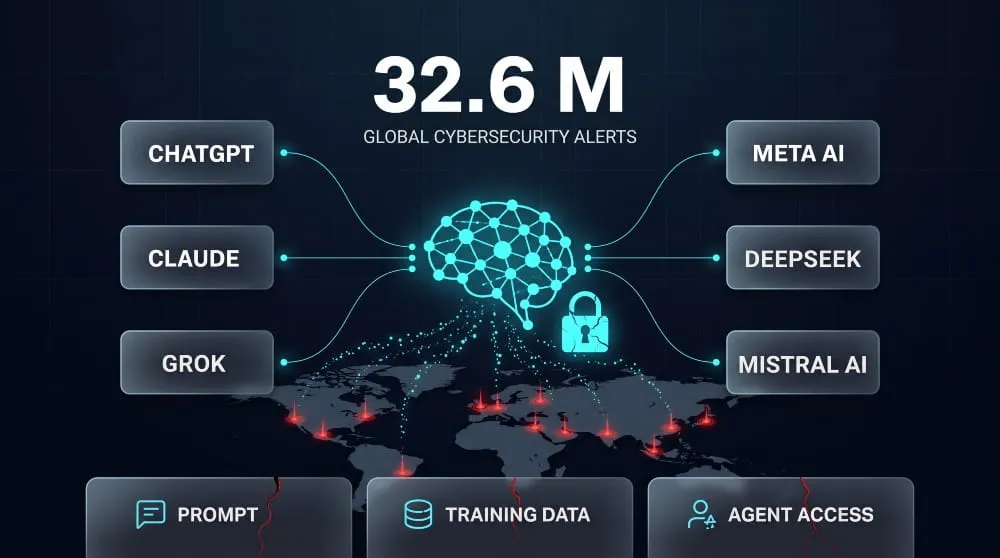
Security is also important. Giving an AI agent access to email, cloud storage, calendars, or business systems can expose sensitive information. Users should therefore apply the least-privilege principle, review permissions, and maintain human oversight for important decisions.
Best Practices for Using AI Agents
To get better results from AI productivity agents:
- Define a clear goal.
- Provide relevant context.
- Specify the desired output.
- Give access only to necessary tools.
- Start with simple, low-risk tasks.
- Review important results.
- Require approval for sensitive actions.
- Monitor the agent’s performance.
- Protect confidential information.
- Increase automation gradually as reliability improves.
The Future of AI Productivity
The future of workplace AI is moving from asking AI questions to delegating tasks. In 2026, AI agents increasingly work across files, applications, browsers, calendars, and other digital environments.
Research benchmarks are also beginning to evaluate how well agents handle long, cross-application professional tasks rather than simple question-and-answer interactions.
This means future productivity tools are likely to focus more on completing complete workflows instead of producing isolated AI-generated responses.
Conclusion
The best AI agents for productivity in 2026 are changing how people work by helping automate repetitive tasks, conduct research, manage information, create content, analyze data, and coordinate complex workflows.
ChatGPT is a strong general-purpose choice, Claude excels in writing and document-heavy work, Gemini fits Google-based workflows, Microsoft 365 Copilot is valuable for Microsoft users, and Perplexity is particularly useful for research.
The smartest approach is not simply to choose the most popular AI agent. Instead, choose the tool that fits your workflow, integrates with your existing applications, and gives you the right balance of automation, productivity, security, and human control.



Post Comment