AI That Fails in the Real World: Why Successful Models Break in Production
Introduction
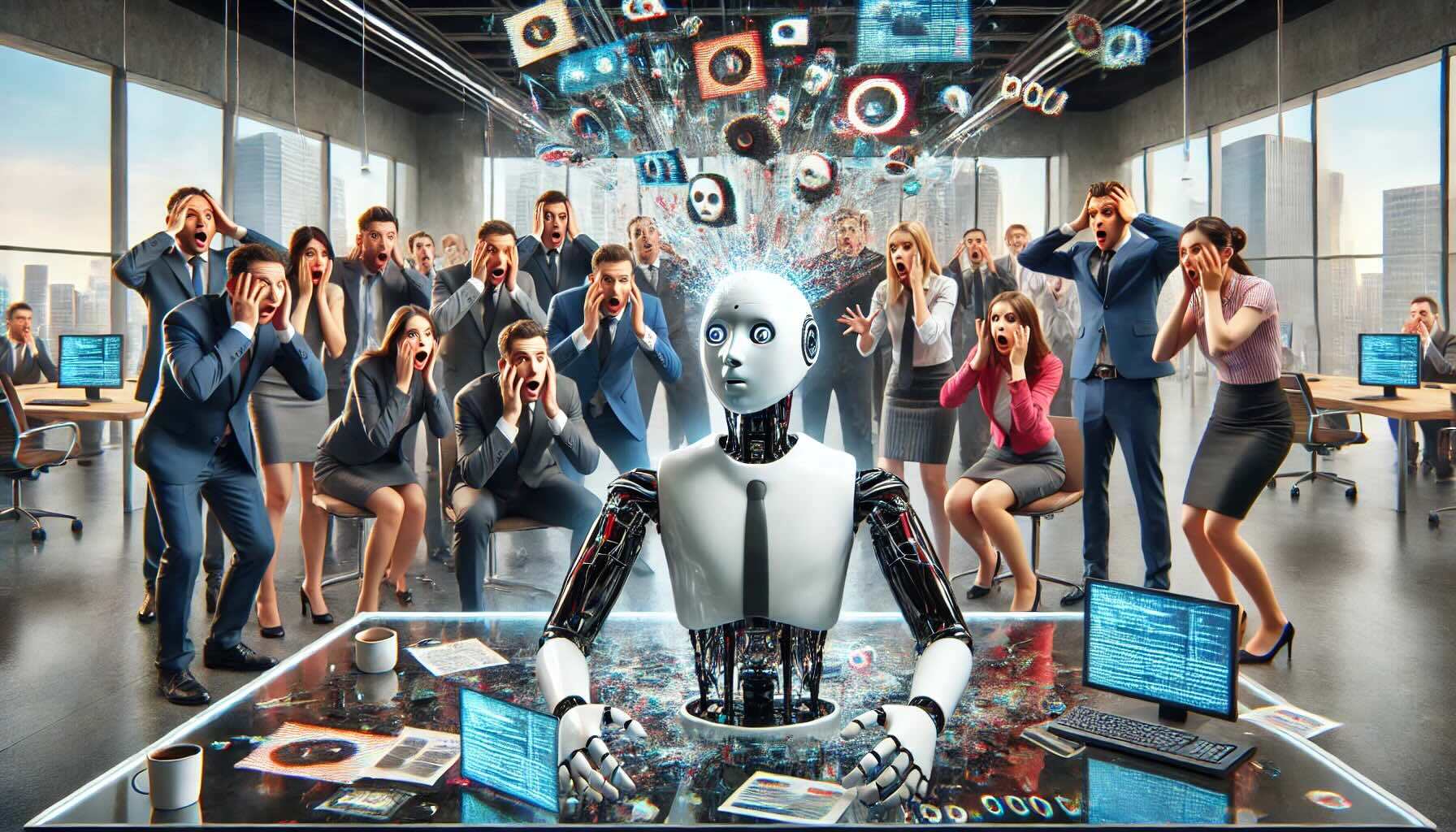
Artificial intelligence models often achieve impressive results during testing, benchmarks, and controlled experiments. However, many AI systems struggle when deployed in real-world environments. Real World gap between laboratory success and production performance has become one of the biggest challenges in modern AI development.
An AI model may perform well with clean datasets, predictable conditions, and carefully prepared inputs, but real-world applications introduce complexity, uncertainty, changing user behavior, and unexpected scenarios. Understanding why AI fails in the real world is essential for businesses, developers, and organizations adopting AI technologies.
Why AI Models Fail in Real-World Applications
1. Training Data Limitations
AI systems learn from historical data, and the quality of that data directly affects performance. If training data is incomplete, outdated, biased, or does not represent real-world conditions, the model may produce inaccurate results after deployment.
For example, an AI system trained on limited customer behavior data may fail when exposed to new markets, different demographics, or changing trends.

2. The Difference Between Testing and Production
AI testing environments are usually controlled and optimized. Developers often evaluate models using clean datasets that do not fully represent real-world complexity.
In production environments, AI encounters:
- Unexpected user inputs
- New patterns and behaviors
- Data quality issues
- System limitations
- Changing environments
This creates a gap between benchmark performance and actual results.
3. AI Models Struggle With Changing Data
Real-world data constantly changes. Language patterns, market conditions, customer preferences, and business needs all change over time.
A model that performs well today may become less accurate months later without continuous monitoring, retraining, and improvement.
4. Lack of Context Understanding
Many AI systems struggle to understand complex human context. While modern AI can process large amounts of information, it may still misunderstand:
- Human emotions
- Cultural differences
- Industry-specific knowledge
- Ambiguous requests
- Rare situations
This can lead to incorrect decisions or unreliable outputs.
5. Bias and Fairness Issues
AI models can inherit biases from their training data. When deployed at scale, these biases may create unfair or inaccurate outcomes.
Industries such as healthcare, finance, hiring, and security require careful AI evaluation to reduce risks and improve fairness.
6. Poor Integration With Existing Systems
Even a powerful AI model can fail if it is not properly integrated into business workflows. Common problems include:
- Incompatible software systems
- Slow data pipelines
- Lack of employee adoption
- Poor user experience
- Insufficient infrastructure
AI success depends on more than just the model itself.
Real-World Examples of AI Failure
Autonomous Vehicles
Self-driving technology performs well in simulations but faces challenges in unpredictable environments, including unusual road conditions, human behavior, and unexpected obstacles.
Healthcare AI
Medical AI tools may achieve high accuracy in research settings but struggle when used across different hospitals, patient groups, or equipment systems.
Customer Service Chatbots
AI chatbots can handle common questions but may fail when customers ask complex, emotional, or unusual questions requiring human judgment.
How Businesses Can Reduce AI Failures
Continuous Monitoring
Organizations should track AI performance after deployment and identify problems early.
Use Real-World Testing Data
Testing should include diverse, realistic scenarios instead of only ideal conditions.
Human Oversight
Human review remains important for high-impact decisions and complex situations.
Regular Model Updates
AI systems need ongoing improvements to adapt to changing data and user needs.
Strong AI Governance
Clear policies, security practices, and responsible AI guidelines help businesses deploy AI safely.
The Future of Reliable AI
The next generation of AI development will focus not only on creating smarter models but also on making them reliable, adaptable, and trustworthy in real-world environments.
Future AI systems will need better reasoning abilities, stronger monitoring, improved data quality, and advanced methods for handling uncertainty. Success will depend on building AI that works beyond testing environments and delivers consistent results in everyday situations.
Conclusion
AI that fails in the real world highlights the difference between experimental success and practical performance. A model can achieve excellent benchmark scores and still struggle after deployment due to changing data, limited context, integration challenges, and unpredictable environments.
The future of AI will depend on closing the gap between testing and production by creating systems that are accurate, adaptable, and capable of handling real-world complexity.




Post Comment